Answering the search for an energy efficient kettle, the following picks balance speed, water usage, and practical features. These models suit busy households, small offices, or anyone looking to cut energy while keeping tea, coffee, or hot drinks ready quickly. The top selections emphasize minimized boil times, built-in filtration, and accurate water level indicators to avoid waste. Each product is evaluated for who benefits most and why it stands out in energy efficiency.
| Product | Best For | Key Efficiency Feature |
|---|---|---|
| Turbo Pot FreshAir Rapid Boil | Families and shared kitchens | Faster-than-average boil on gas stove with energy-efficient heat exchanger |
| Zojirushi CV-DCC50 | Teal lovers and precision brewers | Multi-temp control for precise temperatures |
| Laura Ashley 1.7L Electric Kettle (Variant A) | Everyday tea and coffee drinkers | 1.7L capacity with eco-water indicator |
| Laura Ashley 1.7L Electric Kettle (Variant B) | Tea enthusiasts | External thermometer for precise temp control |
| Laura Ashley 1.7L Electric Kettle (Variant C) | General kitchen use | External water level indicator and fast boil |
FreshAir Rapid Boil Stainless Steel Kettle

The FreshAir Rapid Boil model is designed for faster heating on gas stoves, with an energy efficient heat exchanger base. It uses heavy-duty stainless steel and a silicon handle for comfortable, safe handling. Best for households that rely on gas stoves and want a quicker boil without excessive energy use. Best for: households seeking rapid performance on open flame with a focus on energy efficiency. Limitation: performance depends on stove type and burner efficiency.
Zojirushi CV-DCC50 Hybrid 5.0L Water Boiler

The Zojirushi CV-DCC50 offers a vacuum-electric hybrid approach with multiple keep-warm temperatures (160, 175, 195, 208 °F). Its design aims to minimize energy use by reaching and maintaining precise temperatures without continuous full-boil cycles. Best for: tea aficionados and offices needing precise brewing temperatures. Caution: data focuses on temperature presets and keeps warm rather than full electric heating for all uses.
Laura Ashley 1.7L Electric Kettle (Variant A)

This 1.7L Laura Ashley kettle focuses on a large capacity with an eco-friendly water indicator to avoid boiling more water than needed. It boils quickly and includes a lime-scale filter to improve water quality and appliance longevity. Best for: users who want a stylish, high-capacity option with eco-conscious features. Caution: some models use a manual switch that may feel less automated than sensor-based kettles.
Laura Ashley 1.7L Electric Kettle (Variant B)

Variant B emphasizes a fast boil and external water level viewing window for precise measurements. It also includes a built-in lime-scale filter for performance and longevity. Best for: households needing quick water with visibility for accurate fill levels. Caution: external thermometer feature is not present here, so temperature precision is achieved via boiling and filtering rather than exact temp setting.
Laura Ashley 1.7L Electric Kettle (Variant C)
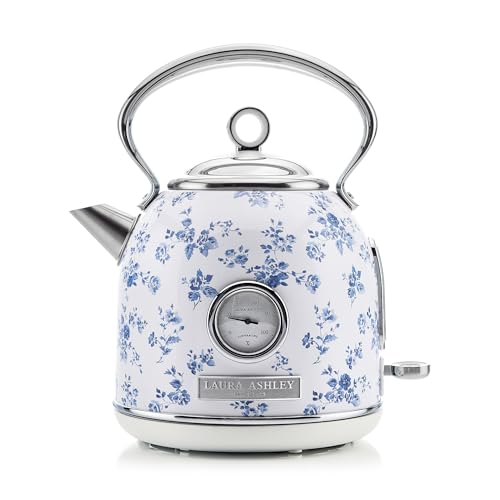
Variant C highlights an external water level indicator paired with a 3-liter-per-minute boil speed. It includes a thermometer option for some drinks to ensure perfect heat. Best for: tea lovers who value precise water management and temperature control. Caution: thermometer feature may imply more specialized use, not necessary for everyday coffee brewing.
Laura Ashley 1.7L Electric Kettle (Variant D)

The final Laura Ashley option includes a classic 1.7L capacity with an external water level indicator and efficient boiling. It’s designed to reduce unnecessary water usage and supports quick preparation of beverages. Best for: general kitchen use where a reliable, stylish kettle is desired. Caution: similar features across multiple Laura Ashley models may lead to minor overlap in performance expectations.
Buying Guide: Energy Efficient Kettles
What matters most when choosing an energy efficient kettle? Consider boil speed, exact temperature control, water usage indicators, and keep-warm efficiency. If you primarily drink tea, models with precise temperatures help extract flavor without over-heating. For coffee lovers, faster boils save time and energy during morning routines. If you boil water for multiple people, a larger capacity reduces reheating time and energy wasted on multiple cycles.
Key purchase considerations
- Capacity: 1.7L kettles suit typical households; larger families may prefer 2.0–2.5L options to minimize boiling cycles.
- Water level indicators: clear views help avoid boiling more water than needed, saving energy and water.
- Temperature control: precise temperature presets benefit tea types; consider thermometer features for exact brewing temperatures.
- Filtration: built-in lime-scale filters protect the kettle and improve water quality, contributing to long-term efficiency.
- Fuel source compatibility: electric kettles are universally compatible; gas-stove kettles rely on efficient heat transfer from the burner.
Practical comparisons
- Best for quick, single-cup prep: models with fast boil rates and narrow pour spouts.
- Better for tea connoisseurs: kettles offering precise temperature control and thermometer features.
- Choose this if you want visibility: external viewing windows help gauge water use precisely.
- Avoid this if you need multi-temperature control without external gadgets: some models rely solely on boil-and-wait for temperature.
FAQ
- Do energy efficient kettles save more energy than standard kettles? Yes, due to faster boil times, reduced water waste, and efficient insulation and heating elements.
- Is a thermometer in a kettle useful for everyday use? It’s most beneficial for tea and specialty drinks requiring specific temperatures.
- What should I look for in a lime-scale filter? A built-in filter reduces scale buildup, extending kettle life and keeping water quality high.
- Can a larger capacity kettle save energy? It can reduce the number of boil cycles for households with multiple users, depending on usage patterns.
- Are external water level indicators necessary? They help prevent overfilling and wasted energy, especially in busy kitchens.
- Is temperature control limited to premium models? Some mid-range kettles include external thermometers or multiple temperature presets for better brewing control.