When upgrading a bathroom or utility space, selecting an inline extractor fan with solid airflow, low noise, and easy installation is essential. This guide highlights five top inline bathroom exhaust fans that balance power and quiet operation. Best for homeowners needing strong moisture control, best for small apartments, best for garages, and best for grow spaces where odor control matters. The listed products cover a range of CFMs, noise levels, and installation styles to fit bathrooms, attics, kitchens, and laundry rooms.
| Product | Airflow (CFM) | Best For |
|---|---|---|
| MIDCVFRUN 2 Speed 200/130 CFM | 200 / 130 | Quiet bathroom exhaust with adjustable airflow for small to medium spaces |
| MIDCVFRUN 2 Speed 330/240 CFM | 330 / 240 | Higher demand baths, kitchens, or garages |
| ALORAIR 6 Inch 300 CFM | 300 | Attic or larger bathrooms, strong, continuous ventilation |
| Aggrfine 230 CFM Inline | 230 | Quiet operation in living spaces like offices or bedrooms |
| Voltset 4″ 280 CFM with Remote | 280 | Grow tents, bathrooms, or kitchens with remote control convenience |
Midcvfrun 2 Speed 200/130 CFM Inline Fan
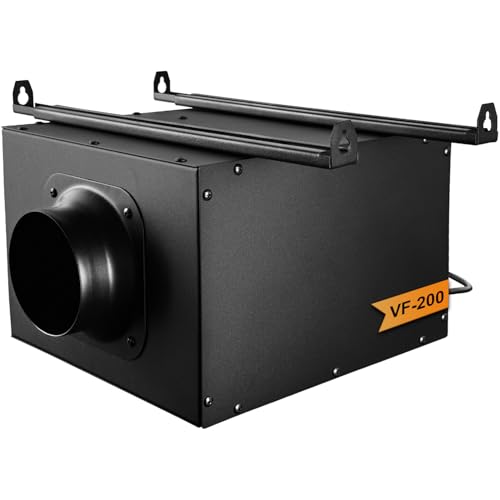
Features: 2 speed high/low with 200 CFM at 1.5 Sones and 130 CFM at 1.2 Sones. Includes a damper to minimize backflow. Suitable for bathrooms, garages, attics, and kitchens. Uses a centrifugal blower for lower noise and energy use.
Best for: small to medium bathrooms or utility spaces requiring adjustable airflow with quiet operation. Choose this if you want a budget-friendly, versatile inline fan with straightforward installation.
Caution/limitation: Lower maximum airflow compared to larger units; consider higher-capacity needs for very damp or larger spaces.
Midcvfrun 2 Speed 330/240 CFM Inline Fan

Features: 2 speed functionality with 330 CFM at 1.7 Sones and 240 CFM at 1.5 Sones. Includes damper to reduce backflow. Designed for bathrooms, garages, attics, and kitchens with low-maintenance centrifugal blower.
Best for: larger bathrooms or spaces needing robust air exchange without loud noise. Better for homes with higher humidity or larger floor plans.
Caution/limitation: Higher airflow can come with increased noise if not properly sized for the space; ensure ducting and mounting location suit the airflow level.
Aggrfine 230 CFM Inline Bath Exhaust

Features: Delivers 230 CFM with ultra-quiet operation (~25 dB) and a slim 12 cm profile. Comes with a long 118-inch power cord for flexible installation and is suited for bathrooms, kitchens, garages, offices, or hotels.
Best for: spaces that require quiet performance and flexible install options in tight ceilings. Choose this for a low-profile solution with high ventilation efficiency.
Caution/limitation: Very quiet operation is paired with moderate airflow; ensure 230 CFM meets the room’s moisture load and size.
Voltset 4″ 280 CFM Inline Fan With Remote

Features: 280 CFM with remote control for easy speed adjustments (high/low). Quiet operation at about 30 dB, and a 4-inch duct size suitable for bathrooms, kitchens, grow tents, and offices.
Best for: setups that benefit from remote-controlled speed changes and convenient placement. Choose this if you want on-the-fly airflow tuning without reaching to the unit.
Caution/limitation: Remote control usability depends on line-of-sight and interference; verify remote works across the installation area.
Buying Guide: Inline Bathroom Exhaust Fans
Key considerations help ensure you choose the right inline fan for your space. The following questions and notes summarize practical buyer intent guidance.
- What space needs ventilating? For bathrooms, 50–100 CFM per bathroom is common; larger rooms and kitchens demand more airflow (80–200+ CFM per space).
- How important is quiet operation? If the unit sits near living spaces, choose fans marketed as ultra-quiet (low sones) or with vibration damping.
- Is auto humidity control needed? Some models include sensors or remote control to adjust airflow automatically based on humidity, which can save energy and improve comfort.
- What installation constraints exist? Consider duct size (4″ or 6″), ceiling height, attic access, and whether a damper is included to prevent backdrafts.
- Power and wiring? Check the length of power cords and whether you need a hardwire setup or plug-in installation. A longer cord offers more flexible placement.
- Maintenance and durability? Look for ball bearings, reinforced housings, and corrosion-resistant materials for long-term reliability.
Comparison Snapshot
- Best for compact spaces: MIDCVFRUN 200/130 CFM – adjustable airflow with low-noise performance.
- Best overall airflow: MIDCVFRUN 330/240 CFM – higher capacity for busy bathrooms or kitchens.
- Best for attic or large bathrooms: ALORAIR 300 CFM – strong airflow with flexible installation.
- Best quiet option: Aggrfine 230 CFM – ultra-quiet operation with slim profile.
- Best with remote control: Voltset 280 CFM with Remote – convenient speed control from a distance.
Frequently Asked Questions
- What size inline fan do I need for a bathroom? For typical bathrooms, 50–100 CFM is common; larger baths or open layouts may require more, up to 150–200 CFM or higher.
- What does “Sones” mean? Sones measure apparent loudness. Lower numbers indicate quieter operation; common bathroom fans range from 1.2 to 1.7 sones for quiet performance.
- What is a backdraft damper? A damper prevents conditioned air from flowing back into the room when the fan is off, improving energy efficiency.
- Should I choose auto humidity control? If humidity fluctuates or you want hands-off operation, sensors that auto-activate the fan can help maintain comfort and reduce moisture buildup.
- Is remote control necessary? Remote-enabled models offer convenience for adjusting speed without reaching the fan, especially in hard-to-reach installations.
- Can these fans be installed in kitchens or garages? Yes, many inline fans are designed for bathrooms, kitchens, attics, and garages, with flexible ducting options for various layouts.