Discover gentle, fragrance-free or skin-friendly moisturizers that lock in moisture without triggering irritation. This guide highlights five hydrating creams ideal for sensitive skin, focusing on barrier support, long-lasting hydration, and lightweight feel. Each option is best for dry to very dry skin or sensitive complexions, with notes on who should choose it and who might skip it. Read on to compare ingredients, texture, and suitability for daily use.
Summary of top picks at a glance:
| Product | Best For | Key Benefit |
|---|---|---|
| Cetaphil Moisturizing Cream (8.8 oz) | Very dry or sensitive skin | 48-hour hydration with barrier support |
| Cetaphil Deep Hydration Face Cream | Fragrance-free sensitivity | HYDROSENSITIVE complex for long-lasting hydration |
| La Roche-Posay Toleriane Double Repair | Barrier repair with prebiotics | 24-hour moisture with microbiome-balancing prebiotics |
| L’Oréal Paris Hydra-Renewal | Dry, sensitive skin daily use | Pro-Vitamin B5 hydration for softer skin |
| The Ordinary Natural Moisturizing Factors + Hyaluronic Acid | Simple, lightweight hydration | Non-greasy, skin-identical ingredients |
Cetaphil Moisturizing Cream, Face & Body (8.8 oz)

Best for very dry or sensitive skin that needs long-lasting hydration. This cream instantly replenishes moisture and supports the skin’s barrier for up to 48 hours, leveraging sweet almond oil and vitamin E. It binds water to the skin to reduce moisture loss, making it suitable for daily use on the face and body. Choose this if you need a heavy-duty, fragrance-free moisturizer that can be used on multiple areas.
Who it’s best for: individuals with very dry, sensitive skin seeking dependable 48-hour hydration and a barrier-restoring formula.
Caution: may feel too rich for those who prefer a lighter texture in warm climates or during humid seasons.
Cetaphil Deep Hydration Face Cream

Best for fragrance-free sensitive skin seeking a non-greasy hydration boost. The HYDROSENSITIVE complex deepens hydration while soothing sensitivity, delivering a 48-hour moisture refresh without heaviness. It’s lightweight and suitable for daily facial use, leaving skin soft and supple without an oily afterfeel.
Who it’s best for: users who want fragrance-free hydration with a light-feel moisturizer that still delivers durable moisture.
Caution: its lightweight formula may feel less protective in extreme dryness or very cold conditions.
La Roche-Posay Toleriane Double Repair Face Moisturizer
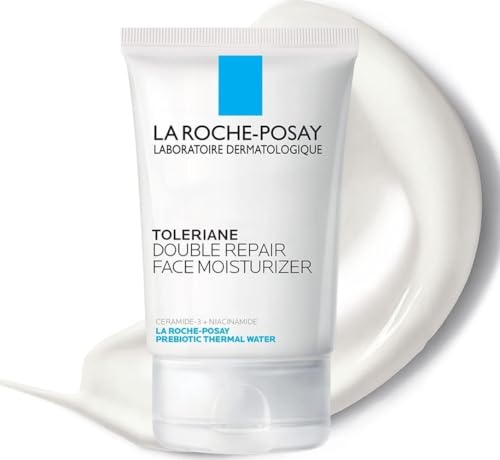
Best for restoring the skin’s protective barrier with skin-friendly science. This dual-action moisturizer aims to repair and hydrate for up to 48 hours, featuring prebiotics that help balance the skin’s microbiome. Ceramides, niacinamide, and glycerin work together to retain moisture and support a resilient complexion for both women and men.
Who it’s best for: those seeking barrier restoration with long-lasting hydration and support for skin texture and even tone.
Caution: may be perceived as slightly heavier than ultra-light formulas, depending on climate and skin type.
L’Oréal Paris Hydra-Renewal Face Moisturizer

Best for daily hydration that supports a healthy barrier without heaviness. This moisturizer uses Pro-Vitamin B5 to help protect against moisture loss and keeps skin hydrated throughout the day. It aims to leave skin softer and more radiant without a greasy feel, suitable for sensitive skin prone to dryness.
Who it’s best for: users wanting a dependable, all-day hydrator from a mainstream brand with a lightweight texture.
Caution: fragrance-free status is not explicitly stated; check ingredient list if sensitivity to additives is a concern.
The Ordinary Natural Moisturizing Factors + Hyaluronic Acid

Best for simple, lightweight hydration that still supports the skin’s outer barrier. This formula relies on skin-identical ingredients such as amino acids, fatty acids, ceramides, urea, and hyaluronic acid to hydrate without a heavy or greasy feel. It’s accepted by some sensitive-skin readers and provides a straightforward hydrator option for daily use.
Who it’s best for: those who prefer a minimal formula with non-greasy hydration and a barrier-support focus.
Caution: not a heavy moisturizer; may require layering with richer creams in very dry conditions.
Buying Guide: Key Considerations For Hydrating Creams
What to look for when choosing a hydrating cream for sensitive skin:
- Fragrance and irritants: Opt for fragrance-free formulas or products labeled as suitable for sensitive skin to minimize irritation risk.
- Hydration duration: Consider whether you need long-lasting hydration (12–48 hours) or a lighter, daily-use formula.
- Barrier-support ingredients: Look for ceramides, triglycerides, niacinamide, glycerin, and prebiotics that help restore and protect the skin’s moisture barrier.
- Texture and feel: If you have very dry skin, a richer cream may be beneficial; for oily or combination skin, lightweight or gel-like moisturizers can prevent a heavy residue.
- Compatibility with skin concerns: For redness, sensitivity, or eczema-prone skin, check for clinically supported ingredients and associations with sensitive-skin groups.
FAQ
- What makes a moisturizer good for sensitive skin?
- Is a fragrance-free moisturizer always better for sensitive skin?
- Should I choose a heavy cream or a light lotion for dry skin?
- Can these products be used on both face and body?
- Are any of these suitable for eczema-prone skin?
- Do these products contain active anti-aging ingredients?
A good option uses minimal fragrances, has a non-irritating ingredient list, and supports the skin barrier with ceramides, glycerin, or niacinamide.
Not always, but fragrance-free products reduce the risk of irritants. Always check for other potential irritants in the ingredient list.
Choose based on climate and skin type. Heavier creams work well in dry environments, while lighter formulas suit warmer climates or oily skin.
Most listed options are suitable for both face and body, but check each product’s labeling for exact usage guidance.
Some formulas with barrier-supporting ingredients, like ceramides and glycerin, may be suitable. Always patch-test and consult a dermatologist for eczema-specific advice.
Most focus on hydration and barrier repair rather than anti-aging, though some contain niacinamide or ceramides that may support skin texture over time.