For discerning listeners, the right high-end amplifier can unlock a system’s full musicality. This guide highlights five premium integrated amplifiers and separates, chosen for their balanced sound, build quality, and versatility. Each entry targets a specific buyer type—from tube warmth lovers to solid-state transparency—so you can match the product to your listening goals. The accompanying buying guide covers key considerations to compare, while the FAQ answers common questions about power, compatibility, and setup.
| Product | Best For | Key Strength |
|---|---|---|
| Yamaha A‑S3200SL | Those seeking ultra-low noise and precise channel separation | Fully balanced circuitry, large toroidal transformer |
| Marantz Model 50 | Analog purists who want warm, spacious sound | Pure analog path, high-current Class A/B |
| Cambridge Audio CXA81 MkII | Modern Hi-Fi with Bluetooth and DAC capability | ESS DAC, Class AB |
| Dayton Audio HTA200 | Hybrid warmth with tube preamp and solid power | Tube preamp with AB power |
| Fosi ZA3 | Balanced, compact, affordable high-end option | TPA3255, balanced inputs, multi-mode |
Yamaha Audio A‑S3200SL Integrated Amplifier (Silver)

Features include fully balanced circuitry to deliver a notably low signal-to-noise ratio and improved channel separation, a large toroidal transformer to pursue pure musicality, and a Mechanical Ground Concept that maximizes rigidity and minimizes vibration. Best for buyers who prioritize ultra-clean signal paths and high dynamic range in a robust chassis. Limitation: some users may prefer older, warmer tube flavors rather than the very clean, clinical presentation.
Marantz Model 50 Premium Integrated Stereo Amplifier
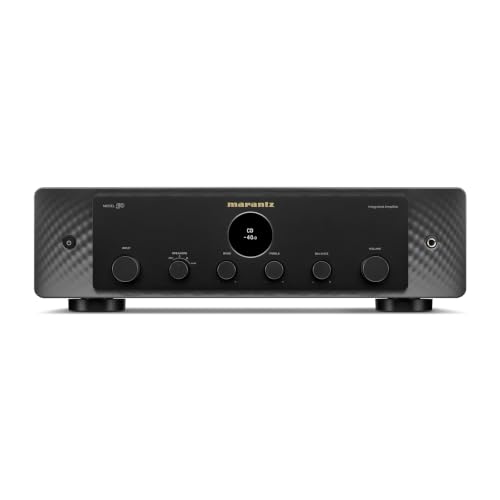
Best for analog purists and listeners who want a warm, spacious sound with a direct signal path. The Model 50 emphasizes a pure analog signal path—no digital circuitry introducing interference—paired with a high-current Class A/B architecture to drive demanding loudspeakers. Choose this if you value musical texture and natural harmonics. Limitation: absence of digital processing within the signal path may limit convenience for some modern streaming setups.
Cambridge Audio CXA81 MkII

Best for modern Hi-Fi enthusiasts seeking versatile features, including Bluetooth aptX HD and an ESS Sabre DAC for high-fidelity digital-to-analog conversion. The Class AB amplifier provides balanced and efficient performance with clear detail and controlled dynamics. Choose this if you want a powerful, feature-rich integrated with contemporary digital inputs. Limitation: some listeners may prefer a fully analog signal path for certain genres.
Dayton Audio HTA200 Integrated Stereo Hybrid Tube Amplifier

Best for listeners who want a classic tube feel alongside modern power—an integrated hybrid with 100 watts per channel and a tube preamp adds warmth without sacrificing headroom. The HTA200 supports multiple inputs and offers a traditional tube character with contemporary connectivity. Limitation: tube warmth can introduce subtle colorations that some purists may not prefer for every genre; setup requires attention to tube conditioning and bias checks.
Fosi ZA3 Balanced Stereo Amplifier

Best for compact, balanced amplification on a budget without sacrificing essential features. The ZA3 uses the TPA3255 chip with balanced inputs and 2-channel output, offering up to 180W in stereo mode or 235W in mono mode. Choose this if you want a contemporary, flexible unit with good SNR and a strong value proposition. Limitation: compact form factor means fewer internal buffering options compared with larger high-end models.
Buying Guide: Key Considerations for High-End Amplifiers
- Sound signature vs. technology: Do you prefer a pure analog path (warmth and richness) or a clean, neutral amplification with modern DACs and streaming inputs?
- Power and speaker compatibility: Ensure the amplifier’s output matches your speaker’s impedance and sensitivity to avoid underperformance or strain.
- Inputs and connectivity: Consider whether you need Bluetooth, USB DAC, optical, coax, or XLR balanced connections for your sources.
- Build quality and isolation: Look for toroidal transformers, rigid chassis, and vibration-damping features to minimize noise and microphonics.
- Tube vs. solid-state: Tube preamps provide warmth; solid-state designs emphasize low distortion and a tighter bottom end. Hybrid designs aim to balance both.
- Room and listening environment: Larger, more powerful units suit bigger rooms; smaller units can excel in nearfield setups.
- Maintenance and reliability: Tube units may require more frequent checks; solid-state units often demand less ongoing maintenance.
Frequently Asked Questions
- What is the difference between integrated and separates?
Integrated amplifiers combine preamp and power amp in one chassis, simplifying setup. Separates offer potentially higher performance with modular upgrades. - What does Class A/B imply?
Class A/B provides efficient power delivery with good fidelity and dynamic headroom; it can run hotter than pure Class A but generally sounds more powerful. - Are balanced inputs important?
Balanced connections reduce noise over long cable runs, beneficial in large rooms or setups with multiple components. - Can I use a high-end amplifier with budget speakers?
Yes, but ensure impedance matching and sensitivity align with the amp’s power to avoid underpowered performance or strain. - Is tube warmth always desirable?
Tube warmth adds harmonic richness and smoothness; some genres may benefit from a cleaner, more accurate sound. - Do I need a standalone DAC?
If your sources are digital, a high-quality DAC improves conversion quality; many integrated amplifiers include DACs, offering a convenient all-in-one solution.