If you’re building a podcasting setup, these headphones offer accurate monitoring, comfortable wear, and reliable isolation to capture clean vocals and detailed edits. This guide highlights top options for podcasters, voice artists, and interviewers, with clear reasons why each model may suit your studio style. Best fits include: professional studio work, home studios, and on-the-go podcasting with dependable wired or wired/wireless flexibility.
| Product | Brand | Best For | Why It Stands Out |
|---|---|---|---|
| Sony MDR7506 | Sony | Professional studios, home studios | Detailed high-frequency response and robust build for long sessions |
| Audio-Technica ATH-M20x | Audio-Technica | Budget-conscious studios, beginners | Solid fundamentals with dependable clarity |
| PHILIPS Over Ear | PHILIPS | All-around listening and recording | Comfortable, versatile with 1/4″ adapter |
| OneOdio A71 | OneOdio | DJ/monitoring mix setups | Hi-Res wired with comfortable design and multiple jacks |
| FIFINE HD8 | FIFINE | Budget studio monitoring | Well-balanced sound with closed-back isolation |
Sony MDR7506 Professional Headphones

The Sony MDR7506 uses neodymium magnets and 40 mm drivers to deliver powerful, detailed sound. This model is well-suited for professional audio work, including podcast production, where accurate vocal reproduction matters. The closed-ear design helps reduce external noises for a quieter monitoring environment. A 9.8-foot cord ends in a gold-plated plug, with a 1/4-inch adapter included for compatibility with mixers and audio interfaces. Best for: professionals who need precise, consistent monitoring during long sessions. Caution: the cord is not detachable, which may affect portability and replacement flexibility.
Audio-Technica ATH-M20x Headphones

These Studio Monitor Headphones feature 40 mm drivers with rare earth magnets and copper clad aluminum wire voice coils, designed for tracking and mixing. The build emphasizes durability and clear low-end performance suitable for voice work and podcasting. Best for: budget-conscious podcasters who need reliable, neutral monitoring. Caution: not specifically marketed as high-end monitors, so may lack the ultra-wide accuracy of premium models.
PHILIPS Over Ear Wired Studio Headphones
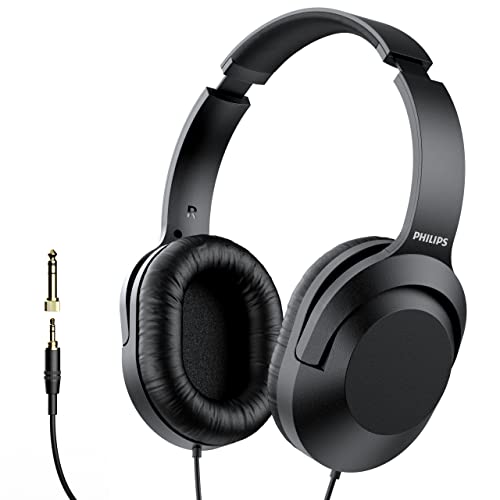
PHILIPS headphones feature 40 mm drivers delivering crisp, clear sound with excellent passive noise isolation through a comfortable over-ear fit. They include a 1/8” (3.5mm) jack and a 1/4” (6.3mm) adapter, making them versatile for home studios, offices, and portable rigs. Best for: podcasters who need a comfortable, general-purpose listening/recording headset. Caution: long sessions may require additional padding for extended wear.
PUPGSIS M20 Wired DJ & Studio Headphones

Featuring large 50 mm drivers and a 20 Hz–20 kHz frequency range, these monitor headphones offer strong bass, clear mids, and detailed highs suitable for podcasting and mixing. The sharing port is a practical feature for co-hosts without adapters. Best for: podcast duos or small studios needing reliable stereo imaging and self-monitoring during recordings. Caution: as a budget option, long-term durability should be considered with regular care.
OneOdio A71 Hi-Res Wired Headphones

OneOdio A71 provides dual-mode operation with wired and wireless options, featuring 40 mm neodymium drivers and a foldable, space-saving design. The kit includes a long coiled cord with 6.35 mm and 3.5 mm plugs, offering flexibility for mixers, keyboards, and other devices in a home studio. Best for: podcasters who want reliable wired monitoring with optional wireless use. Caution: battery-dependent wireless mode may require charging for extended sessions.
Buying Guide
What to consider when choosing podcasting headphones
- Sound accuracy: Look for a flat or neutral frequency response to avoid coloring voices.
- Comfort: Choose soft ear cushions and an adjustable headband for long recording or editing sessions.
- Isolation: Closed-back designs help minimize room noise and prevent bleed into the microphone.
- Connectivity: Decide between wired for consistency or wired/wireless for flexibility; ensure compatibility with your mixer or interface.
- Durability: Consider build quality and cable design, especially for frequent folding or transport.
- Portability: For on-location recording, foldable headphones and detachable cables can be advantageous.
How do I know which is best for my podcast workflow?
For solo voice work in a quiet home studio, prioritize comfort and accurate vocal clarity (e.g., Sony MDR7506 or Audio-Technica ATH-M20x). For co-hosted shows, consider headphones with sharing-friendly features or dual-mode connectivity (e.g., PUPGSIS M20 or OneOdio A71). If you need flexibility across devices, choose models with 1/4″ and 3.5 mm adapters and a long cord (PHILIPS or OneOdio A71).
What about price versus performance?
Budget monitors like ATH-M20x provide solid foundational quality for beginners. Mid-range options such as PHILIPS or FIFINE offer balanced sound with good isolation. Higher-end models (Sony MDR7506) deliver more precise detail for professional editing, but require careful handling and proper fit for comfort over long sessions.
Are detachable cords or replaceable parts important?
Detachable cords simplify transport and replacement. If you travel or move between locations, a model with a detachable cable is preferable to avoid wear on the headphones themselves.
What about a co-host setup?
For podcasts with two people, consider shared monitoring or port-friendly designs that reduce cable clutter, like models featuring dual jacks or sharing ports to simplify the setup without additional adapters.
How should I test headphones before buying?
Listen for vocal intelligibility, sibilance, and low-end balance. Check for headphone comfort during extended use and confirm that the clamp force isn’t excessive. If possible, test with your typical microphone and recording software to assess bleed and room tone.
FAQ
- Q: Are closed-back headphones better for podcasting?
- A: Yes, because they help minimize ambient noise and prevent recording bleed, which improves vocal clarity.
- Q: Should I buy wired or wireless headphones for podcasting?
- A: Wired headphones offer consistent latency and reliability; wireless can add convenience but may introduce latency or interference.
- Q: Do I need a high-end model for podcasting?
- A: Not always; many podcasters succeed with solid mid-range models that deliver accurate vocal response and comfort for long sessions.
- Q: What is the advantage of a 40 mm driver in these headphones?
- A: A 40 mm driver supports clear mids and highs with punchy low end, which helps with natural voice reproduction.
- Q: How important is comfort for long recording days?
- A: Very important; comfortable cushions and an adjustable headband reduce fatigue and improve focus during editing and monitoring.