If you’re seeking headphones that make dialogue clearer and reduce background noise, these five Amazon picks are designed for the hearing impaired and seniors. They offer simple setup, low latency, and options for wired or wireless use around the home. This guide highlights who each option is best for and why they stand out, with practical considerations to help you choose.
| Product | Best For | Why It Stands Out |
|---|---|---|
| OHAYO Wireless TV Headphones | Seniors seeking plug-and-play wireless TV viewing | Low latency, long range, simple RCA/Optical/AUX connections |
| Wireless Headphones for TV Watching (Earbay) | Families wanting private listening with multiple modes | Three audio modes, versatile connection options, private listening |
| Mutbam Wireless Headphones for TV | Elderly users needing reliable base pairing | Factory-paired base, broad TV compatibility, long-use comfort |
| Sony ZX Series Wired On-Ear (MDR-ZX110) | Portable, wired listening on the go | Lightweight, foldable, comfortable cushioned earpads |
| IROGER Hearing Amplifier | Individuals needing automatic gain and clear voices | Smart auto-gain, directional microphone, long battery life |
OHAYO Wireless TV Headphones for Seniors

Best for seniors seeking a plug-and-play setup. The transmitter dock connects to Optical, RCA, or 3.5mm ports, and the headphones auto-pair, avoiding Bluetooth pairing hassles. The system advertises sub-27ms latency and ≥85dB SNR for clearer speech, making words easier to hear without blasting the room. The 100ft (30m) range is ideal for moving around the house while watching TV. Designed to work with most TVs that provide common outputs.
Who it’s best for: buyers who want a simple, non-technical connection with strong lip-sync under movie and sports watching scenarios. The product is a strong pick for people who prefer immediate use without complex setup steps.
Caution: If your TV lacks compatible outputs (rare but possible), you may need an adapter or an alternate model. While Bluetooth compatibility is mentioned, the primary strengths are wired-to-wireless simplicity rather than cross-device streaming.
Wireless Headphones for TV Watching (Earbay)

Best for households needing flexibility with multiple connection options. These headphones support optical, 3.5mm AUX, RCA, and Bluetooth, making them compatible with TVs that lack a standard port. The private listening feature keeps dialogue clear without turning up room volume. The three audio modes and comfortable over-ear design appeal to users who want a personalized listening experience for long viewing sessions.
Who it’s best for: families or individuals who want a versatile setup that can adapt to various TV models and future devices. The product’s emphasis on private listening is beneficial for shared living spaces.
Limitation: Bluetooth compatibility can add extra steps on some TVs, and audiophiles may still prefer dedicated wired options for certain sources. Comfort is good, but long sessions may vary by ear shape.
Mutbam Wireless Headphones for TV

Best for seniors who want a straightforward, one-time setup with a charging dock. The headset ships factory-paired to the transmitter, reducing repeat pairing efforts. It supports Optical, RCA, AUX, and Bluetooth connections, broadening compatibility with many TV models and other devices. The standout is stable wireless audio with minimal setup friction.
Who it’s best for: buyers who value ease of use and a ready-to-use experience after a single setup. This model suits households seeking dependable performance with minimal daily fiddling.
Limitation: Some TVs may require different adapters for optimal optical connections, and long-term comfort varies by user head size and ear shape.
Sony ZX Series Wired On-Ear Headphones (MDR-ZX110)

Best for portable, wired listening where minimal latency matters. The lightweight design uses neodymium drivers for a punchy response and a closed-back, cushioned earpad setup for comfort. The swiveling earcup helps with storage during travel, and the overall build aims for durable use in daily activities.
Who it’s best for: individuals who want a simple, reliable wired headphone option for TV or general listening while traveling. Choose this if you prefer a straightforward, no-fuss connection without batteries or charging.
Limitation: This is a wired model, so it won’t offer the freedom of movement that wireless headphones provide. If you need private listening that travels with you around the house, a wireless option may be better.
IROGER Hearing Amplifier for Seniors
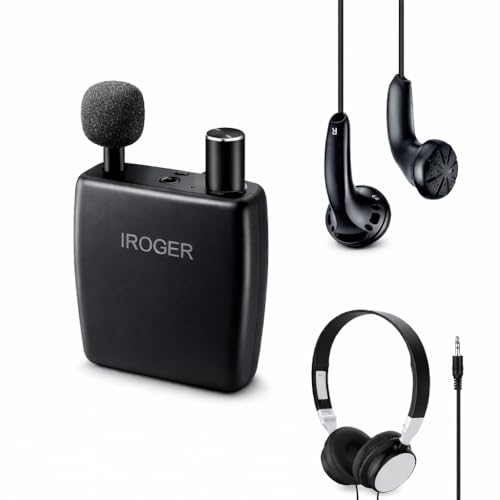
Best for individuals seeking automatic gain control and a dedicated voice-first listening profile. The device uses smart auto-gain to balance levels and reduce distortion, with a directional microphone to focus on foreground speech. It includes two listening options (over-ear headphones and earbuds) and a long-lasting rechargeable battery, supporting extended daily use.
Who it’s best for: users who need adaptive amplification for clearer dialogue in TV and conversations, with flexibility in wearing styles. It’s a strong candidate for steady, all-day wear without frequent charging.
Limitation: As an amplifier, it might amplify ambient noise in very quiet rooms; in such cases, using the directional mic mode is recommended to improve focus on speech.
Buying Guide
What to consider when choosing headphones for hearing impairment
- Connection type: Wired vs. wireless. Wired models avoid latency concerns and setup complexity but limit movement. Wireless options offer room-to-room use with potential pairing steps.
- Latency and lip-sync: Low latency is crucial for synchronized dialogue with on-screen action. Look for stated latency figures or technologies that minimize delay.
- Compatibility: Ensure the headset supports your TV’s outputs (Optical, RCA, AUX) or Bluetooth if applicable. Some systems also offer Bluetooth pairing with other devices for standalone use.
- Comfort and fit: For long viewing sessions, prefer cushioned ear pads and adjustable headbands. Consider ear shape and pressure to avoid discomfort.
- Voice clarity features: Look for enhanced speech modes, auto-gain control, and directional microphones to improve dialogue comprehension without raising overall room volume.
- Battery life and charging: For wireless models, verify battery life per charge and the convenience of the charging dock or stand.
- Privacy vs. shared listening: Private listening helps minimize disturbing others, but ensure your set can still be used with other devices if needed.
Frequently Asked Questions
- Do these headphones work with all TVs? Most support common outputs (Optical, RCA, AUX) and Bluetooth if available. Check your TV model’s ports before buying.
- Is low latency important for TV listening? Yes. Low latency helps keep dialogue in sync with on-screen action, especially for movies and sports.
- Can I use these headphones with streaming devices? Some models support Bluetooth pairing with phones or tablets, enabling standalone use beyond the TV.
- What is a good option for easy setup? Models labeled “plug & play” or with a docking/transmitter base are designed for quick, repeatable setup.
- Are wired options better for hearing impairment? Wired options generally have no latency issues and can be simpler for non-technical users, though wireless freedom is appealing.
- Which feature helps the most with speech clarity? Auto-gain control and directional microphones focus on voices, reducing ambient noise for clearer dialogue.