Finding the right headphones for guitar practice means balancing accurate tone with comfort and isolation. These picks are suited for players practicing quietly, recording, or jamming along with tracks. Each product below is evaluated for ease of use with guitar gear, from amps to audio interfaces. The buyer profiles highlighted help you choose based on whether you’re a casual learner, a home studio setup, or a professional rehearsal space.
Summary of selected products:
| Product | Brand | Best For | |
|---|---|---|---|
| OneOdio Wired Studio Monitor Headphones | OneOdio | Budget-friendly monitoring, single-ear use | Great baseline for mixing and practice with 50mm drivers |
| Audio-Technica ATH-M50x | Audio-Technica | Pro-grade monitoring, long sessions | Critically acclaimed with open, accurate sound |
| Audio-Technica ATH-M20x | Audio-Technica | Entry-level studio work | Solid build, good low-end response |
| JOYO JMH-02 Studio Monitor Headsphones | JOYO | Flat response on a budget | Excellent for accurate mixes and guitar practice |
| Sony MDR7506 | Sony | Professional tracking and mixing | Classic, detailed headphone for studios |
OneOdio Wired Over Ear Headphones for Studio

Best for: Home studios and guitar players who need powerful bass with balanced highs. The 50mm drivers and neodymium magnets deliver a robust low end that helps guitar tones translate well when practicing with backing tracks or amps. These headphones support single-ear monitoring, which is useful for DIY recording or live DJ setups. Caution: The bass emphasis may be pronounced for some critical listening tasks; use neutral monitoring if youre mixing delicate guitar tones.
Audio-Technica ATH-M50X Professional Studio Headphones

Best for: Serious home studios and professionals needing accurate, extended frequency response. The ATH-M50x’s proprietary 45 mm drivers and rare earth magnets deliver clarity across the spectrum, including tight guitar bass and crisp highs. It is well-regarded by engineers for mastering and mixing. Caution: cans can be firm for very long sessions; consider a lighter model if comfort is the top priority in long practice days.
Audio-Technica ATH-M20x Professional Studio Headphones

Best for: Newcomers and budget-conscious setups. The M20x provides solid build quality and 40 mm drivers with a tuned low-end response, making it suitable for tracking guitar parts and practicing with backing tracks. Caution: While price-friendly, it lacks some of the higher-end detail of the M50x; ideal as a practice workhorse rather than a primary mixing reference.
JOYO Studio Monitor Headphones JMH-02

Best for: Budget-minded recording and guitar practice with a flat response. The 50mm neodymium drivers offer a true-to-form monitoring experience, helping you hear the raw track without excessive bass boost. Caution: This model emphasizes passive isolation; avoid if you need built-in active noise cancellation on very noisy environments.
Sony MDR7506 Professional Headphones

Best for: Professionals and serious hobbyists needing detailed, flat monitoring for guitar recording and mixing. The MDR7506 uses a closed-back design to reduce ambient noise and provide clear separation of guitar parts. Caution: The 9.8-foot cord is non-detachable; adapters are included but consider a longer, detachable option for flexibility in studios with gear racks.
OneOdio A70 Bluetooth Over-Ear Headphones

Best for: Wireless practice with long playback times and flexible wired options. The A70 offers up to 72 hours of playtime in wireless mode and wired compatibility via 3.5 mm or 6.35 mm adapters. It’s a solid choice for guitarists who move around a lot or need to jam away from power outlets. Caution: Wireless mode may introduce latency in certain setups; use wired mode for critical timing tasks.
Philips Over Ear Wired Studio Headphones
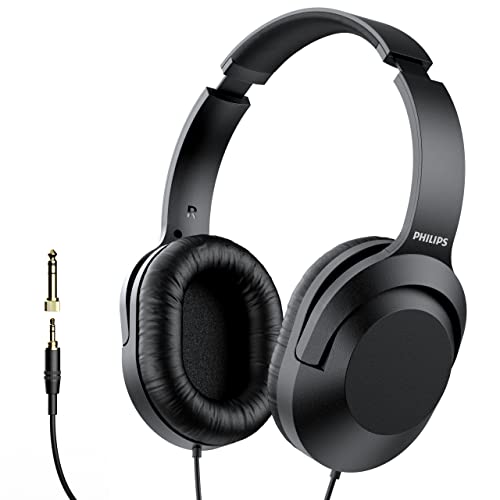
Best for: Versatile use in studios and home setups. Philips headphones sport 40 mm drivers for clear, crisp sound with strong passive isolation. The included 1/4 inch adapter makes it convenient for guitar amps and audio interfaces. Caution: Some listeners may prefer more refined highs; consider swapping to a higher-end model for critical mastering tasks.
LEKATO Guitar Headphone Amp
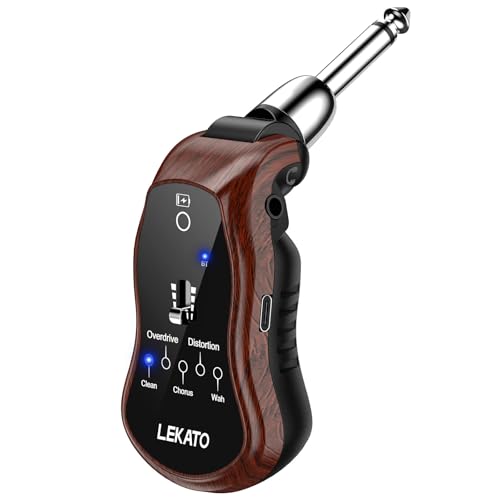
Best for: Private practice with built-in guitar effects. The LEKATO amp includes multiple effects (Clean, Overdrive, Chorus, Distortion, Wah) and Bluetooth input for practicing with backing tracks. It’s a compact solution for guitarists who want silent practice without a loud amplifier. Caution: It acts as a headphone amp and may not replace a full guitar amp for loud live playing.
Buying Guide: Key Purchase Considerations
- Sound signature: Do you need flat monitoring for mixing or a warmer tone for practice?
- Isolation and comfort: Long practice sessions require soft padding and good passive isolation.
- Connectivity: Consider wired versus wireless, 1/4″ adapters, and compatibility with guitar amps or interfaces.
- Durability and fit: Look for robust build and adjustable headbands for extended use.
- Portability: Foldable designs help if you travel with gear or practice in different rooms.
Frequently Asked Questions
- What headphones are best for guitar practice?
– For practice, choose headphones with comfortable cushions and a balanced or flat response to hear your guitar accurately. Closed-back designs help isolate sound in shared spaces. - Should I buy wired or wireless headphones for practice?
– Wired headphones generally offer zero latency and consistent tone. Wireless models are convenient but may introduce latency or compression in some setups. - Is a dedicated monitoring headphone necessary for guitar recording?
– Not strictly, but studio-grade monitors provide more accurate reference for shaping guitar tone during mixing and mastering. - Do I need a 1/4″ adapter?
– If you plan to connect to amps, audio interfaces, or mixers, a 1/4″ adapter is very helpful and commonly included on many models. - What should I avoid when choosing practice headphones?
– Avoid models with overly boosted bass or treble if you primarily need accurate guitar tones for mixing.