When searching for a guitar reverb pedal, the goal is clear: to add depth and space to your tone without muddiness or latency. This guide highlights five top choices across budgets and styles, helping players pick the right fit for practice, recording, or live stage use. Whether you want classic spring sweep, lush plate, or digital versatility, there’s a pedal here for you. The table below summarizes the key picks to compare at a glance, focusing on ideal user types and standout strengths.
| Product | Best For | Why It Stands Out |
|---|---|---|
| Donner Reverb Pedal | Bargain seekers and beginners | Seven modes, true bypass, durable aluminum chassis |
| JHS Pedals 3 Series Reverb | Players seeking tonal versatility | Extremely versatile with room-to-wash textures and EQ control |
| MEDIORAYS Mini Reverb | Road warriors and compact setups | Nine modes in a small, lightweight package with easy status LEDs |
| BOSS RV-6 Reverb | Studio-like reliability on stage | Premium algorithms, straightforward controls, strong build |
| SONICAKE Delay Reverb 2 in 1 | Dual-effect flexibility for live and practice | Two effects in one, delay and reverb with scheduling |
Below, each product is described with a concise profile, who it’s best for, and practical considerations to help you compare quickly. All sections include a direct link to each product on Amazon for quick viewing and purchase decisions.
Donner Reverb Guitar Pedal, Verb Square

The Donner Verb Square provides seven reverb modes: Room, Hall, Church, Spring, Plate, Studio, and Mod. It uses a digital circuit design with true bypass to preserve your tone when the effect is off, and it features a durable aluminum-alloy chassis for portable use. Best for beginner to intermediate players who want a versatile, budget-friendly option without compromising core reverb quality.
Why selected: The broad mode set covers common live and practice needs, enabling quick tonal shifts. Caution: as a multi-mode budget pedal, some users may prefer more refined control over higher-end models for nuanced studio work.
JHS Pedals 3 Series Reverb

JHS Pedals’ 3 Series Reverb is a versatile, premium option designed for players who perform a wide range of styles. It emphasizes extreme tonal flexibility, letting you dial in everything from intimate room sounds to expansive, wash-like textures. The on-board EQ helps shape the reverb’s texture, from bright to dark, ensuring it sits well in various rigs.
Why selected: Ideal for players who want professional-sounding reverb with deep control. Caution: larger footprint and higher price may not suit compact pedalboards or budget-focused buyers.
MEDIORAYS Mini Reverb

The MEDIORAYS Mini Reverb offers nine modes in a compact aluminum chassis, including Room, Hall, Chorus, Duck, Plate, Studio, Echo, and LOFI. It features a true bypass design and a bright LED indicator for status visibility. Best for players needing a compact, lightweight pedal with substantial tonal variety for live gigs or practice spaces.
Why selected: Excellent balance of modes and portability. Caution: small size may limit control precision for users who prefer larger knobs or more tactile feel during live use.
BOSS RV-6 Reverb Guitar Pedal

The BOSS RV-6 offers a compact, studio-grade reverb experience with straightforward controls. It provides rich, expansive reverbs suitable for a wide range of styles and a dependable build that fits both stage and studio environments. Best for players who want reliable, high-quality reverb with intuitive control and consistent performance.
Why selected: The combination of refined algorithms and a simple interface makes it a solid all-around choice. Caution: some users may prefer additional modulation or shimmer options found in higher-end models.
SONICAKE Delay Reverb 2 in 1

The SONICAKE Delay Reverb 2 in 1 packs digital delay and reverb into a single unit. It supports up to 2000 ms delay time and includes a large, schedulable Decay parameter, as well as Trail and Tap Tempo functions for live performances. Best for players who need both effect types in one compact box and enjoy live-toggling between delay-based ambience and reverb textures.
Why selected: Two essential effects in one pedal reduce board clutter. Caution: digital modeling varies with amp interaction, so tone shaping may require careful dialing to avoid washiness in busy mixes.
FLAMMA FC02 Reverb Pedal
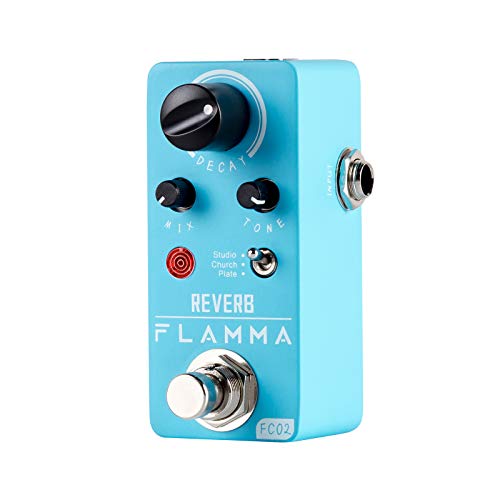
The FLAMMA FC02 provides three reverb types—Studio, Church, and Plate—with true bypass. This gives a solid range of ambient options while ensuring your signal remains untouched when the pedal is off. Best for players who want a simple, three-mode setup without extra features cluttering the signal chain.
Why selected: It’s straightforward to use and dependable for clean, classic reverbs. Caution: lacks more radical effect textures found on top-tier models.
M-VAVE Mini Universe Pro Reverb
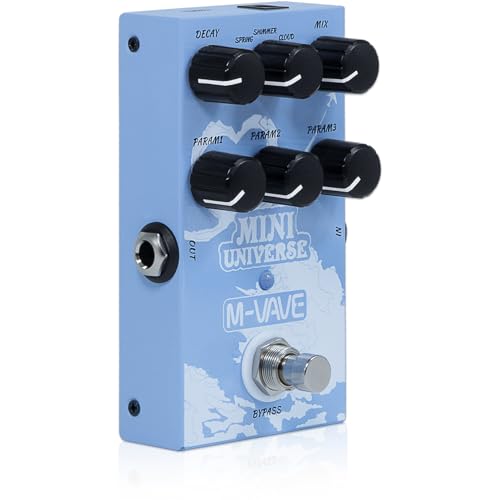
The M-VAVE Mini Universe Pro delivers nine digital reverb effects, including Room, Hall, Plate, Spring, Shimmer, Cloud, Bloom, Swell, and Lo-Fi, in a compact, metal housing. It supports true bypass and dual power options, making it versatile for various setups. Best for players wanting broad tonal variety in a sturdy, small package.
Why selected: The wide library and durable build are strong for gigging players. Caution: power options require attention to adapter compatibility and correct polarity for best results.
Buying Guide: Key Considerations for Choosing a Guitar Reverb Pedal
- Effect range: Do you want classic spring and plate sounds, or modern, lush ambient textures? Pick a model whose modes align with your genre.
- Bypass quality: True bypass minimizes signal coloration when the effect is off. Verify the pedal’s switching method and how it preserves your core tone.
- Knob layout and controls: Easy-to-use, intuitive controls help you dial in sounds quickly during gigs and sessions.
- Build and footprint: If you tour or busk, a sturdy chassis and compact size prevent damage and save space on your pedalboard.
- Power options: Check whether the pedal uses standard 9V DC power or requires batteries, and ensure it fits your power supply plan.
- Reliability for live use: Consider the pedal’s response to foot-switching, especially if you rely on precise on/off transitions.
- Compatibility with other effects: Some reverb pedals pair better with delay, modulation, or overdrive. Plan how you will chain them for the desired texture.
FAQ
- What is a true bypass reverb pedal?
A true bypass pedal preserves your guitar signal by physically disconnecting the circuit when the pedal is off, preventing coloration of your tone.
- Do I need multiple reverb modes?
Multiple modes offer versatility for different songs or genres, but a smaller number of high-quality modes can be enough for beginners.
- Can a reverb pedal replace a reverb in an amp?
It can supplement or replace amp reverb in many setups, providing more control and a broader range of textures.
- Is a larger pedalboard better for reverb tones?
Not necessarily; tone quality comes from the circuit and the overall signal path. Larger boards can offer more options but require careful routing.
- How important is the EQ control on a reverb pedal?
EQ helps tailor the reverb to your guitar and amp, ensuring the effect sits well in the mix without becoming overly bright or muddy.
- Which reverb type is best for live shows?
Plate, hall, and room modes are common live staples. Choose a pedal with reliable, clear algorithms and stable performance.