Answering the common buyer question: which guitar patch cables deliver reliable signal and fit neatly on a crowded pedalboard? This guide highlights five top options, with practical notes on who should choose each. Ideal for players seeking low-noise, compact cables that maximize pedalboard space and maintain tone.
| Product | Best For | Length | Key Benefit |
|---|---|---|---|
| MXR Patch Cable 6 in | Compact pedalboards | 6 in | Transparent signal with rugged build |
| GOGHOST 12 inch Flat Cables | Space-saving routing | 12 in | Low capacitance, clean tone |
| Amazon Basics 6 in 6-Pack | Budget-friendly setup | 6 in | Right-angle versatility, shielding |
| Ernie Ball Flat Ribbon 6 in | Low-profile pedal layout | 6 in | Durable connectors, clutter reduction |
| Heams Premium 6 in | Maximized space, noise-free | 6 in | Premium copper cores, multilayer shield |
MXR Patch Cable 6 In 3 Pack
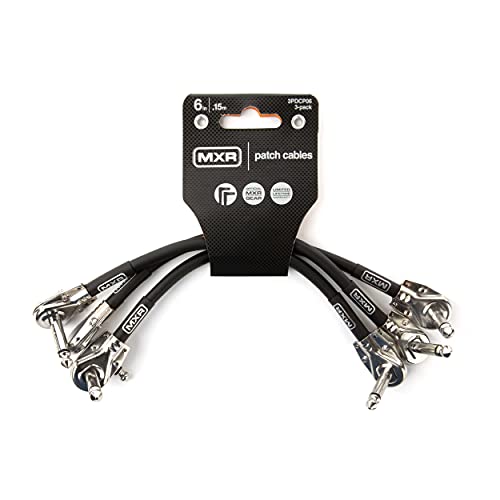
MXR patch cables use 20-AWG oxygen-free copper wire with polyethylene insulation to transmit true instrument tone. They feature a lightweight yet durable PVC jacket, designed to withstand live performance stress. The cables are built to maintain warm, natural tone with clarity, even through multiple pedals. Best for players who need reliable, road-ready patch cables that don’t color the signal.
Best for: players who travel frequently or perform live, and want consistent tone through a dense pedal chain. Limitation: bulkier jackets may be less flexible in ultra-tight pedalboards.
Guitar Patch Cables Gold-Plated Flat Ribbon 4 Pack
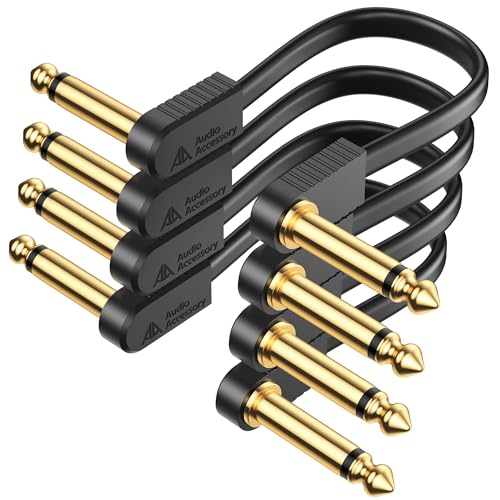
These gold-plated patched cables use compact molded plugs to fit tight pedalboard spaces. The double-layer protection around solder joints helps resist breakage, making them a good choice for busy boards. They are ideal for players who need space-efficient cables that minimize insertion noise and maximize reliability.
Best for: compact pedalboards where fit is critical and corrosion resistance matters. Limitation: premium price and the small plug design may still conflict on extremely crowded boards.
Amazon Basics 1/4 Inch Right-Angle Patch Cable

Amazon Basics offers a six-pack of 6-inch cables with right-angle connectors to allow close pedal placement. The OFC spiral shield and conductive PVC shield help block interference, making them strong all-around performers for standard pedalboards. Best for budget-conscious players who want consistent performance across a full board. Caution: may not be as premium as high-end flat cables in shielding depth.
GOGHOST 12 Inch Flat Patch Cables
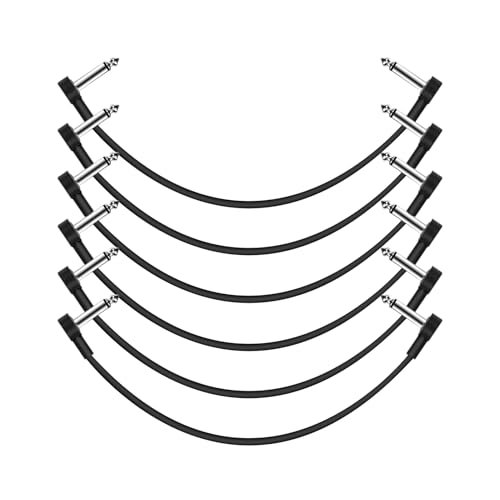
Flat ribbon construction helps keep cables organized and helps reduce pedalboard clutter. They use ultra-pure copper for low capacitance and pure tone, with shielding to maintain noise-free operation. Best for players who want a tidy, space-saving layout with dependable tone through a mid-length patch run. Caution: 12 inches may be longer than needed for ultra-compact boards.
Ernie Ball Flat Ribbon Patch Cable Multi-Pack

Ernie Ball’s flat ribbon design enables easy pedal positioning and reduced cable clutter. The multi-pack includes a mix of small and longer cables, with low-profile metal connectors and strain relief. Best for players needing a varied set of patch cables to adapt a larger board. Limitation: availability may vary by bundle configuration.
Buying Guide
What length should you choose? Shorter cables (6 inches) save space but can be inflexible on wide pedalboards. Longer cables (12 inches) offer routing flexibility but take more space and may introduce more capacitance. Consider your pedal layout and whether you prefer flat ribbon versus round cables for space and noise considerations.
Flat ribbon versus round cables: Flat ribbons typically save space and minimize clutter, while round cables may offer slightly less resistance to microphonics and can be more durable in tight corners. Shielding quality is critical; look for multi-layer shielding or foil-plus-braid shielding to reduce interference in higher-gain setups.
Gold-plated connectors and molded plugs can improve longevity and reduce insertion noise, particularly on busy boards. However, premium features should align with your needs and budget. For live performance, prioritize build durability and space efficiency over flashy styling.
Best practice: test a small set on your board before committing to a larger purchase. Confirm connector fit with your pedal jacks and the available spacing on your pedalboard base to avoid issues in live use.
FAQ
- What length patch cables are best for a compact pedalboard? Six-inch cables maximize space on crowded boards, but check fit with your layout before buying.
- Do flat ribbon cables really save space? Yes, they lay flatter and compress more easily behind pedals, reducing clutter and allowing closer pedal spacing.
- Are gold-plated connectors worth it? They resist oxidation and can reduce insertion noise, which helps in noisy signal chains.
- Should I choose right-angle or straight connectors? Right-angle plugs save space and fit tight layouts; straight plugs can offer easier routing on some boards.
- Is shielding important for patch cables? Yes. Adequate shielding minimizes interference, especially in high-gain or multi-pedal setups.
- Can I mix patch cable brands? Mixing is common; ensure consistent length and shielding quality to maintain a balanced signal across the chain.