Finding the right delay pedal helps shape your tone, texture, and live performance. This guide targets players across skill levels: beginners who want straightforward echo, gigging players seeking versatile presets, and studio enthusiasts chasing warm, analog vibes. We highlight five solid options and explain who each is best for, plus potential limitations. A quick buying table follows to help you compare key choices at a glance.
| Product | Best For | Notes |
|---|---|---|
| Donner Guitar Delay Pedal | Budget players needing warm analog tone | Mini, durable, wide delay range |
| SONICAKE Delay Reverb 2 in 1 | Players wanting digital delay with reverb | Up to 2000ms, live-friendly features |
| BOSS DD-8 Digital Delay | Pro-level versatility and built-in looper | Multiple modes, professional workflow |
| Pogolab Delay Pedal | Analog delay on a budget, mini form factor | True bypass, simple controls |
| MXR Carbon Copy Analog Delay | Classic analog delay with modulation | Rich, tape-echo vibe |
Donner Analog Delay Pedal for Pedals Boards

The Donner pedal recreates a warm vintage analog delay, with a 20ms to 620ms delay range and adjustable delay level and feedback. Its aluminum alloy body is durable and compact, making it ideal for small pedalboards. Best for players who want classic echo without extra features. A potential limitation is that it emphasizes a vintage tone, which may be less flexible for modern, pristine digital delays.
SONICAKE Delay Reverb 2 in 1

This pedal combines digital delay with plate reverb in one unit, offering up to 2000ms of delay time and a sizeable decay control in reverb. It suits players who need a single-compact solution for spacious, ambient tones or live looping with a straightforward interface. Best for modern players who value both delay and reverb in a single stomp box. Limitation: the dual-function design may require careful knob tweaking to dial in combined effects during fast passages.
BOSS DD-8 Digital Delay

The DD-8 represents BOSS’s most versatile compact delay to date, with eleven modes including vintage echoes, shimmer, modulated delays, and a built-in looper offering up to 40 seconds of recording time. It’s best for players who need a broad palette and a reliable looper in a single pedal. Consideration: some users may prefer a built-in expression control for realtime parameter changes during performance.
Pogolab Delay Pedal

This analog-delay pedal emphasizes warm repeats with a simple three-knob control scheme. It uses a true bypass and a compact aluminum body, making it a practical choice for players seeking a straightforward, quiet pedal on a budget. Best for beginners and players who want a no-fuss, transport-friendly option. Limitation: fewer modern features or presets compared to multi-mode pedals.
Kmise Analog Delay
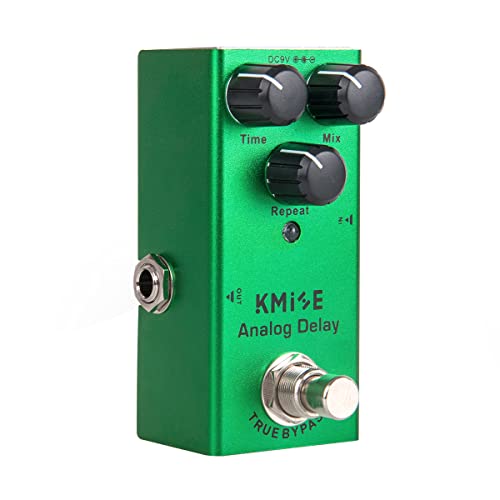
The Kmise Analog Delay offers true bypass and a dedicated Time, Mix, and Repeat knob layout. Made from aluminum alloy, it’s designed for reliable transport on crowded boards. Best for players who want quiet operation and precise control over feedback and mix. Caution: some users report that the learning curve for dialing in the exact analog tone may be steeper than plug-and-play digital options.
JHS Pedals 3 Series Delay
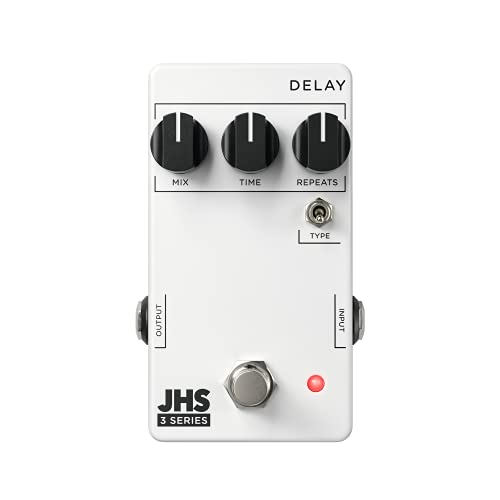
The JHS 3 Series offers 80ms to 800ms delay with a Type selector for digital-voiced or analog-voiced trails. It’s tailored for players who want a high-quality, American-made feel with a focus on tone and simple operation. Best for guitarists who need a reliable, tonal delay with straightforward controls. Limitation: a premium option that may be outside some budget ranges.
MXR Carbon Copy Analog Delay

MXR’s Carbon Copy delivers rich, all-analog delay up to 600ms with modulation to emulate tape echo tones. It’s a favorite for players seeking a classic, warm echo character with reliable performance. Best for traditional analog tone purists and songwriters who rely on dependable, timeless delay. Caution: fewer digital features may limit modern modulation options for ambient soundscapes.
Buying Guide: Key Considerations for Delay Pedals
What delay tone matters most to you? Analog delays deliver warmth and natural repeats, while digital delays offer precise timing and longer trails. Consider your main guitar style—rock, blues, jazz, or ambient—and your live setup when choosing a pedal.
- Delay Time Range: If you need slapback plus long ambient washes, look for pedals offering a broad range (e.g., 80ms–800ms or more).
- Delay Type: Analog, digital, or hybrid. Analog delivers warmth; digital offers pristine repeats and longer time, with modulation options available in some units.
- Controls: Time, feedback, and mix are standard. Some pedals add Tap Tempo, Trail, or Modulation controls for more texture.
- Bypass Quality: True bypass helps preserve your clean tone when the pedal is off. Check the total signal integrity in your chain.
- Looper and Presets: Built-in looper or preset options can simplify live performance or songwriting workflows.
- Size and Durability: Pedalboard space and build quality matter for gigging. Aluminum bodies tend to be sturdy for travel.
- Price-to-Feature Ratio: Higher-end models offer more modes, longer delay times, and better converters, but budget options still deliver classic analog vibes.
FAQ
- What is the difference between analog and digital delay?
- Do I need a looper in a delay pedal?
- Is true bypass important?
- What delay time should a beginner start with?
- Should I choose a compact pedal or a larger multi-mode unit?
Analog delay uses bucket-brod-time-based repeats for a warmer, natural feel, while digital delay stores a duplicate signal for precise, longer repeats and cleaner echoes.
A looper is helpful for layering ideas live, practicing loops, or performing song sections hands-free. It’s not essential for every player.
True bypass minimizes tone loss when the pedal is off, which matters for players wanting a transparent signal path.
Starting around 200–400ms is common for general rhythm and slapback tones. You can gradually explore longer delays as you become comfortable.
Compact pedals are great for simple setups and portability. Multi-mode units offer more tonal options and flexibility for diverse genres.