Answering the buyer’s search for authentic amp tones and flexible direct-recording options, these guitar amp simulators and multi-effects units cover everything from classic American crunch to modern high-gain. They’re suited for players who want studio-grade tones, stage-ready direct outputs, or portable practice rigs. The top picks here emphasize clear cabinet IRs, versatile presets, and reliable model accuracy for live performances and home recording alike. The table below compares the five selected products at a glance.
| Product | Best For | Key Strength | Limitations |
|---|---|---|---|
| JOYO American Tube Amp Simulator & Preamp (JF-14) | Direct recording and stage backup | Built-in cabinet simulation; six-knob control | Limited model variety compared to multi-effects |
| JOYO Amp Simulator Preamp House R-15 | Two-channel tone switching | Nine amp models; dual channel with savable presets | Global preset storage may require planning |
| Two Notes ReVolt All-Analog Pedal | Analog warmth and MIDI control | All-analog preamp with MIDI I/O and cab sim | Higher price bracket for some buyers |
| BOSS IR-2 Amp & Cabinet Emulator | Premium IR loading in a compact pedal | 32-bit processing; Celestion IRs | Limited to cabinet IRs and amp types compared to full floor multis |
| MOOER GE150 Pro (and Pro Li) | Extensive tone library on the go | 200 presets, 55 amp models, 26 cab sims | Software updates may affect feature access |
JOYO American Tube Amp Simulator & Preamp (JF-14)
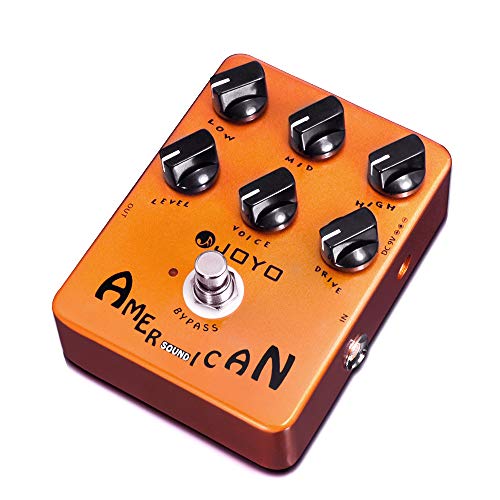
The American Sound model provides classic American tube amp tones, from sparkling Blackface cleans to mid-forward Tweed overdrive. It’s suited for players who need a reliable direct-to-PA or mixer option for live use or home recording. The six-knob control (Level, Drive, Low, Mid, High, and Voice) lets users shape a signature tone. The Voice knob offers a clear path between scooped cleans and thick overdrive. Best for players seeking an affordable, compact solution with direct-recording capability and a familiar amp-like feel.
Who it’s best for: performers who may rely on a direct output for gigs or home studios, and players who want a quick, dialed-in American tone without mic’ing a cabinet. This unit can serve as a constant backup if the main amp fails on stage. Caution: the unit emphasizes amp flavor over expansive model variety, so if you want a broad tonal palette, consider pairing with other processors.
JOYO Amp Simulator Preamp House R-15

With nine amp models and two channels, the Preamp House R-15 delivers a broad tonal palette. It provides a dedicated Clean and Distortion channel per amp model, yielding 18 distinct tones. Built-in impulse responses (IR cab sim) and an XLR output support direct stage and studio workflows. This unit is best for players who want quick access to a wide variety of tones in a compact box and plan to use direct outputs for PA systems or interfaces. Caution: paired with heavy gigging rigs, you may prefer an option with more savable presets per amp model for live switching.
Best for: players who switch styles often and want two channels per model with easy preset management for live sets. Choose this if you value built-in IRs and direct outputs on a compact pedal. Limitation: global storage may require strategic planning around which tones you save for which gigs.
Two Notes ReVolt All-Analog Guitar Amp Simulator Pedal
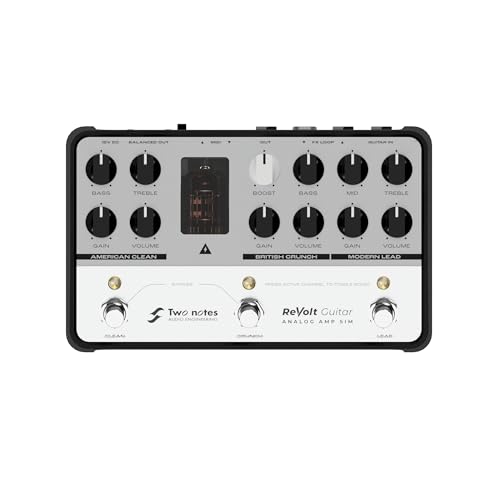
The ReVolt pedal emphasizes analog tone in a compact form, with a 12AX7 tube, analog cab simulation, and MIDI I/O. It suits players who prefer an all-analog signal path with external control options, and who want a dedicated preamp stage that can drive either a real or simulated cabinet. Best for purists who seek a warm, tactile feel in a compact pedal. Caution: analog tone depends on external cabinet and mic choices when used in tandem with other gear, which may require additional setup time.
MOOER GE150 Pro Li (Battery Powered)

The GE150 Pro Li model is designed for portability and extended battery life, offering 200 presets, 55 amp models, 26 cab sims, and MNRS support. It comes in two editions: the standard mains-powered and the Li battery version, which adds significant runtime for practice or travel. This unit is best for players who need a full tonal library on the go and want a robust expression pedal and four footswitches for patch navigation. Caution: software updates can change feature access, so keep the system current to maximize performance.
Buying Guide
What should I look for in a guitar amp simulator?
- Model variety vs. analog warmth: Decide whether you prioritize many amp models or a traditional, analog feel. Some units mix both approaches.
- Direct output quality: If you frequently record or play live through a PA, choose models with reliable IRs and balanced outputs (XLR).
- Presets and saveability: If you perform live, ensure the unit can store and recall quick patches without lengthy setup.
- Cabinet realism: Look for credible cabinet simulations or IR libraries that suit your preferred genres.
- Portability and power: Battery-powered options are valuable for rehearsals on the go; mains-powered units may offer more headroom.
- Controls and usability: Simple knobs for core tone shaping help reduce setup time during gigs.
Practical tips for choosing
- Match your genre: For blues and classic rock, prioritize clean-to-crisp crunch models; for metal, focus on high-gain models and reliable IRs.
- Plan the workflow: If you rely on a DI path, ensure the device provides a clean DI or XLR option without extra gear.
- Check compatibility: Consider how the unit interfaces with your DAW, audio interface, or pedalboard.
Frequently asked questions
- What is an amp simulator pedal? It models the sound of a guitar amp and speaker cabinet, often with built-in effects and direct outputs.
- Why use IR cab simulations? IRs provide a more consistent and controllable speaker-cabinet tone for direct recording and live use.
- Are analog amp pedals better than modeling pedals? Analog pedals offer a warm, natural response; modeling pedals provide a broader range of sounds and easier tonal recall.
- Can these units replace a real amp? For many players, yes—especially for recording and silent practice. Stage use depends on output compatibility.
- Do these units require a power supply? Most can run from a standard 9V or higher supply; battery-powered options exist in some models.
- Do I need an audio interface to use with a computer? If you plan to record or re-amp, an audio interface with proper input/output is recommended.