Whether you’re upgrading an existing track lighting setup or refreshing recessed fixtures, GU10 LED bulbs offer energy efficiency, longer life, and improved color rendering. This guide highlights five solid options to fit common needs—from dimmable, warm-white accents to bright daylight for task lighting. Each product is explained with who it’s best for, why it stands out, and a practical limitation to consider. Ideal buyers include homeowners updating living spaces, designers refining mood lighting, and DIYers seeking low-maintenance bulbs with clear color rendering.
Summary table of selected products
- SETEN 6-Pack GU10 LED Bulbs Dimmable — Best for cozy, warm accents in living rooms or bedrooms; 3,000K, high CRI, dimmable.
- Amazon Basics MR16 LED Light Bulb (GU10 Base) 6-Pack — Best overall value; 3,000K, dimmable, energy-saving replacement.
- Lepro Non-Dimmable GU10 LED Bulbs 6-Pack (5000K) — Best for bright, daylight task lighting in kitchens or work areas.
- DEWENWILS 10-Pack GU10 LED Bulb Dimmable 3000K — Best for larger installations requiring smooth dimming and long life.
- Lepro Non-Dimmable GU10 2700K 6-Pack — Best for warm, cozy ambient lighting in home theaters or dining areas.
SETEN 6-Pack GU10 LED Bulbs Dimmable, 6W, 3000K Soft White
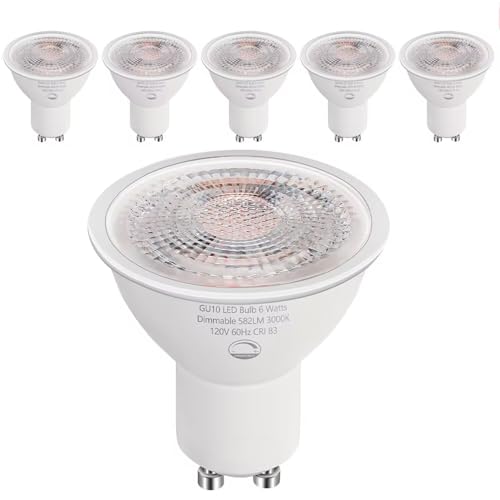
Best for warm, inviting spaces with recessed or track lighting. These 6W bulbs deliver the look of a traditional 50W halogen with modern efficiency and 582 lumens. The 3000K soft white enhances color warmth and realism with a high 80 CRI for more natural-looking artwork and furnishings. They are dimmable for mood control and suitable for living rooms, bedrooms, and hallways that benefit from cozy illumination.
Who it’s best for: homeowners who want a dimmable, warm-white option without changing fixtures. Why selected: strong warm ambience, good color rendering, and energy savings. Caution: not compatible with candle warmers; verify fixture compatibility with dimming controls.
Amazon Basics MR16 LED Light Bulb, 50W Equivalent, GU10 Base, 7W, 6-Pack

Best for value-conscious buyers seeking a straightforward replacement for halogen MR16 setups. These 7W bulbs consume far less energy than incandescent equivalents while matching about 50W lamp output. A 10,000-hour lifespan reduces replacement frequency, making them suitable for high-change areas like hallways or kitchens with numerous fixtures.
Who it’s best for: budget-minded renovators seeking reliable, long-lasting performance. Why selected: proven energy savings and a broad base compatibility profile. Caution: performance claims are based on general estimates; verify dimming compatibility if you use dimmer controls.
Lepro Non-Dimmable GU10 LED Bulbs 5000K Daylight (6 Pack)
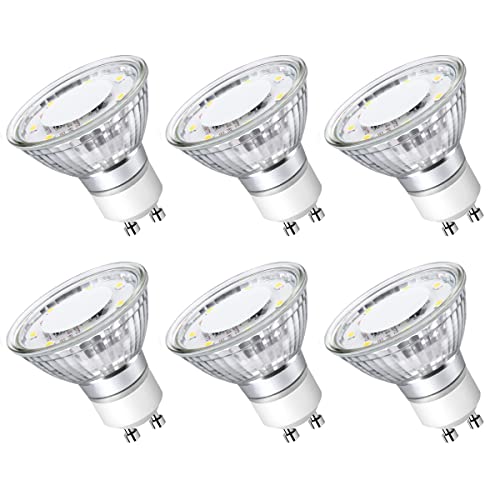
Best for bright task lighting and environments requiring clear daylight illumination. These 4W bulbs replace 50W halogen lamps, delivering about 350 lumens at a 100° beam angle. Not dimmable, making them ideal where steady, daylight-like light is preferred in kitchens, workspaces, or bathrooms.
Who it’s best for: designers prioritizing daylight accuracy over mood dimming. Why selected: high CRI and broad beam aid visibility and color fidelity. Caution: not dimmable; avoid in fixtures with dimmer switches or circuits.
DEWENWILS 10-Pack GU10 LED Bulb Dimmable, 3000K

Best for larger installations needing reliable dimming with a consistent warm tone. Each 7W bulb outputs about 500 lumens and features smooth 10%-100% dimming. The 10,000+ hour lifespan reduces maintenance in kitchens, living rooms, and offices with multiple fixtures.
Who it’s best for: households with several recessed lights that require precise dimming and warm ambience. Why selected: strong dimming range and energy efficiency. Caution: ensure your dimmer switch is compatible with LED GU10 bulbs to avoid flicker or limited dimming range.
Lepro Non-Dimmable GU10 LED Bulbs 2700K 6-Pack
Best for warm, intimate ambience where dimming is not required. The 4W bulbs provide about 350 lumens with a 100° beam, suitable for living rooms or dining areas. They replace 50W halogen bulbs and offer long life, reducing replacement frequency.
Who it’s best for: spaces requiring steady, soft-wocused warmth without dimming. Why selected: comfortable 2700K warmth and good energy savings. Caution: not dimmable; pair with fixed-light scenes where dimming isn’t needed.
Buying Guide: Key Considerations For GU10 LED Bulbs
- Color temperature: Choose 2700K-3000K for warm, cozy ambience; 4000K-5000K for daylight task lighting. Consider room function and existing décor.
- Dimming capability: If your fixtures use dimmers, pick fully dimmable GU10 LEDs and ensure dimmer compatibility with LEDs.
- Beam angle and brightness: A 100° beam angle is common for even coverage; 40° beams can highlight artwork or focal points. Compare lumens to estimate brightness relative to your needs.
- CRI (Color Rendering Index): Higher CRI (80+ or 90+) yields truer colors for furnishings and artwork. Prioritize higher CRI in living spaces and display areas.
- Wattage and equivalence: LED wattage differs from halogen equivalents. Look for stated lumens and the wattage to gauge energy savings and brightness.
- Base compatibility and size: GU10 bases fit specific fixtures; verify the bulb’s height and diameter to avoid clearance issues in recessed cans or tight fixtures.
- Lifespan and maintenance: Longer lifespans reduce replacements, especially in hard-to-reach fixtures. Consider 10,000–15,000 hours or more.
- Flicker and compatibility: Some non-dimmable bulbs can flicker when used with dimming controls. Confirm fixture and switch compatibility before upgrading.
Frequently Asked Questions
- What does GU10 mean? It refers to the two-pin, twist-lock base used by many downlights and track lighting fixtures.
- Are GU10 LED bulbs dimmable? Some are; check product specs. If using a dimmer, ensure the LED bulb and dimmer are compatible.
- Do GU10 bulbs last longer than halogen bulbs? Generally yes, offering thousands of additional hours of life and lower energy use.
- Can I use daylight bulbs in a living room? Yes, for task-oriented spaces or brighter ambience, but consider comfort and mood implications.
- What beam angle should I choose? 100° is common for general lighting; smaller angles are better for accent lighting or artwork.
- How do I know if a bulb fits my fixture? Check the bulb height and diameter, along with the GU10 base compatibility with your recessed can or track fixture.