Answering the common question, the best glues for bonding plastic to plastic are fast-setting, impact-tough formulations that create strong, durable bonds across common plastics like ABS, PVC, acrylic, and polyolefins. This guide highlights five reliable options, each suited to different needs—from precision fixes to bulk repairs. Ideal buyers include hobbyists and DIYers repairing models or toys, homeowners resealing plastic parts, and workshop pros needing dependable plastics bonding.
Overview of top picks:
| Product | Best For | Key Benefit | Limitations |
|---|---|---|---|
| Y’allCanDiy Plastic Glue | General plastic repairs | 15-second dry time, high strength | May require longer cure for heavy loads |
| Gorilla Super Glue Gel XL | Vertical surfaces, small parts | No-drip gel for precise applications | Gel still needs proper clamping for some joints |
| GH1200 (2-in-1) Plastic Glue | Large surfaces, precise application | Brush applicator and nozzle for control | May require multiple applications for large areas |
| J-B Weld Plastic Bonder | Challenging plastics and structural bonds | Strong, long-lasting with 3770 psi | 15-minute set, not instant |
| Loctite Plastics Bonding System | Hard-to-bond plastics | Two-part system with activator for better adhesion | Kit-based setup more involved |
Y’allCanDiy Plastic Glue for Models and More

Best for versatile plastic repairs around the home or workshop, Y’allCanDiy Plastic Glue is formulated to bond PVC, ABS, acrylic, and similar plastics with high strength. The 15-second quick-dry formula supports fast model fixes or toy repairs. It is appropriate for light-to-medium duty applications where a quick set is valuable. The product is especially suitable for hobbyists who need reliable bonds on models, miniatures, and small plastic components.
Who this is best for: hobbyists and DIY enthusiasts repairing models or Lego-like builds, or homeowners tackling small plastic fixes. Why selected: it combines speed with strong bonding across a range of plastics, making it a practical first choice for quick repairs. Caution: allow full cure time for heavier loads and avoid subjecting joints to heavy stress immediately after repair.
Gorilla Super Glue, Fast-Setting, Clear

Best for precise small repairs and jewelry fixes, this Gorilla option uses a compact 3 g tube with an anti-clog cap. Its impact-tough formula bonds quickly, typically in 10 to 45 seconds, and dries clear. The gel-like consistency helps prevent runs on vertical applications. This choice is ideal for quick fixes on small plastic parts, electronics housings, or model components that require controlled placement.
Who this is best for: travelers, hobbyists, and anyone needing a precise, no-muss bond on small plastic parts. Why selected: its compact size and anti-clog cap keep usage clean and predictable. Caution: not ideal for larger surface area bonds or high-load structural joints; consider a stronger system for bigger repairs.
GH1200 2-in-1 Plastic Glue with Brush and Nozzle

Best for large-area bonding with clean application, GH1200 provides a built-in brush applicator plus an anti-clog nozzle for controlled dispensing. This dual-option design supports precise or broad applications on plastic models and DIY projects. The adhesive claims waterproof and long-lasting bonds, making it suitable for items that may be exposed to moisture or handling. Caution: the precision of the brush helps with fine work, but larger joints may require multiple passes for full strength.
J-B Weld Plastic Bonder Body Panel Adhesive
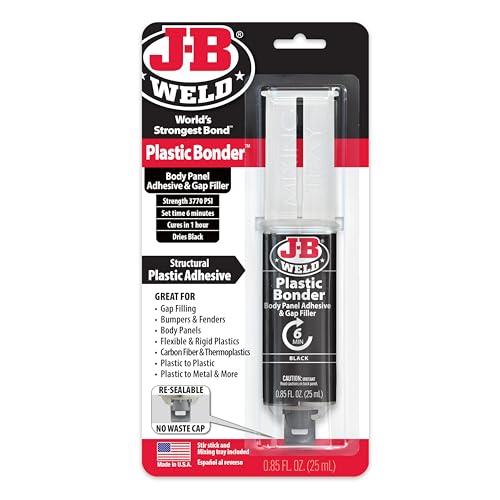
Best for challenging plastics and structural repairs, J-B Weld Plastic Bonder is a 2-part urethane system with a 1:1 mixing ratio. It sets in about 15 minutes and can be sanded after 30 minutes, delivering a hard, permanent bond with high tensile strength. This product is well-suited for automotive panel repairs, coated plastics, or projects requiring a durable, load-bearing bond. Caution: longer cure time means plans should accommodate a period before final finishing or painting.
Loctite Plastics Bonding System

Best for hard-to-bond plastics such as PE, PP, and PTFE, this Loctite two-part system primes surfaces and uses an activator to enhance bonding. It provides strong, durable adhesion without clamping or mixing beyond the kit setup. This choice is ideal for plastics known to resist traditional cyanoacrylates or when a primed surface improves long-term durability. Caution: it requires following the activator and primer steps for best results.
Buying Guide
What type of plastic are you bonding?
Some glues perform better on specific plastics. For general purpose bonding across ABS, PVC, and acrylic, fast-setting cyanoacrylates with good gap-filling work well. For polyolefins like PE and PP, activator-based systems or two-part epoxies may provide stronger, long-lasting bonds.
How fast do you need a cure?
Instant-to-30-second bonds suit quick repairs and model work. If you’re repairing load-bearing parts or areas exposed to stress, choose products with longer cure times that reach full strength after hours.
Do you need precision or bulk application?
Gel formulas and brush/nozzle systems excel at precision or large areas respectively. Gel helps with vertical surfaces; brush/nozzle tools aid large-area coverage.
Is the bond moisture-resistant or heat-tolerant?
Waterproof or heat-resistant bonds are important for exterior items or parts near heat sources. Check product specs for cure conditions and exposure limits.
Is ease of use important?
Two-part systems require mixing or priming but can produce very strong bonds on difficult plastics. Pre-mixed adhesives with built-in applicators offer simpler operation for quick fixes.
What about safety and surface preparation?
Prepare surfaces by cleaning and drying. Lightly sanding the bonding area can improve adhesion. Always follow product instructions for ventilation and skin protection.
FAQ
- What glue works best on plastic to plastic? A high-strength cyanoacrylate or two-part epoxy designed for plastics often delivers the strongest, quickest bonds, depending on the plastic type.
- Can these glues fix model kits permanently? Yes, most of the options shown provide durable bonds suitable for models, miniatures, and toys when applied correctly and given proper curing time.
- Do I need to clamp plastics during bonding? Some bonds cure without clamping, but clamping or steady pressure helps achieve a stronger, gap-free joint, especially on large surfaces.
- Are there safety concerns with these glues? Use in a well-ventilated area, avoid skin contact, and wear gloves if needed. Follow manufacturer safety guidance on the label.
- How should I choose between a gel and a liquid glue? Gel is better for vertical surfaces and precise spots; liquid provides faster setting and deeper penetration for gaps or porous surfaces.
- Can I repaint after bonding? Some glues tolerate painting after full cure; verify compatibility and allow complete curing before finishing.