Answering the top search intent, this guide helps buyers choose the best neoprene glue for repairs on wetsuits, waders, and related gear. These products are ideal for outdoor enthusiasts, divers, surfers, and anglers who need quick, reliable fixes that move with the fabric. The featured options cover contact cements, flexible repair adhesives, and kit-style solutions suitable for high-wear areas. The table below provides a quick snapshot to compare core strengths and ideal uses.
| Product | Best For | Notes |
|---|---|---|
| GEAR AID Aquaseal NEO Contact Cement (14110) | Professional wetsuit repairs and gloves | Fast, permanent bond; black, flexible finish |
| GEAR AID Aquaseal FD | Various fabrics including neoprene | Clear, flexible; excellent for patches |
| GEAR AID Aquaseal NEO (4 oz) | High-wear neoprene gear | Fast-drying, durable, stretchy |
| Bondtech Rubber Glue | Rubber-to-rubber repairs | Strong, versatile; precision application |
| EIGTWEN 120ml Wetsuit Repair Kit | Wetsuits, gloves, boots | Saltwater resistant, flexible bond |
GEAR AID Aquaseal NEO Contact Cement for Neoprene and Wetsuit Repair
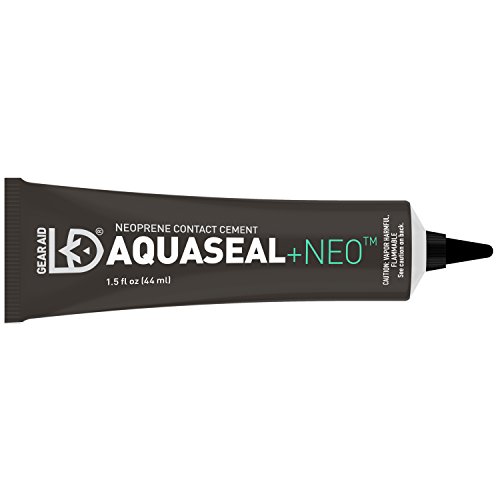
Best for: Neoprene wetsuit and glove repairs that require a rapid, long-lasting bond. This contact cement cures to a black, flexible rubber that moves with fabric, making it ideal for knees, elbows, and other high-wear areas.
- Fast, permanent repair within about 30 minutes.
- Adheres to neoprene, latex, and coated materials; suitable for drysuits and spray skirts.
- Recommended for repairing torn wetsuits, waders, and reusable gear.
Limitations: The black cure may show on lighter fabrics; ensure color compatibility if appearance matters for the repair area. Best results come from clean, dry surfaces and even pressure during curing.
GEAR AID Aquaseal FD Flexible Durable Repair Adhesive

Best for: Patching holes and sealing leaks in waders, wetsuits, PVC inflatables, and other outdoor gear. Clear glue dries to a flexible urethane rubber, forming a watertight seal that resists peeling and cracking over time.
- Versatile: neoprene, nylon, canvas, leather, rubber, and GORE-TEX fabrics are compatible.
- Cures in 8-12 hours; available in 0.75 oz or larger sizes for bigger jobs.
- Excellent choice when a clear, unobtrusive repair is desired.
Limitation: Drying time may be longer in cool or humid environments; plan repairs with adequate cure time.
GEAR AID Aquaseal NEO Neoprene Contact Cement

Best for: Fast repairs on wetsuits, waders, and neoprene gear that require stretchable, durable patches. The 4 oz option increases repair coverage for larger areas or multiple repairs.
- Black, flexible rubber finish ensures patches move with fabric without cracking.
- Suitable for high-wear areas like knees and cuffs to extend gear life.
- Contains versatile bonding power for neoprene and coated materials.
Limitation: May require careful surface prep to avoid air pockets; apply in even, smooth layers for best adhesion.
Bondtech Rubber Glue

Best for: Rubber-to-rubber repairs and attachments across neoprene, rubber, plastic, metal, and wood. This adhesive is designed for precision application to small, hard-to-reach spots.
- Strong, fast bond with broad material compatibility.
- Three droppers with fine tips allow controlled applications for delicate repairs.
- Clear guidance on applying and preventing droppers from clogging during use.
Limitation: As with many rubber adhesives, avoid over-application to prevent excessive curing times; use sparingly on delicate seams.
EIGTWEN 120ml Wetsuit Repair Kit

Best for: Wetsuit repairs that require a saltwater and wear-resistant bond. Suitable for tears, holes, or split seams on wetsuits, dive skins, and related gear.
- Waterproof barrier designed for damp conditions and daily wear.
- Flexible bond that moves with gear to prevent cracking or stiff patches.
- Works with PVC, inflatable items, and synthetic materials beyond wetsuits.
Limitation: Not all users may need a full kit; consider whether you prefer a dedicated single-tube adhesive or a kit with multiple components for versatility.
Buying Guide: Neoprene Glue Essentials
What to consider when choosing neoprene glue:
- Material compatibility: Look for adhesives designed for neoprene, coated fabrics, and rubber to ensure a watertight, flexible bond.
- Drying and curing time: Faster cures are convenient for on-site repairs, but ensure you have time for a complete cure in your environment.
- Flexibility vs. stiffness: Neoprene patches should remain flexible to move with the fabric; avoid rigid dries for high-mobility areas.
- Transparency and color: Clear adhesives are ideal for appearances on light-colored gear, while black cures can blend with dark neoprene.
- Surface prep: Clean, dry surfaces yield stronger bonds. Some products advocate roughening the surface or applying pressure during curing.
- Application method: Consider whether you need a built-in brush, precision droppers, or a simple squeeze tube for large patches.
- Durability under water and salt: For wetsuits and waders, select water-resistant or waterproof formulations that resist saltwater exposure.
- Repair scope: For large tears, a stronger adhesive with a larger coverage area is preferable; for small nicks, precision tools help.
Frequently Asked Questions
- What is the best glue for neoprene repairs? – A neoprene-specific contact cement or flexible repair adhesive with good stretch and water resistance is typically best, especially for high-mobility areas.
- Can these adhesives be used on all neoprene gear? – Most are suitable for wetsuits, waders, gloves, and booties; verify fabric compatibility on the packaging.
- How long does it take neoprene glue to cure? – Curing times vary; some products cure in 30 minutes to form initial strength, full cure can take several hours.
- Will the repair be watertight? – Many formulations create watertight seals when fully cured; use proper surface prep to maximize sealing capabilities.
- Is color important for appearance? – Clear adhesives are less noticeable on light fabrics; darker glues or black cures blend better with most neoprene.
- Should I use a kit or a single tube? – Kits offer versatility for multiple gear types; single tubes are cost-efficient for targeted repairs.