Answering the question most buyers have: which fly tying tools deliver consistent results for beginners, travelers, and seasoned tiers? This guide highlights five well-rounded options, explaining who each tool set is best for, and why they stand out. It covers portability, core functionality, and ease of use to help you pick tools that fit your style and goals.
Quick comparison summary
| Product | Best For | Key Benefit |
|---|---|---|
| Beginners and travelers | All-in-one kit with 12 tools and four bobbins, retro bag for organization | |
| Progressing tiers and pros | Premium rotary vise and complete set in a wooden box | |
| On-the-go starters | Compact, essential tools with a portable case | |
| Compact kits and backups | Five essential tools with built-in threading aids | |
| Precise, dedicated tiers | True rotary vise with balanced operation |
XFISHMAN Fly Tying Tool Kit 12 in 1
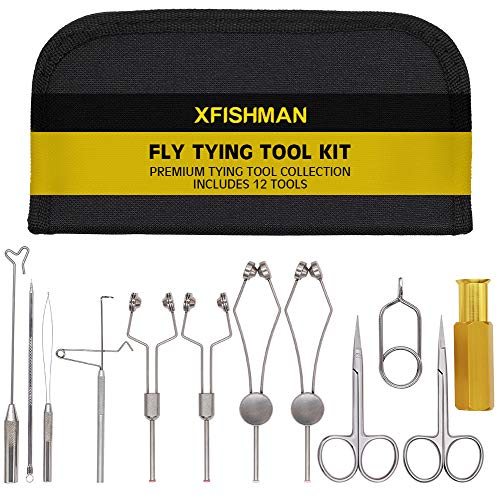
The XFISHMAN kit is designed as a budget-friendly all-in-one option for beginners and travelers. It includes 12 basic tools and four bobbins to reduce the need for constant rethreading. The retro tool bag helps keep components organized during travel. Best for learners who want multiple tools in one portable package.
Who it’s best for: Beginners who want a broad starter toolkit and travelers who need portability without purchasing many separate items.
Why selected: Its value proposition centers on breadth of tools and improved efficiency with four bobbins, along with a compact carrying bag.
Limitations: The kit may lack some high-end refinements found in pro-grade vices; ideal when you prioritize variety and portability over specialization.
Colorado Anglers Fly Tying Standard Tool Kit

This kit comes in an elegant wooden box and centers on a premium rotary vise, plus essential tools like a bobbin, scissors, and a whip finisher. It’s engineered for both beginner and advanced users who want a complete, organized setup with a touch of sophistication. Best for home setups and long-term practice.
Who it’s best for: Those who value a stable, professional vise and a cohesive set in a stylish container.
Why selected: The premium rotary vise and the full tool lineup offer precision and durability for ongoing projects.
Limitations: The wooden box, while stylish, adds weight and may require care to maintain its appearance.
Kingfisher Fly Tying Intro Fly Tying Tool Kit Brass
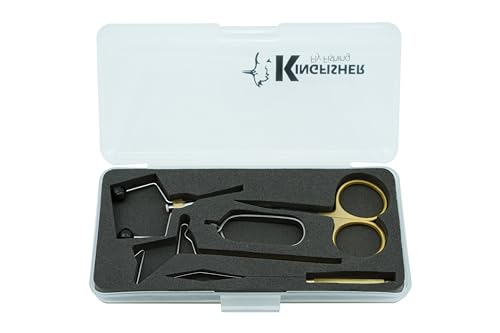
This beginner-friendly kit focuses on portability and core tying tools. It includes a hackle plier for material wrapping, a stout ceramic-insert bobbin, and a bobbin threader for easy setup. It’s ideal for on-the-go tying sessions, camp trips, or tying at a friend’s place.
Who it’s best for: The on-the-go tiers who need a compact, reliable starter set.
Why selected: The inclusion of a threader and ceramic-insert bobbin simplifies setup and thread control for novices.
Limitations: It focuses on essential tools, so advanced tiers may want to upgrade specific items later.
5 Pcs Fly Tying Tools Set (Skylety)

This five-piece set covers essential tying tasks with a whip finisher, scissors, and bobbin tools designed for durability. A threader helps users pass thread through the bobbin, reducing frustration and saving time during setup. Best for occasional tiers or as a compact backup kit.
Who it’s best for: Tiers who want a compact set with practical threading aids and sturdy cutting tools.
Why selected: The threading aids reduce common setup issues, while the scissors and bobbin components are sized for easy handling.
Limitations: Fewer tools than larger kits, so some projects may require additional items for advanced techniques.
Kingfisher Clarkfork Fly Tying Vise Kit

This kit centers on a true rotary vise with two ball bearings for exceptionally smooth operation. It supports larger hook sizes from 26 to 4/0 and uses hard anodized marine-grade aluminum components for durability. Best for dedicated tiers seeking precise, balanced tying performance.
Who it’s best for: Tiers who prioritize a high-precision vise and long-term stability in their setup.
Why selected: The dual-ball-bearing rotary vise and robust construction provide reliable rotation and control for intricate flies.
Limitations: The kit’s value is higher for serious hobbyists; casual tiers might not need the full precision features.
Buying Guide: How To Choose The Right Fly Tying Tools
What matters most when selecting fly tying tools?
- Experience level: Beginners benefit from complete starter kits, while advanced tiers may prefer high-precision vises and specialized tools.
- Portability vs. durability: Travel-friendly kits prioritize compact packaging, while home setups may favor heavier, stable tools.
- Core needs: Decide if you need a full set (vise, bobbins, scissors, whip finisher) or a focused subset (scissors, bobbin, threader).
- Tool quality: Ceramic inserts, hardened jaws, and anodized aluminum increase longevity and control for delicate materials.
- Organization: A case or wooden box helps keep items protected and easy to transport.
Frequently Asked Questions
- What is the essential tool every new fly tyer should own? A reliable bobbin, scissors, and a whip finisher are foundational for most flies.
- Are rotary vises worth the upgrade for beginners? Rotary vises offer better access to the entire fly and can improve accuracy, but beginners can start with a basic non-rotary vise to learn technique.
- Should I buy a complete kit or individual tools? A complete starter kit offers convenience and cost savings for newcomers, while experienced tiers may tailor sets to specific needs.
- Is portability important for fly tying tools? If you tie on trips or at locations away from your workbench, a portable kit with a protective bag is beneficial.
- What materials should I consider for durability? Look for tools with stainless steel components, ceramic inserts in bobbins, and hard anodized aluminum parts for longevity.
- Do higher-priced vises improve tying quality? Higher price often correlates with smoother rotation and better balance, which can improve consistency in intricate ties.