Whether you’re revisiting film after years away or starting a new analog project, these 35mm cameras offer reliable exposure control, easy handling, and lasting value. This guide highlights five picks across SLRs, compact half-frame options, and point-and-shoot styles. It targets shoppers who want a tactile shooting experience, clear exposure controls, and compatibility with common lenses or film formats. The table below summarizes key details to compare at a glance.
- Vintage Canon AE-1 — Best for enthusiasts who want classic controls and interchangeable lenses.
- Canon New EOS Kiss — Best for beginners who want autofocus and a familiar brand ecosystem.
- Canon Rebel 2000 — Best for learners seeking a straightforward 35mm SLR with built-in flash.
- KODAK EKTAR H35 Sage — Best for travelers wanting lightweight half-frame versatility.
- Fujifilm QuickSnap Flash 400 — Best for casual shooters needing an inexpensive, ready-to-use option.
| Product | Type | Best For | Why It Stands Out |
|---|---|---|---|
| Vintage Canon AE-1 | SLR | Enthusiasts | Shutter-priority exposure, TTL metering, and Canon FD lens compatibility. |
| Canon New EOS Kiss | SLR | Beginners | Autofocus with wide-area control and simple, user-friendly interface. |
| Canon Rebel 2000 | SLR | Learners | 35mm format with 7-point AF and built-in flash for everyday use. |
| KODAK EKTAR H35 Sage | Half-frame | Travelers | Twice as many exposures per roll; lightweight and easy-to-use. |
| Fujifilm QuickSnap Flash 400 | One-time-use | Casual shooters | Pre-loaded ISO 400 film with built-in flash; convenient and affordable. |
Vintage Canon AE-1 35mm SLR Camera with 50mm 1:1.8 Lens

Features include shutter speeds from 1/1000 to 2 seconds plus Bulb for long exposures, a built-in TTL metering system for accurate readings, and compatibility with Canon FD lenses. Best for experienced hobbyists who value manual control and a broad lens ecosystem. Limitation: Requires compatible FD lenses for full versatility; not all modern bodies offer automatic digital integration.
Canon New EOS Kiss (AKA Rebel G) SLR With 35-80mm EF Lens

Autofocus performance with a wide-area AF point supports sharper results across portraits, landscapes, and action scenes. The model is designed for users seeking a straightforward, beginner-friendly SLR experience with an included zoom lens. Best for: new film photographers who want a reliable Canon system and easier handling. Caution: AF performance may vary in low light; manual focus might be preferred in challenging lighting.
Canon Rebel 2000 SLR Film Camera with 28-80mm EF Auto Focus Lens

Key points include standard 35mm film compatibility, a 7-point autofocus system, and a built-in pop-up flash. Best for learners who want a simple, adjustable shooting setup with a flexible focal-length range. Limitation: As a renewed model, availability of parts or service may be limited compared to newer film-era cameras.
KODAK EKTAR H35 Half Frame Film Camera, Sage
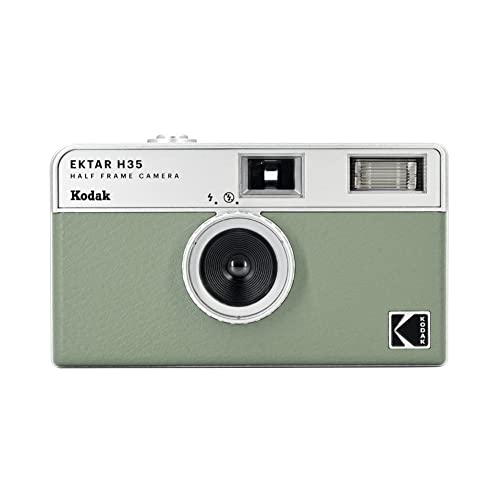
Designed for simplicity and portability, this half-frame camera doubles the number of images per roll and remains lightweight for daily carry. Best for travelers and casual shooters who want more frames per roll. Caution: Film format is half-frame, so frame composition differs from standard 35mm; ensure your film stock matches the camera’s format.
Fujifilm QuickSnap Flash 400 One-Time-Use Camera

Pre-loaded with ISO 400 film and 27 exposures per camera, it includes a built-in flash range of about 10 feet and offers a simple, grab-and-go experience. Best for casual shooters seeking an affordable option for events or travel. Limitation: As a disposable camera, it has limited reusability and no manual controls.
Buying Guide
- Film format and frame count: Half-frame cameras offer more exposures per roll but require compatible film stock; 35mm SLRs provide standard framing and broader lens options.
- Exposure controls vs. convenience: Manual exposure (aperture/shutter in older bodies) yields creative control, while autofocus and autoexposure simplify everyday shooting.
- Lens ecosystem: Interchangeable-lens cameras (Canon AE-1, Rebel 2000, EOS Kiss) unlock growth; fixed-lens models (Fujifilm QuickSnap) are best for simplicity.
- Portability: Half-frame and compact cameras prioritize weight and size for travel, street photography, and casual use.
- Maintenance and availability: Renewed or used models can offer good value; check for functional light seals, shutter reliability, and availability of compatible film stock.
FAQ
- What is the main difference between 35mm SLRs and half-frame cameras?
– 35mm SLRs use standard 36-exposure frames; half-frame cameras yield roughly twice as many photos per roll and are generally more compact. - Are renewed Canon cameras a good value for beginners?
– Yes, if you want usable exposure modes and lens compatibility, though you should assess shutter consistency and lens availability. - Do I need to buy new film stock for each camera type?
– Most 35mm frames use standard 35mm film; half-frame cameras require half-frame film or compatible stock. - Is autofocus necessary for film photographers?
– Not necessarily; many seasoned shooters prefer manual focus for control, but autofocus aids quick shots in busy scenarios. - Can I use these cameras for learning photography today?
– Yes; they offer opportunities to practice composition, exposure, and light management with tangible results.