Answering the search for the best epoxy glue for plastic, this guide highlights reliable options that bond plastics well, cure quickly, and are suitable for DIY repairs, automotive touches, and household fixes. The top picks favor clear dries, 5–6 minute set times, and strong tensile strength. Ideal buyers include hobbyists needing fast fixes, automotive enthusiasts repairing plastic panels, and homeowners tackling dented bumper or plastic trim repairs. Below, find a concise product overview, followed by detailed sections to help you choose.
Summary of selected products:
- Gorilla 2 Part Epoxy, Clear Epoxy, 0.85 Ounce Syringe — 5 Minute Set
- J-B Weld PlasticBonder Structural Adhesive — 25 ml
- J-B Weld ClearWeld 5 Minute Epoxy Syringe — 25 ml
- J-B Weld KwikWeld 6 Minute Epoxy — 2 Pack, Dark Grey
- J-B Weld PlasticWeld Quick-Setting Epoxy Syringe — Translucent Yellow
Gorilla 2 Part Epoxy, Clear Epoxy

Best for quick, clear repairs on household plastics or automotive interior trim. This 0.85-ounce syringe delivers a 5-minute set time and a strong bond, with gap-filling properties for uneven surfaces. The clear dry finish helps hide repairs on visible plastics. Suitable for users who need a simple, one-syringe mixing experience and a fast hold.
Best for: light bumper trims, ceramic tile edges, and clear cosmetic plastic repairs. Choose this if you want a clear bond with a short cure window and minimal fuss. Limitation: not ideal for long-term outdoor water exposure without proper surface prep.
J-B Weld PlasticBonder Structural Adhesive
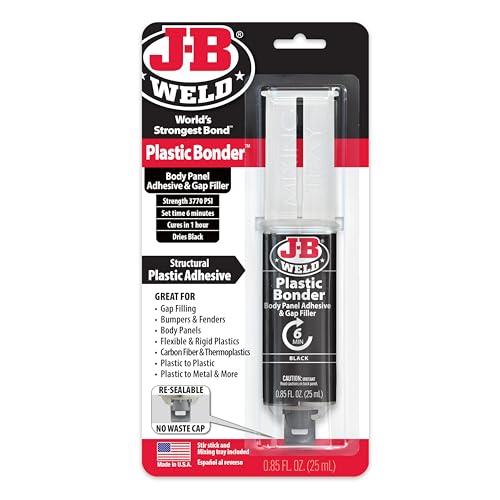
Best for durable, permanent bonds on a wide range of plastics and composites. This 25 ml syringe uses a 1:1 mix and sets in about 15 minutes, with a 3770 PSI tensile strength. It’s a trusted option for automotive panels, dent repairs, and DIY plastic projects requiring a strong, heat- and chemical-resistant bond.
Best for: thermoplastics, coated metals, and automotive repairs. Choose this if you need a high-strength bond and easy syringe-based mixing. Limitation: requires full curing time (about 30 hours) for maximum strength.
J-B Weld ClearWeld 5 Minute Epoxy

Best for quick, clear repairs on metal, glass, and versatile plastics. This 25 ml syringe offers a 5-minute set time and a 1-hour cure, with a clear bond that resists yellowing. It is well-suited for transparent or semi-transparent plastic repairs where aesthetics matter.
Best for: glass-tiber edges, light automotive trim, and display cases. Choose this if you need a very fast, noticeable-clear bond. Limitation: not ideal for heavy structural loads compared with longer-cure epoxies.
J-B Weld KwikWeld Epoxy

Best for fast-setting, versatile repairs on multiple surfaces, including plastic, metal, and composites. KwikWeld sets in about 6 minutes with a 4–6 hour cure, providing a strong, durable bond in a compact way. The 25 ml syringe facilitates easy 1:1 mixing and convenient application.
Best for: emergency repairs, DIY projects, and small plastic panel fixes. Choose this if you need a very quick initial set. Limitation: longer cure times to reach maximum strength, compared to some 5-minute epoxies.
J-B Weld PlasticWeld Quick-Setting Epoxy
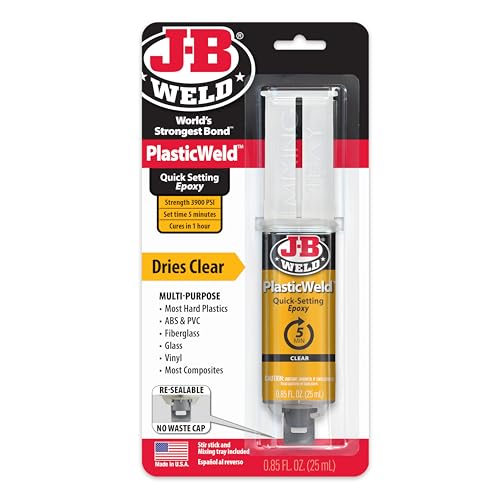
Best for a fast, plastic-specific bond with easy 1:1 mixing. PlasticWeld uses a translucent yellow adhesive and cures in about 1 hour, with a 3900 PSI tensile strength. It’s tailored to a range of plastics, including PVC and ABS, and offers a convenient syringe packaging to limit mess and waste.
Best for: quick bumper repairs, plastic dings, and DIY fixes in automotive interiors. Choose this if you want a fast, simple mix and a visibly consistent bond. Limitation: not ideal for heavy, load-bearing joints without adequate surface preparation.
Buying Guide
What should you consider when choosing epoxy glue for plastic?
- Material compatibility: Confirm the epoxy specifies plastics you work with (ABS, PVC, polycarbonate, etc.).
- Set time vs. cure time: Decide between quick initial holds (5–6 minutes) and full strength (hours to days).
- Color and finish: Clear epoxies are best for visible joints; colored or tan options help blend with certain plastics.
- Bond strength: Look for tensile strength figures (PSI) suitable for the intended load.
- Ease of use: Syringe-based dual-part systems reduce waste and improve mixing accuracy.
- Gap filling ability: If surfaces are uneven, gap-filling epoxies provide a stronger bond.
- Curing conditions: Some epoxies cure better indoors; others tolerate humidity and temperature variations.
Key comparison at a glance
- Best overall quick bond: Gorilla 2 Part Epoxy, Clear Epoxy (5-minute set).
- Best for high-strength plastic repair: J-B Weld PlasticBonder (1:1 mix, high PSI).
- Best quick clear bond: J-B Weld ClearWeld (5-minute set, clear finish).
- Best fast-set versatile epoxy: J-B Weld KwikWeld (6-minute set, durable).
- Best plastic-specific quick fix: J-B Weld PlasticWeld (5-minute set, translucent yellow).
FAQ
- What is the fastest-setting epoxy for plastic? — The epoxies listed offer 5–6 minute set times, with some providing initial handling strength within minutes.
- Can these epoxies bond to automotive plastics? — Yes, several options are designed for automotive plastics and panels, including bumper repairs and interior trims.
- Do these epoxies require clamps? — Some bonds cure with pressure or gravity; for best results, light clamping ensures a contact-perfect bond.
- Are clear epoxies better for visible joints? — Clear epoxies help hide repairs on visible surfaces, offering a cleaner finish.
- Is one syringe enough to bond large surfaces? — For larger areas, apply in multiple layers or use products designed for gaps; the kits often include enough resin for moderate repairs.
- Do these epoxies stick to metal and glass as well? — Many epoxies bond well to metal and glass; always follow the product’s surface preparation instructions for best results.