Whether you’re a beginner capturing daily moments or a seasoned creator chasing professional results, choosing the right digital camera matters. This guide highlights five cameras that balance image quality, ease of use, and value, helping you pick the best fit for photography enthusiasts and aspiring content creators. The selections cover high-resolution sensors, versatile lenses, and user-friendly features to suit travel, vlogging, and social media workflows.
Summary table of selected products:
| Product | Best For | Key Benefit | Limitations |
|---|---|---|---|
| 8K Digital Cameras for Photography (Tecglem) | Advanced creators and travel shooters | 8K video with 88MP sensor for superb detail | Large footprint, dual-lens setup may be complex for beginners |
| Canon EOS Rebel T7 DSLR Kit | Beginner photographers | APS-C sensor with built-in Wi‑Fi, solid AF | Kit lens limits low-light versatility |
| KODAK PIXPRO FZ55 | Casual everyday shooters | 16MP with 5x zoom for flexible framing | Compact sensor limits high-ISO performance |
| Gavonde 4K Digital Camera | YouTube and vlogging beginners | 4K video, 64MP photos, 18x zoom | Digital zoom affects image sharpness |
| LIYTIFOR 5K Digital Camera | Travelers and vloggers | 5K video with 80MP photos, dual screens | Newer brand, may have learning curve |
8K Digital Cameras for Photography With Dual-Lens System

This Tecglem camera targets advanced enthusiasts and multi-format creators. It uses an 8K video capability coupled with an 88MP sensor for exceptionally detailed stills. The quick autofocus system helps lock focus quickly, which benefits travel photographers and event shooters who must adapt on the fly. The device includes dual lenses for flexible shooting angles and a 3.2-inch IPS touchscreen for intuitive framing.
Who it’s best for: travelers, content creators, and professionals who want high-resolution stills plus 8K video in one package. Why: the sensor resolution and autofocus speed support sharp images in varied lighting while the dual-lens design expands composition choices. Limitation: the combination of 8K video and dual lenses can increase complexity for complete beginners.
Key features include: 8K video, 88MP high-resolution capture, fast autofocus, dual front/rear lenses, 16x digital zoom, WiFi transfer, and two batteries with a charging stand. The “iSmart DV2” app enables quick sharing, which is convenient for social media workflows. Use this model if you need an all-in-one setup for high-detail photography and compelling video content.
Canon EOS Rebel T7 DSLR Camera Kit

The Canon Rebel T7 kit is designed for beginner photographers building confidence with a capable APS-C sensor and a straightforward interface. The 24.1MP CMOS sensor provides solid detail across everyday scenes, while built-in Wi‑Fi enables quick sharing and remote control from a phone. It ships with an EF-S 18-55mm kit lens, which is a practical starting point for learning composition and framing.
Who it’s best for: new photographers and students seeking an approachable, reliable entry into DSLR photography. Why: established Canon controls, user-friendly menu navigation, and a broad ecosystem of lenses and accessories support steady growth. Limitation: modest autofocus points and feature set compared to newer mirrorless rivals, which can matter for action or low-light use.
Key features include: 24.1MP APS-C sensor, built-in Wi‑Fi, 9-point AF, and AI Servo AF. The kit lens covers wide to short-tele framing, making it versatile for portraits and landscapes alike.
KODAK PIXPRO FZ55 16MP Compact Camera

The KODAK PIXPRO FZ55 is a compact option ideal for everyday photography. Its 16MP sensor provides reliable detail for casual captures, and a 5x optical zoom helps with versatile framing in various environments from street photography to family events. Full HD video recording adds basic video capability for quick vlogs or travel clips.
Who it’s best for: casual shooters who want a small, portable camera without sacrificing essential photo quality. Why: compact form factor makes it easy to carry daily, and the 5x zoom supports more flexible framing than a fixed-lens model. Limitation: the 16MP sensor and older processor may limit performance in very low light or in high-resolution cropping compared with newer cameras.
Key features include: 16MP sensor, 5x optical zoom, wide-angle lens, and Full HD video recording. This model is suitable for travelers and students who prefer simplicity and portability.
Gavonde 4K Digital Camera For Photography

This Gavonde camera targets aspiring YouTubers and vloggers with 4K video and 64MP stills. It includes built-in WiFi for quick sharing and functions as a webcam, expanding content creation options beyond still photography. An 18x digital zoom and a 180° flip screen support flexible selfie and vlog setups, though the note on digital zoom quality remains important.
Who it’s best for: beginner to intermediate vloggers who want a simple, all-in-one device for video and photos. Why: the compact package, 4K video, webcam ability, and flip screen simplify on-camera content creation. Limitation: digital zoom tends to soften images; rely on optical framing whenever possible for best sharpness.
Key features include: 4K video, 64MP stills, built-in Wi‑Fi, 18x digital zoom, and a 180° flip screen. It provides a practical balance between photography and video for channel creation and social sharing.
LIYTIFOR 5K Digital Camera For Photography
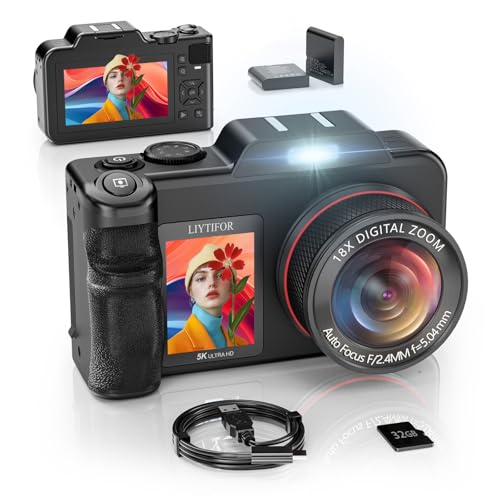
The LIYTIFOR LR1 model aims at travelers and content creators who want top-tier stills and video with an eye toward portability. It offers native 5K Ultra HD video at 30fps and 80MP high-resolution photography, paired with autofocus designed to lock quickly on moving subjects. A 3.5″ main screen plus a 2″ front screen supports easy framing and vlogging, while a 360° filter dial adds built-in creative options.
Who it’s best for: travelers and YouTube beginners who want a strong all-around camera with dual screens for easy selfies and composition. Why: combined high-resolution stills and sharp videos support multi-format content. Limitation: as a newer or lesser-known brand, some users may prefer more established ecosystems or accessories.
Buying Guide: Key Purchase Considerations
- Resolution vs. sensor size: Higher megapixels help crop flexibility, but sensor size (APS-C vs full-frame) often matters more for low-light performance and dynamic range.
- Video vs. stills emphasis: If you’re primarily photographing, focus on autofocus speed, color science, and lens compatibility. If you produce videos, check 4K/8K support, frame rates, and stabilization.
- Lens ecosystem and future expandability: A camera with a robust selection of lenses and accessories provides greater long-term value and versatility.
- Portability and build: Travel and street photography benefit from lighter bodies; durability matters for outdoor use.
- Connectivity and workflow: Built-in Wi‑Fi, Bluetooth, and app support speed up sharing and remote control. Consider whether you need webcam functionality or tethered shooting options.
- Software compatibility: Look for ease of use with common editing tools and compatibility with common cloud services or transfer apps.
Frequently Asked Questions
- What should beginners look for in a digital camera? Look for user-friendly menus, guided modes, reliable autofocus, and a versatile kit lens to learn composition.
- Is 8K video necessary for photography-focused users? Not essential for still photography, but beneficial for high-detail video work and future-proofing content.
- What is the advantage of a camera with dual screens? A front screen helps with self-portrait framing and vlogging, while the main screen handles standard composing.
- Should I prioritize optical zoom over digital zoom? Yes. Optical zoom preserves image quality; digital zoom can degrade sharpness at higher magnifications.
- Are kit lenses enough to start with? For many beginners, yes. They provide a versatile range, enabling you to learn framing before investing in more specialized lenses.
- Which camera is best for travel photography? A compact model with good battery life, reliable autofocus, and a flexible focal length, such as a 18-55mm kit or a compact system with interchangeable lenses, often works best.