Direct answer: choose fade creams and serums formulated for hyperpigmentation in darker skin tones, focusing on ingredients like niacinamide, tranexamic acid, kojic acid, and moisturizers that support barrier health. This guide highlights five products best suited for addressing dark spots on Black or deeply pigmented skin, with clear reasons for each choice and practical cautions. The buyer is typically seeking effective, non-irritating options that reduce discoloration while preserving moisture and texture. Below is a quick comparative table of the featured products to help you compare at a glance.
| Product | Key Benefit | Best For |
|---|---|---|
| Ambi Even & Clear Advanced Fade Cream | Niacinamide + licorice for fading dark spots | Stubborn discolorations on textured or acne-prone skin |
| VALITIC Kojic Acid Soap Bar | Daily cleansing with kojic acid + vitamin C & retinol | Daily prep and maintenance for overall tone |
| Palmer’s Cocoa Butter Formula Eventone Fade Cream | Natural emollients with no hydroquinone | All-day moisture + discoloration correction |
| Good Molecules Discoloration Correcting Serum | Tranexamic acid + niacinamide for even tone | Targeted spot correction over time |
| MESANDY Dark Spot Corrector | Multi-ingredient brightening system | Comprehensive correction for sun and post-acne spots |
The following sections describe each product with a concise, objective view. Use the buying guide to tailor choices to your skin type and goals.
Ambi Even & Clear Advanced Fade Cream
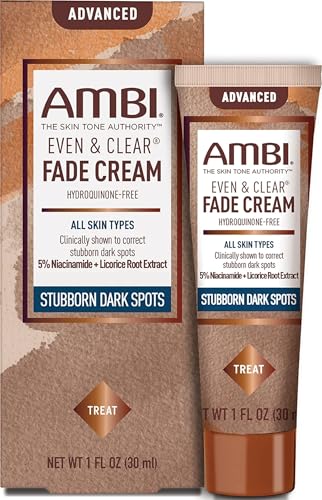
Best for acne-prone and uneven skin tone. This hydroquinone-free formula uses 5% niacinamide to fight hyperpigmentation, plus licorice root extract to reduce dark spots and a gentle PHA for exfoliation. It’s clinically shown to fade discolorations and deliver a more even complexion in about 2–3 weeks. Caution: sensitive individuals should patch-test to monitor irritation or redness.
VALITIC Kojic Acid Dark Spot Remover Soap Bars

Best for daily cleansing with brightening support. The Original Japanese Complex combines kojic acid with vitamin C, retinol, and collagen to target uneven tone and encourage a more balanced complexion. It’s suitable for face, hands, neck, and body areas. Caution: soap-based products can be drying; follow with a moisturizer and limit use on already irritated skin.
Palmer’s Cocoa Butter Eventone Fade Cream

Best for a moisturizing, all-in-one brightening option. This fade cream targets dark spots and uneven tone while improving suppleness and elasticity. It avoids hydroquinone, parabens, phthalates, and sulfates, using natural oils and cocoa butter for barrier support. Limitation: results may vary with skin type; consistency is key for visible improvement.
Good Molecules Discoloration Correcting Serum

Best for targeted spot correction with a science-backed formula. Tranexamic acid plus niacinamide helps visibly even skin tone and lighten dark spots with continued use. It is lightweight and suitable for layering under daytime moisturizers. Caution: new users may experience temporary tingling as formulas adjust to the skin.
MESANDY Dark Spot Corrector

Best for a multi-ingredient brightening approach. The formula includes niacinamide, tranexamic acid, acetyl glucosamine, peptides, and 3-O-ethyl ascorbic acid to address sun spots, freckles, and post-acne marks. It also includes soothing plant extracts to maintain balance. Caution: test for sensitivity if you have dry or reactive skin, as active acids can cause mild irritation.
Buying Guide
What should I look for in a dark spot remover for Black skin?
Key ingredients include niacinamide for barrier support and inhibition of pigment production, tranexamic acid for stain reduction, kojic acid for brightening, and gentle exfoliants like PHAs. Hydration and barrier protection are important to prevent irritation on darker skin tones.
Which product is best for acne-related hyperpigmentation?
Ambi Even & Clear and Good Molecules Discoloration Correcting Serum are strong options for acne‑related discoloration due to niacinamide and tranexamic acid. Palmer’s and MESANDY offer moisture-forward alternatives that still address spots.
How should I use these products safely?
Patch-test new products for 24–48 hours. Start with once-daily application and gradually move to twice daily if tolerated. Use sunscreen daily; UV exposure can worsen hyperpigmentation and reverse progress.
Are cleansers like the VALITIC Kojic Bar suitable for daily use?
Yes, as part of a routine, but avoid overuse to prevent dryness. Follow with a moisturizer and sunscreen. If irritation occurs, reduce usage frequency or switch to a gentler formula.
What about expectations and timelines?
Most products note visible improvement within 2–4 weeks for some breakout-related spots, with continued progress over 6–12 weeks. Results depend on skin type, placement of spots, and consistency.
How do I choose between serums and creams?
Serums offer concentrated actives for targeted fading, while creams provide moisture and barrier support. For very dry or sensitive skin, a moisturizer with brightening ingredients can be a gentler option.
What is a safe routine structure?
Cleanser, treatment serum, moisturizer, sunscreen. Layer from thinnest to thickest: serum first, then moisturizer. Use spot treatments on affected areas and avoid layering multiple strong acids at once unless advised by a dermatologist.
FAQ
- Can dark spots on Black skin completely disappear?
- Are kojic acids safe for dark skin?
- Is tranexamic acid suitable for sensitive skin?
- Should I use multiple products at once?
- How long should I wait to reapply sunscreen after using active brightenings?
Disclaimer: This article provides information for buyer clarity and does not substitute professional medical advice. Consult a dermatologist for persistent or large-area discoloration.