Answering buyers who want reliable cooling for AMD and Intel builds, these CPU water blocks are selected for high performance, broad socket compatibility, and solid build quality. This guide helps builders choose blocks for AM5/AM4 and other generations, focusing on heat transfer, flow efficiency, and ease of integration in custom loops. The top picks cover metal and copper bases, built-in filters, and even display options for personalized setups. Suitable buyers include enthusiasts upgrading an existing loop, builders starting a new custom cooling system, and anyone seeking consistent thermal performance under load. The quick reference table below highlights who each product is best for.
| Product | Best For | |
|---|---|---|
| Thermal Grizzly Mycro Pro RGB | High-end AM5/AM4 cooling | 68 microfins, 0.2 mm structure |
| Dracaena.io AMD CPU Water Block | Broad AMD compatibility | All-copper loop, 0.4 mm microfins |
| Alphacool Core 1 | Intel/AMD versatility | AM4/AM5 compatibility, black finish |
| TRYX Panorama WB | Display-focused builds | AM cooling with 2K AMOLED screen |
| EKWB Quantum Velocity 3 | Premium performance | AM5/1700/1851, Plexi |
Thermal Grizzly Mycro Pro RGB – Hardware Overview
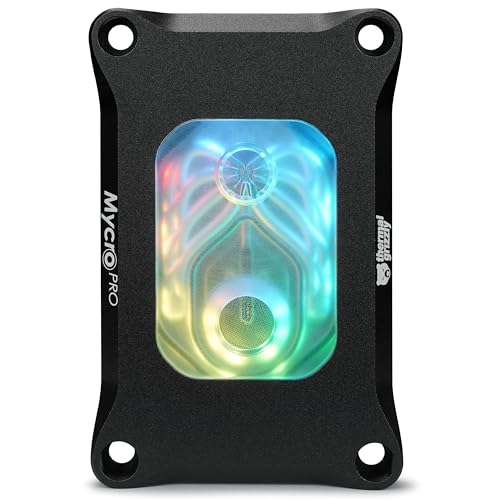
- High-performance CPU water block designed for AMD AM5 and AM4 compatibility.
- Nickel-plated copper cold plate with 68 microfins and 0.2 mm spacing for maximum heat transfer.
- Integrated fine mesh inlet filter supports cleaner coolant flow.
Best for: Enthusiasts building a high-end custom loop who need efficient cooling for AMD platforms. Why selected: Strong thermal surface area and filtration support reliable operation under load. Caution: AM5/AM4 compatibility may require precise mounting hardware and gasket alignment.
Dracaena.io AMD CPU Water Block

- Broad AMD socket support with no adapters required, covering AM5, AM4, AM3/AM3+, and more.
- All-copper water loop with 0.4 mm microfin base plate for high thermal conductivity.
- Compact form factor with a clear acrylic top and corrosion-resistant copper channels.
Best for: Builders seeking broad AMD compatibility and a copper-based cooling path. Why selected: It covers many AMD generations in one block. Caution: Copper-only paths may require careful corrosion management in mixed metal loops.
Alphacool Core 1 CPU Water Block

- Versatile CPU water block compatible with Intel LGA 1700 and AMD AM4/AM5 sockets.
- Black color option offers a sleek, understated look in a modded build.
- Designed for compatibility with mixed platform builds and varying loop configurations.
Best for: Builders needing a flexible all-in-one option across Intel and AMD sockets. Why selected: Broad compatibility reduces need for multiple blocks. Caution: Aesthetics and mounting hardware must align with your motherboard and case clearance.
TRYX Panorama WB CPU Water Block
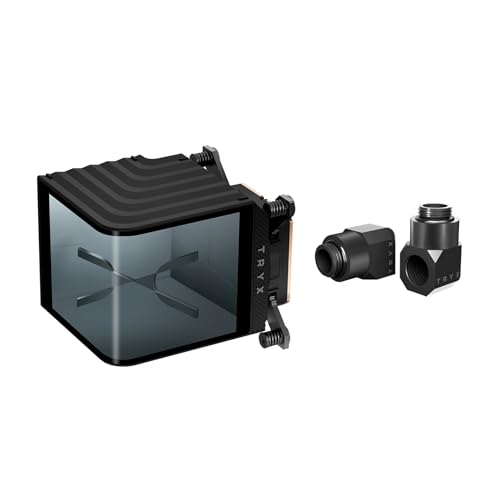
- Custom loop CPU water block with a built-in 6.67″ AMOLED display (2K) for dynamic visuals.
- GIPHY integration via software for animated content and personalized display options.
- Designed for TRYX Kanali software compatibility with live hardware monitoring data.
Best for: Display-forward builds that want visual customization in addition to cooling. Why selected: Unique screen-enabled aesthetic in a water block. Caution: Display features rely on software and may introduce additional setup steps.
EK-Quantum Velocity 3 CPU Water Block

- High-performance water block with support for AMD AM5 and Intel LGA 1700/1851, Plexi top.
- Optimized internal geometry and precise mounting pressure for maximum heat transfer.
- Notable thermal efficiency improvements over previous Velocity generations.
Best for: Premium builders prioritizing top-tier cooling and modular design. Why selected: Elite thermal performance and established EK engineering. Caution: May require exact mounting alignment and compatible fittings for best results.
Buying Guide
Key considerations when selecting a CPU water block for a custom loop:
- Socket compatibility: Ensure the block supports your motherboard’s socket (AM4, AM5, LGA 1700, 1851, etc.).
- Base material and fin design: Copper bases with microfins boost heat transfer; filters help maintain coolant cleanliness.
- Loop compatibility: Check G1/4″ threading and overall block dimensions for fit in your case and radiator arrangement.
- Aesthetics vs. performance: Blocks with RGB or display features add visual appeal but verify any software dependencies.
- Maintenance needs: Inlet filters and ease of disassembly influence long-term reliability.
Frequently Asked Questions
- What makes a CPU water block suitable for AM5 and AM4?
- Is a copper-based block better than aluminum?
- Do display blocks affect cooling performance?
- What maintenance is needed for filters in blocks like Mycro Pro RGB?
- Should I choose a universal block over a platform-specific block?
- Are high-end blocks worth the extra cost?
Look for blocks explicitly listed as compatible with both AM5 and AM4 sockets, or those with universal mounting kits and copper bases for efficient heat transfer.
Copper generally offers higher thermal conductivity, but aluminum can be lighter and cheaper. Ensure compatible metals to prevent galvanic corrosion in mixed-metal loops.
Display features typically do not significantly impact cooling; they primarily affect aesthetics and software requirements.
Regular inspection and cleaning of the inlet filter help sustain steady coolant flow and consistent heat transfer.
Universal blocks simplify upgrades across generations, but platform-specific blocks can offer tighter mounting tolerances and slightly better cooling in some setups.
For extreme workloads or silent performance requirements, premium blocks with optimized geometries and materials can provide measurable thermal gains and reliability over time.