Finding an efficient clothes air dryer for indoor use helps you dry laundry quickly while protecting fabrics and reducing ironing time. This article showcases five top options that balance performance, energy use, and space, with practical considerations for UK homes. Each product is evaluated on capacity, heat source, folding design and ease of storage to help you choose the right model for your space and laundry needs.
| Product | Brand |
|---|---|
| JML DriBUDDI Compact Electric Clothes Dryer | JML |
| PowerDri 15kg Indoor Wet Laundry Dryer | PowerDri |
| Vivo Technologies 3-Tier Heated Clothes Airer | Vivo Technologies |
| Neo XL Large Indoor 3 Tier Airer | Neo |
| Beldray Heated Clothes Airer Pod | Beldray |
Compact Heated Airer For Quick Drying

The JML DriBUDDI presents a compact electric airer design that fits neatly into smaller living spaces while delivering strong performance. With an 850W heating element, it dries up to around 10 kg of clothing, making it suitable for a typical weekly wash load. The unit operates within a tailored cover that circulates warm air, replicating the benefits of line drying indoors. Its compact form helps reduce ironing time by delivering gentler drying that minimizes creases and shrinkage. This makes it a practical pick for flats or homes with limited laundry space, where a full-size airer would be impractical.
Key considerations include setup and storage ease, durability of the cover, and the effectiveness of heat distribution. Users should consider the typical laundry load and whether this model’s 850W element aligns with their electrical setup. For households prioritising quick, space-saving drying without traditional tumble dryers, this option offers a strong balance of performance and convenience.
High Capacity Indoor Clothes Dryer
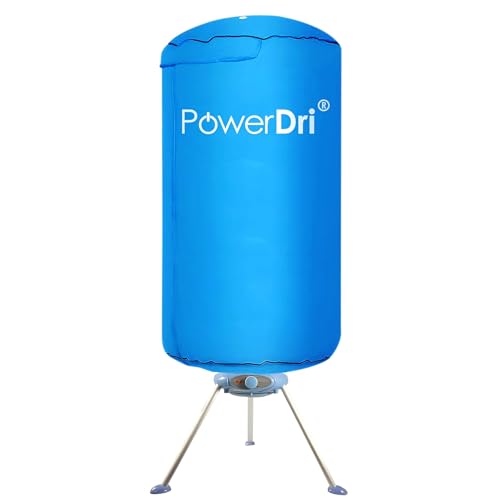
The PowerDri 15kg Indoor Wet Laundry Dryer is designed for larger laundry loads, offering up to 15 kilograms of capacity. It uses a built-in timer and a robust heating system to circulate warm air through the drying chamber, enabling efficient drying of varied fabrics. This model is positioned as a practical option for those who regularly contend with heavy wet loads and limited outdoor drying space. Its portable design also makes it adaptable to different rooms or living arrangements, including apartments and dorms, where a dedicated outdoor line is not an option.
Considerations for buyers include energy use, drying speed with larger loads, and how often you need to dry bulky items like towels and bedding. The PowerDri unit aims to deliver a balance between high capacity and space-conscious design, making it a strong choice for households that prioritise versatility and efficient indoor drying without frequent manual intervention.
Foldable 3-Tier Heated Airer

The Vivo Technologies 3-Tier Heated Clothes Airer offers a foldable design with 36 heated rails across a 21-metre drying space. The unit highlights energy efficiency and a sturdy aluminium construction, aiming to provide a reliable indoor drying solution without the noise and space demands of a traditional tumble dryer. Its folding capability allows easy storage when not in use, which is ideal for compact flats or homes with limited laundry space. Drying is described as quick and even, aided by the distributed heat across multiple rails.
Buyers should consider the balance between energy use and drying speed, as well as the floor area required for full extension. The design supports flexible loading patterns and the ability to adapt to different garment types, which can be beneficial for households with a mix of everyday wear and bulkier items.
Round Heated Airer With Six Arms

The Beldray Heated Clothes Airer Pod is a round, compact solution designed to hold up to 10 kg of damp laundry. Its six-arm design accommodates multiple hangers, enabling efficient air flow and quick drying within a controlled indoor environment. The unit features a lightweight aluminium frame and a cover to maintain warmth and reduce creases. The six arms offer a practical layout for evenly spaced items, helping to maximise drying capacity while keeping the setup compact for smaller rooms or corners.
Key considerations for selection include the balance between drying speed and energy use, the durability of the frame under repeated heating cycles, and the effectiveness of the cover in maintaining interior heat. For households that prioritise compactness without sacrificing capacity, this model provides a sensible blend of efficiency and space-saving design.
Buying Guide: Key Considerations For Choosing A Clothes Air Dryer
Choosing the right indoor clothes dryer depends on a mix of space, budget, and drying needs. Consider the following factors to compare models effectively:
- Capacity: If you regularly wash larger loads, prioritise models offering 15 kg or more. For smaller households, compact units around 6–10 kg may be sufficient.
- Heat source and speed: Electric airers with higher wattage (e.g., 850W–1000W) generally dry faster but may consume more energy. Look for models with even heat distribution to reduce creases.
- Foldable design and storage: Foldable or collapsible racks save space, enabling easy storage in hall cupboards or under beds when not in use.
- Durability and materials: Aluminium or corrosion-resistant frames extend life and maintain stability, especially for frequent heating cycles.
- Noise and energy efficiency: Quieter operation and energy-efficient motors help in shared living spaces. Check user reviews for noise levels and long-term performance.
- Ventilation and heat retention: Covers and enclosures improve heat retention, facilitating quicker drying while keeping warmth contained in a room.
- Safety and materials compatibility: Ensure fabrics are compatible with heated drying and that covers are flame-retardant if heat exposure is frequent.
Practical usage notes include placing the dryer away from walls to ensure adequate air flow, avoiding overloading, and balancing loads to maximise drying efficiency. While some models excel at small spaces, others offer generous capacity suitable for weekly laundry cycles. When selecting, weigh the trade-offs between weight, storage needs, and how often you’ll rely on heated indoor drying as part of your laundry routine.