Answering the need for high-speed, low-latency wired connections, these Cat 8 Ethernet cables are designed for gaming, streaming, and data-heavy setups. This guide highlights five options that balance speed, durability, and value for American homes and small offices. Ideal buyers include serious gamers, home offices, media enthusiasts, and IT enthusiasts seeking future-proof cabling.
| Product | Length | Speed/Bandwidth | Why It Stands Out |
|---|---|---|---|
| UGREEN Cat 8 Ethernet Cable 6FT | 6FT | 40 Gbps / 2000 MHz | Compact, highly durable braided design; strong anti-interference features. |
| Smolink Cat 8 Ethernet Cable | 50FT | 40 Gbps / 2000 MHz | Long reach with solid shielding; solid value for larger setups. |
| DbillionDa Cat 8 Ethernet Cable | 6FT | 40 Gbps / 2000 MHz | Outdoor-ready option with heavy shielding and rugged build. |
| Orbram Cat 8 Ethernet Cable | 50FT | 40 Gbps / 2000 MHz | Flat design for easy routing; robust shielding and gold-plated connectors. |
| Dacrown Cat 8 Ethernet Cable | 150FT | 40 Gbps / 2000 MHz | Very long run capability with strong shielding; ideal for warehouse or data-center style layouts. |
UGREEN Cat 8 Ethernet Cable 6FT
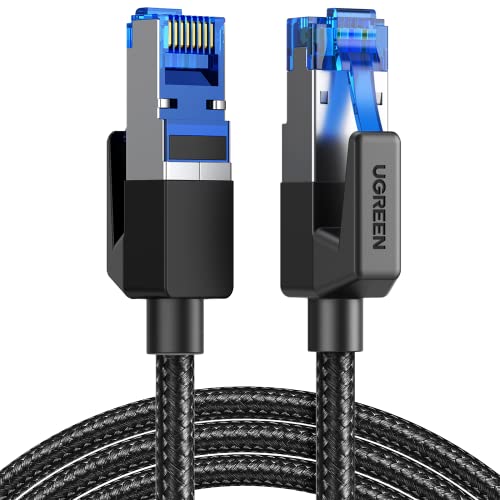
Features: 40 Gbps 2000 MHz high-speed data transfer; F/FTP shielding with four shielded twisted pairs; pure copper core and gold-plated RJ45 connectors; cotton braided exterior for durability. Best for: small gaming setups or streaming rigs needing a compact, ultra-fast cable. Limitation: shorter length may require more cable management for larger rooms.
UGREEN Cat 8 Ethernet Cable 15FT
Features: 40 Gbps / 2000 MHz; same shielding and copper core as the 6-ft version; cotton braided jacket for added durability. Best for: mid-size rooms where longer reach improves performance for consoles, PCs, and smart home hubs. Caution: slightly longer cables can be more prone to tangling if not routed properly.
DbillionDa Cat 8 Ethernet Cable, 6FT

Features: Outdoor-ready with heavy-duty shielding; 26 AWG conductors for stable load performance; F/FTP shielding; supports up to 2000 MHz and 40 Gbps. Best for: users needing direct burial or outdoor installations and robust performance in mixed environments. Caution: heavier gauge may be stiffer to bend in tight spaces.
Orbram Cat 8 Ethernet Cable 50FT
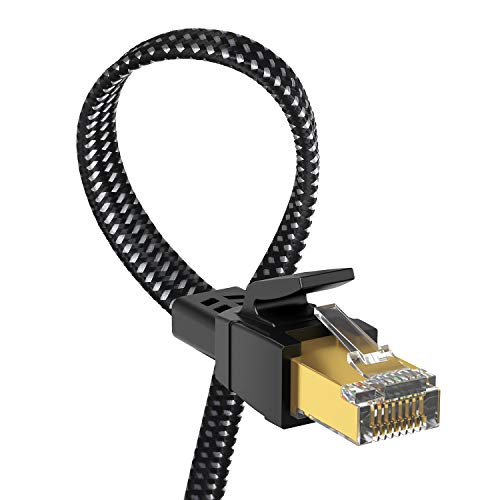
Features: 40 Gbps / 2000 MHz; S/FTP shielding with gold-plated RJ45 connectors; flat design to minimize clutter. Best for: larger rooms or multi-device setups requiring long runs with reduced interference. Caution: longer distance can increase potential signal lag if internal routing is poor.
Dacrown Cat 8 Ethernet Cable 150FT

Features: 2 GHz bandwidth; backward compatible with all Cat standards; supports 25GBASE-T and 40GBASE-T; shielded SFTP construction. Best for: large homes, offices, or data-center‑like environments needing long cable runs. Caution: very long cables may require careful management to avoid signal degradation from environmental factors.
Buying Guide
What to consider when choosing a Cat 8 Ethernet cable
- Length vs. signal integrity: Longer cables can introduce more potential for signal loss; choose the minimum length that meets your layout needs.
- Shielding type: S/FTP or F/FTP shielding minimizes crosstalk and EMI. If your setup is noisy or near power lines, prioritize shielded cables.
- Conductor gauge: 26 AWG provides solid performance with Cat 8; thicker gauges can improve stability for long runs but are stiffer to install.
- Jacket durability: Braided jackets offer strength; outdoor or burial use benefits from UV-resistant and weatherproof jackets.
- Connectors and materials: Gold-plated RJ45 connectors and 100% copper conductors enhance longevity and signal quality.
How to route Cat 8 cables effectively
- Use cable clips or raceways to keep cables tidy and protect them from physical damage.
- Avoid sharp bends; follow recommended bend radii to preserve conductor integrity.
- Keep Cat 8 cables separated from power lines to minimize interference; if crossing, do so at a right angle.
Compatibility and future-proofing
Cat 8 is backward compatible with Cat 5e/6/6a/7 devices through standard RJ45 jacks. For devices that do not support 40 Gbps, you’ll still benefit from lower latency and reduced interference on a modern network.
Buying considerations at a glance
- Best for gaming and streaming in compact spaces: shorter lengths with reinforced braiding.
- Best for large rooms or office environments: longer lengths with flat designs for easy routing.
- Budget-conscious option without sacrificing shielding: model with strong S/FTP shielding and copper conductors.
FAQ
- Q: Do Cat 8 cables always provide 40 Gbps? A: They can support up to 40 Gbps under ideal conditions, but real-world speeds depend on devices, network equipment, and length.
- Q: Is Cat 8 backward compatible with Cat 5e/6 devices? A: Yes, Cat 8 cables are compatible with older RJ45 devices, though you won’t gain Cat 8 speeds if the device is older.
- Q: When should I choose a longer Cat 8 cable? A: Choose longer cables for larger rooms or multi-device layouts where shorter runs aren’t feasible.
- Q: Is shielding necessary for home use? A: Shielding helps reduce interference in busy environments or near power lines, improving reliability.
- Q: Can I bury Cat 8 cables directly? A: Some models are rated for outdoor or direct burial use; check the product specs for outdoor suitability.
- Q: Do Cat 8 cables require special tools for installation? A: Generally no; basic routing and management tools are sufficient unless you’re running through walls or conduits.