For users seeking stable, high-speed wired connections, Cat6 Ethernet cables deliver more bandwidth and lower crosstalk than older standards. This guide highlights five solid Cat6 options, explaining who they’re best for and why they stand out. Each pick favors clear performance, compatibility, and value for typical American home or small-office setups.
Cable Matters 10Gbps Snagless Cat 6 Ethernet Cable, 25ft
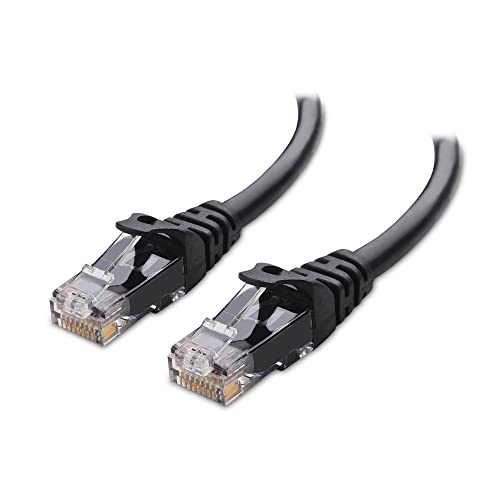
The Cable Matters 25-foot Cat6 cable uses a 24 AWG copper core for reliable, high-speed wired connections. It’s designed for LAN components such as PCs, printers, routers, and servers, offering solid performance and backward compatibility with Cat5e networks. Best for users needing a straightforward upgrade to gigabit-ready, future-proof Cat6 connectivity without paying premium for Cat6a or Cat7 features. A minor limitation is its 25-foot length, which may not suit very large rooms without an extender or switch.
Jadaol Cat6 Ethernet Cable 50FT with Clips, White

The Jadaol Cat6 50-foot flat cable offers Cat6 performance at a Cat5e price, with included clips for clean cable management. It supports up to 250 MHz and 10 Gbps over appropriate networks, making it a flexible choice for home offices and media centers. Best for users needing longer runs with easy mounting and straightforward installation. A caution: flat cables can be less durable under heavy foot traffic or frequent bending in high-traffic areas.
Ultra Clarity Cables Cat6 Ethernet Cable 100 ft

The Ultra Clarity 100-foot Cat6 cable is built for long runs, supporting frequencies up to 500 MHz and up to 10 Gbps. It uses 24 AWG copper conductors and a 5.8 mm PVC jacket with gold-plated RJ45 connectors for added durability. Best for home networks spanning larger rooms or multiple floor setups where a single run covers several devices. A potential limitation is the heavier length, which may require careful mounting to avoid tension or accidental tugging.
Brozzag Cat6 Plenum Cable 1000ft

The Brozzag Cat6 Plenum Cable is a bulk 1000-foot run designed for commercial and in-wall installations. It’s DSX-8000 certified for Category 6 performance, with 23 AWG conductors and a protective jacket suitable for in-wall, outdoor, or direct burial applications. Best for users wiring multiple rooms or offices who need a robust, long-length solution. A limitation is the bulk nature of a 1000-foot reel, which may require cutting to exact lengths and careful spooling during deployment.
Amazon Basics RJ45 Cat-6 Ethernet Patch Cable, 50 Feet

The Amazon Basics Cat6 50-foot cable provides a reliable, budget-friendly option with 1 Gbps performance. It is compatible with standard RJ45 Ethernet networks and is suitable for typical home or small office setups where gigabit speeds meet user needs. Best for value-focused buyers who want a solid Cat6 option without extra features. A note: it lacks some of the shielding or specialized construction found in higher-end cables, which can matter in environments with heavy interference.
Buying Guide
- Cable length and deployment: Choose cable length with a little extra for flexibility, but avoid excessively long runs if you don’t need them, as longer cables can add bulk and potential signal loss in certain environments.
- Conductor material and gauge: 24 AWG copper is standard for Cat6 and ensures good performance. Copper-clad aluminum (CCA) saves cost but may affect durability and signal integrity over very long runs.
- Jacket type and installation environment: For in-wall or plenum spaces, select plenum-rated jackets. Outdoor or direct-burial needs weather-resistant jackets. Bulky bulk reels are best for installers wiring multiple rooms.
- Shielding and crosstalk: Shielded (F/FTP) cables reduce interference in high-EMI environments; UTP cables are common for home use but may be more susceptible to interference.
- Planned network speeds: If planning 10 Gbps, ensure the chosen Cat6 cable supports it and that the rest of the network (switches, NICs) also supports 10 Gbps.
- Installation practicality: Flat cables are easy to route under carpets and along walls but can be less durable than round armored cables in high-traffic areas. Consider mounting clips or ties for organization.
Quick product comparison
| Product | Best For | Length / Speed | Notes |
|---|---|---|---|
| Cable Matters 25ft Snagless Cat6 | General home/office upgrades | 25 ft, up to 10 Gbps | Solid performance, snagless connectors |
| Jadaol 50ft Flat Cat6 | Long runs, easy mounting | 50 ft, up to 10 Gbps | Includes clips; flat design |
| Ultra Clarity 100ft Cat6 | Large rooms or multi-device setups | 100 ft, up to 10 Gbps | Durable jacket, good shielding |
| Brozzag 1000ft Plenum Cat6 | Commercial wiring projects | 1000 ft reel, 10 Gbps | DSX-8000 certified; plenum-rated |
| Amazon Basics 50ft Cat6 | Budget-friendly defaults | 50 ft, up to 1 Gbps | Good value, basic Cat6 |
Frequently Asked Questions
- What is the difference between Cat6 and Cat6a? Cat6a supports up to 10 Gbps at longer distances and has improved shielding, while Cat6 is typically sufficient for most home and small-office needs up to 1 Gbps or 10 Gbps over shorter runs.
- Do I need shielded or unshielded Cat6? Use shielded (FTP/F/FTP) in high-EMI environments or where cables run near motors or metal panels. Unshielded (UTP) is fine for typical homes and offices.
- Is longer cable always better? Not necessarily. Longer cables can introduce slight signal loss; plan runs to match device placement and use switches or repeaters if needed.
- Can Cat6 replace Cat5e for existing networks? Yes, Cat6 is backward compatible with Cat5e components and offers higher bandwidth for future use.
- Are there performance differences between brands? Brand quality can affect durability, connector reliability, and shielding, which influence real-world stability and ease of installation.
- What should I consider for in-wall installation? Look for plenum-rated or CMR/CMP jackets suitable for in-wall use and compliance with local codes.