Answering your CO safety questions with clear, actionable guidance. This article helps buyers choose reliable carbon monoxide alarms for home or travel, highlighting who each top product suits best. The table below compares five strong options to fit different needs, from portable models to plug‑in detectors with battery backups.
| Product | Best For | Power Source | Notable Feature |
|---|---|---|---|
| Kidde Carbon Monoxide Detector, AA Battery Powered, Portable for Travel or Home | Travelers and small-space use | 2 AA batteries | 85 dB alarm, LED status |
| FIRST ALERT CO605 Plug-in Carbon Monoxide Detector with Battery Backup | Home use with wall outlets | Plug-in with battery backup | Advanced electrochemical sensor |
| First Alert Battery Carbon Monoxide Alarm | Budget-friendly multi-pack | Battery powered | 2-pack option, 85 dB alarm |
| Kidde Carbon Monoxide Detector, Plug-in with AA Battery Backup | Plug-in with backup power | 120V plug-in + 2 AA batteries | 85 dB alarm, LED indicators |
| Kidde Carbon Monoxide Detector, AA Battery Powered CO Alarm with LEDs | Portable, easy wall/table setup | 2 AA batteries | LED indicators, test/reset |
Kidde AA Battery Powered CO Detector, Portable
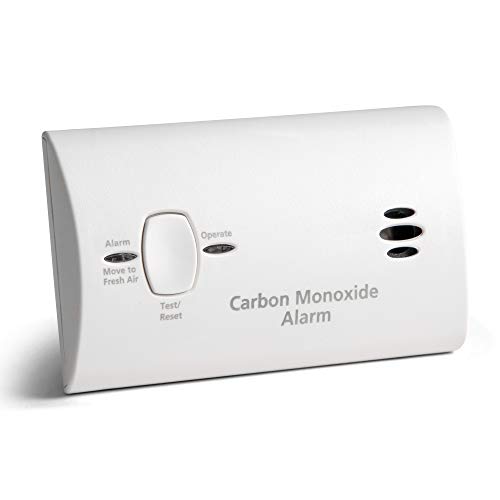
Product overview: Electrochemical sensor technology detects CO gas with easy installation—no wiring needed. It operates on 2 AA batteries, enabling use during power failures. Best for travelers, dorm rooms, or small apartments. The green LED shows power, while an 85 dB alarm and a red LED indicate CO presence. This model is ideal for buyers who need portable, independent protection without a fixed outlet or hardwired setup. Caution: not ideal as a primary home detector if you require a plug-in with continuous power in larger rooms.
FIRST ALERT CO605 Plug-in CO Detector With Battery Backup
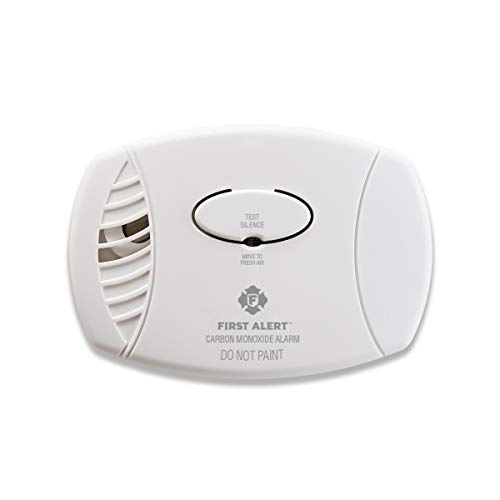
Product overview: This plug-in CO alarm adds a battery backup for continuous monitoring during power outages. It uses an advanced electrochemical sensor to accurately detect CO levels anywhere in the room. The unit features a simple test/silence button and an 85 dB alarm. Better suited for homes with standard outlets where a fixed detector is preferred. Caution: may require positioning considerations to avoid obstruction by furniture or curtains.
First Alert Battery Carbon Monoxide Alarm (2-Pack)
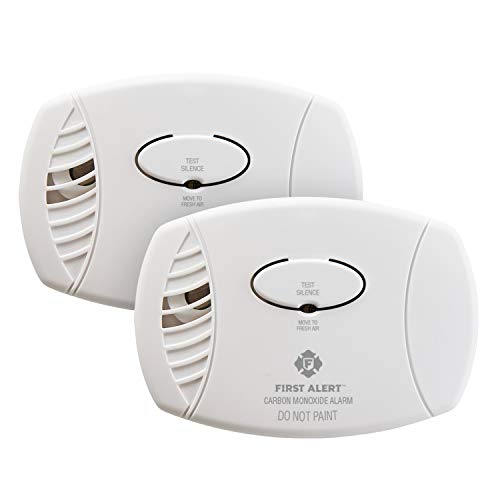
Product overview: This battery-operated CO alarm comes in a 2-pack, offering continuous CO monitoring independent of power sources. It uses an electrochemical sensor for reliable detection and emits an 85-dB alarm when dangerous levels are detected. Best for households seeking economical multi-pack options or for temporary setups like basements or rental units. Limitation: battery life and replacement needs should be planned for long-term maintenance.
Kidde Plug-In CO Detector With 9V Battery Backup, Digital Display

Product overview: A plug-in CO detector with 9V battery backup ensures protection during power outages. It features a digital LED display showing CO levels and an 85 dB alarm for dangerous readings. This model is best for users who want a visible CO level readout and reliable performance in occupied living spaces. Caution: the digital display and backup power are helpful, but placement in a central area is still key for optimal detection.
First Alert Plug-In CO Alarm (3-Pack)

Product overview: This three-pack of plug-in CO alarms includes battery backup for continuous monitoring across multiple rooms. Each unit uses an electrochemical CO sensor and features a straightforward test/silence button with an 85 dB alarm. Best for larger homes or multi-room setups where uniform CO coverage is needed. Caution: be mindful of outlet availability in wall spaces to ensure consistent operation across rooms.
Buying Guide: Key Purchase Considerations
- Power source: Choose plug-in with battery backup for continuous protection during outages or portable models if you need temporary coverage or travel-friendly options.
- Sensor type: Electrochemical sensors are standard for accuracy and reliability in residential settings; avoid models without a proven sensor type.
- Alarm and indicators: Look for audible alarms around 85 dB or higher and visible LEDs to confirm operation and CO presence at a glance.
- Placement and coverage: Place detectors at appropriate heights and away from vents, stoves, and bathrooms to reduce false alarms; larger homes may need multiple detectors for coverage.
- Maintenance: Consider batteries that are easy to replace and an accessible test button to simplify routine checks.
- Multi-pack value: For households with multiple rooms or renters, multi-packs can reduce total cost while ensuring broad coverage.
FAQ
- What is the most reliable power option for a CO alarm? – A plug-in detector with battery backup offers continuous monitoring during outages and consistent power, suitable for permanent placement in key rooms.
- Do all CO alarms sound the same? – Most modern alarms use an 85 dB or louder alarm, but visual indicators and display readouts vary by model.
- How many CO alarms should a home have? – A common recommendation is at least one on every level, plus a detector in sleeping areas for early warning.
- Can CO detectors be moved between rooms? – Portable models are designed for movement, but plug-in detectors are best kept in fixed locations to maintain coverage.
- What maintenance is required? – Regular battery checks for battery-powered units and testing detectors monthly or per manufacturer guidance help ensure reliability.
- Are there any safety caveats? – CO alarms should be part of a comprehensive safety plan including proper ventilation and regular inspection of fuel-burning appliances.