When choosing a camping water filter, the right option depends on your activity, water source, and how you travel. This guide highlights five reliable options suited for hikers, campers, RV travelers, and emergency kits. The Waterdrop Gravity Straw is ideal for solo trips, LifeStraw remains a staple for quick hydration, Camco Tastepure serves RV setups, Katadyn Hiker Pro suits backpackers who need field cleaning, and Sawyer Squeeze shines for ultralight backpacks and group trips. The summary table below helps compare key points at a glance.
| Product | |||
|---|---|---|---|
| Waterdrop Gravity Water Filter Straw (1.5 gal bag) | Solo hikers and emergency kits | Up to 1,400 gallons lifetime; 700 ml/min | 5-stage ultrafiltration with a gravity-fed bag |
| LifeStraw Personal | Backpacking and travel kits | Lifetime use with multiple uses; no pump | 99.999999% bacteria and 99.999% parasites removed |
| Camco Tastepure RV Water Filter | RVs and camping with hoses | GAC/KDF filtration; 6-step process | Lead-free and compliant with filtration standards |
| Katadyn Hiker Pro Hand Pump | Backpackers and survivalists | Field-cleanable; connects to hoses and bottles | 0.2-micron filter removes most bacteria and protozoa |
| Sawyer Squeeze Water Filtration System | Ultralight travelers and group trips | 0.1 micron filter; up to 100,000 gallons lifetime | Lightweight; attaches to pouches or bottles |
Waterdrop Gravity Water Filter Straw
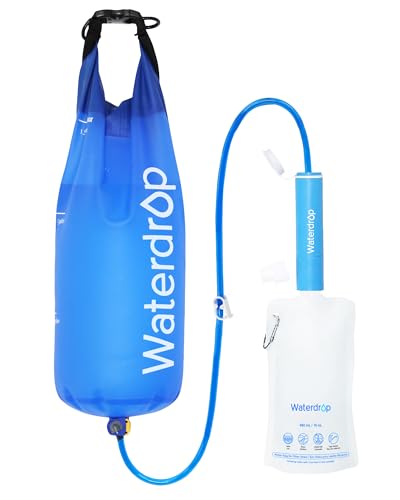
Best for solo travelers and emergency kits, this 5-stage filtration straw pairs with a 1.5-gallon gravity-fed bag to deliver convenience in outdoor settings. The filter uses a premium 0.1 µm ultrafiltration membrane to reduce chlorine, particulates, sediment, bad taste, and odors. It’s designed for continuous use, offering a flow rate up to 700 ml/min and a long lifespan—up to about 1,400 gallons. Choose this if you need a compact, gravity-assisted solution that works with a large-capacity bag for all-day use. A limitation is the dependence on the bag to supply water; in swampy or highly turbid sources, pre-filtration may still be required.
LifeStraw Personal Water Filter
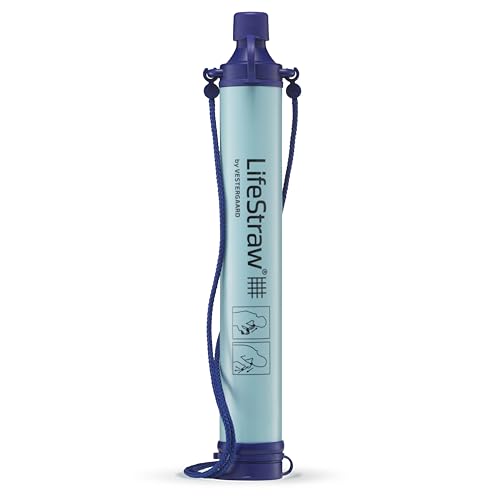
Best for hikers and travelers who favor simplicity, LifeStraw removes 99.999999% of bacteria and 99.999% of parasites, plus microplastics down to 1 micron. It is a lightweight, ready-to-use device suitable for on-the-go hydration. Its self-contained design makes it ideal for quick water access from uncertain sources. Best for those who want a compact, gravity-free option that can be tucked into a pocket. The device has no integrated storage or pumping mechanism, so it’s less suitable for high-volume purification when sharing among groups.
Camco Tastepure RV Water Filter

Best for RV owners and camper setups, this inline filter uses GAC and KDF filtration with a six-step process to reduce tastes, odors, chlorine, and sediment. It is NSF/ANSI certified for lead-free content and aligns with several safety standards. The main advantage is its compatibility with standard hoses and fittings—great for stationary or mobile setups. A potential limitation is the need to monitor filter life and replace cartridges regularly to maintain performance in high-use scenarios.
Katadyn Hiker Pro Hand Pump

Best for backpackers who need a field-cleanable, dependable pump, the Katadyn Hiker Pro removes 99.9999% of bacteria and 99.9% of protozoa using a 0.2-micron glass fiber filter. The ergonomic design and quick-connect hoses facilitate easy setup with bottles or hydration systems. It suits longer trips where you can carry a pump and possibly a secondary, portable water source. A drawback is the manual pumping effort required, which can be more tiring on hot days or when filtering large volumes.
Sawyer Squeeze Water Filtration System

Best for ultralight travelers and groups seeking flexibility, the Sawyer Squeeze uses a 0.1-micron absolute inline filter and weighs only about 2 ounces for the MINI version. It attaches to drinking pouches or standard 28 mm bottles and can be used directly in streams or taps by connecting the included pouch or hose. Choose this if you need extreme portability and the ability to filter directly into bottles. The trade-off is that the flow rate is slower compared with pump systems in demanding scenarios, and pump-style setups can be more robust for high-volume needs.
Waterdrop Gravity Water Filter Straw (2 Pack)

Best for group outings and redundancy, the two-pack Waterdrop Gravity Straw increases capacity and availability during trips with multiple travelers. The multi-pack uses the same 5-stage filtration and gravity-fed design as the single unit, maintaining the same flow and lifespan advantages. It is ideal for coordinated camping or family trips where backup filtration is beneficial. One limitation is ensuring both units are kept clean to avoid cross-contamination and to maintain flow rates.
Buying Guide
Key purchase considerations for camping water filters include source water quality, usage style, weight, and maintenance. The following questions help refine choices:
- What water sources will you encounter most often (streams, lakes, taps, or questionable campground supplies)?
- Do you need a filter that’s ultralight and portable, or is you plan to filter larger volumes at a base camp?
- Is quick field cleaning important, or is pumping acceptable for your trips?
- Will you be filtering alone or with a group, requiring higher capacity or multiple devices?
- How critical is removing microplastics and chemical tastes for you?
Consider Your Filter Type
- Gravity-fed or straw filters: Great for hands-free operation and emergency kits; best for moderate volumes and simple setups.
- Water pumps: Ideal for high-volume needs and reliability in challenging sources; require more effort but give consistent output.
- Inline filters: Built into hoses for RVs or camping setups; convenient for stationary use and sharing among travelers.
- Compact bottles and pouches: Best for ultralight travel; easy to carry during fast-paced outings.
Maintenance And Longevity
- Check lifespans and replacement parts (membranes, cartridge filters, or microfilters) to plan refills.
- Clean field filters as recommended to avoid clogging and maintain filtration efficiency.
- Store filters dry when not in use to prevent mold and odor formation.
Safety And Standards
- Look for products that meet recognized standards (NSF/ANSI, EPA protocols) for contaminant reduction.
- Verify compatibility with your water sources and any potential contaminants unique to your area.
FAQ
- Q: Can I use a camping water filter for daily home use?
- Q: How often should I replace filters?
- Q: Are these filters safe for chemical contaminants?
- Q: Is an inline RV filter necessary for camping?
- Q: Can I drink directly from streams with these devices?
- Q: Do these filters remove microplastics?
A: Some portable filters can meet basic home-like needs in emergencies, but they are not replacements for household filtration systems.
A: Replacement frequency depends on source water quality, filter type, and usage volume. Follow manufacturer guidelines.
A: Some devices reduce chlorine and tastes, but many are not designed for all chemical contaminants. Check product specs for specifics.
A: Not always, but it simplifies filtering across hose connections and helps ensure consistent water quality at the campsite.
A: Many are designed for this purpose, but always consider source water turbidity and risk of contamination before relying solely on a single filter.
A: Some filters remove microplastics down to micron sizes; verify the spec for each model you consider.