Answering the question for photographers and videographers who need reliable, fast storage: these camera memory cards deliver solid performance for 4K UHD video, high-res stills, and continuous shooting. The top picks below are best for photographers needing fast offload, hobbyists capturing 4K, and professionals who require dependable durability and ample capacity. The table summarizes key offerings to compare at a glance.
| Product | Best For | Capacity | Read Speeds |
|---|---|---|---|
| Sandisk 128GB Extreme PRO SD Memory Card | 4K, high-res stills | 128GB | Up to 250 MB/s |
| Sandisk 64GB Extreme PRO SD Memory Card | High-speed bursts | 64GB | Up to 250 MB/s |
| Sandisk 128GB Ultra SD Memory Card | Everyday 4K and photos | 128GB | Up to 140 MB/s |
| SanDisk 32GB Ultra SD Card | Entry-level shooters | 32GB | Up to 100 MB/s |
| Sandisk 256GB Extreme PRO SD Memory Card | Professional use | 256GB | Up to 200 MB/s |
Notes: Speeds vary by device and conditions. All cards support modern SD standards and are suitable for a range of consumer and professional cameras.
Sandisk 128GB Extreme PRO SD Memory Card
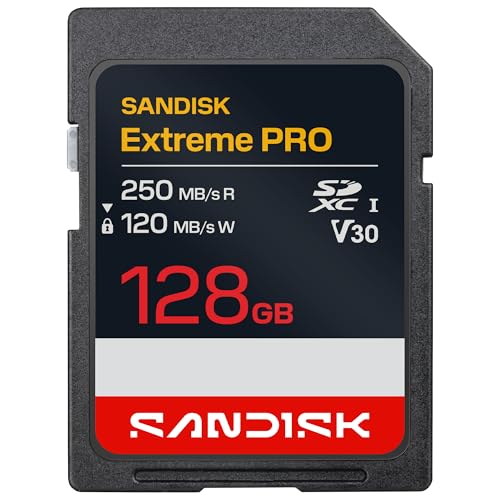
Features highlight blazing read speeds up to 250 MB/s and write speeds up to 170 MB/s across capacities from 256GB to 1TB in some SKUs. This card is designed to unlock 4K UHD video and pristine high-resolution stills with U3 and V30 rating support. Best for professional photographers and videographers who need fast offload and reliable performance for long shoots.
Best for: professionals shooting 4K and large RAW files who require maximum data transfer speed and high reliability. Choose this if you regularly exceed standard burst limits and rely on quick backups to prevent workflow bottlenecks.
Limitation: performance can vary with host device compatibility and file transfer conditions; ensure your reader supports the high-speed class features to realize full speeds.
Sandisk 64GB Extreme PRO SD Memory Card

Features emphasize offload speeds up to 250 MB/s and QuickFlow technology for faster transfers when paired with compatible readers. It supports up to 64GB and larger capacities, offering robust performance for action photography and 4K recording. Best for: photographers who need rapid card-to-reader transfers without compromising in-camera performance.
Limitation: actual speeds depend on host device and conditions; higher capacities may require compatible hardware to hit peak performance.
Sandisk 128GB Ultra SD Memory Card

Best for: casual to enthusiast shooters needing reliable everyday performance. This card offers quick transfer speeds up to 140 MB/s, with ample storage to handle substantial photo libraries and Full HD or standard 4K footage where applicable.
Limitation: not the fastest option for extreme burst shooting or high-end 4K work; better suited for mixed-use scenarios and mainstream capture workflows.
SanDisk 32GB Ultra 100MB/s SDHC Memory Card

Best for: entry-level users and budget-conscious buyers needing dependable storage for basic photography and Full HD video. Speeds up to 100 MB/s make it a solid starter option for point-and-shoot cameras and compact systems.
Limitation: lower speed ceiling may constrain 4K capture and rapid sequential shooting on higher-end cameras; consider larger or faster cards for demanding workflows.
SanDisk 64GB Ultra SDXC UHS-I Memory Card

Best for: travelers and hobbyists who need reliable Full HD recording and photography with dependable storage. The 64GB capacity balances ample space with a compact form factor, and UHS-I speeds support steady performance for everyday use.
Limitation: not designed for high-end 4K workflows or extreme burst shooting; consider higher-speed options for professional video work.
Sandisk 256GB Extreme PRO SD Memory Card

Best for: professional use requiring extended capacity and high-speed offloads. This card offers up to 200 MB/s read speeds and 140 MB/s write speeds, with large storage to support extended shoots, multi-camera setups, or long-form 4K recording.
Limitation: larger capacity cards can be more expensive and require compatible readers; ensure your workflow benefits from the extra space before choosing.
Buying Guide: Key Considerations for Camera Memory Cards
Capacity matters: choose a capacity that matches your typical sessions. Professionals may prefer 128–256GB or larger for long shoots, while hobbyists might start with 32–64GB cards.
Speed class and performance: look for UHS-I or higher with V30 or U3 ratings for 4K video and high-burst photography. Read speeds impact offload times and in-camera performance; write speeds influence recording reliability.
Durability and resilience: many cards are designed to withstand dust, temperature extremes, and accidental drops. Consider cards with robust casing if you shoot in challenging environments.
System compatibility: ensure your camera body and reader support the specific card class and speeds to maximize performance. Some features require newer hosts or readers.
Brand and warranty: trusted brands often provide consistent firmware updates and robust customer support. Check the warranty terms and any data recovery options offered by the brand.
FAQ
- What capacity is best for 4K video? For 4K video, 128GB or larger is common, with 256GB or 512GB preferred for longer sessions and multi-camera rigs.
- Do faster cards always mean better performance? Faster read/write speeds improve offload and capture reliability, but actual performance depends on your camera, reader, and workflow.
- Is it safe to reuse memory cards for new shoots? Yes, but format after backing up your footage to prevent data loss and ensure optimal performance.
- Should I choose UHS-I or UHS-II cards? If your camera supports UHS-II, consider it for higher sustained write speeds, especially in 4K or high-burst modes; otherwise UHS-I cards are widely compatible and fast enough for many uses.
- What is the benefit of V30 or U3 ratings? These indicate minimum sustained write speeds suitable for 4K video and continuous shooting, improving reliability during recording.
- Are SanDisk Extreme PRO cards worth the extra cost? For professionals needing maximum transfer speeds and large capacities, the Extreme PRO line often provides better workflow efficiency and lower risk of dropped frames.