Answering the question “which camera is best for videography,” this guide highlights five top options across 8K, 5K, and standard 4K workflows. The picks are tailored for different creator needs—from high-resolution cinematic vlogging to beginner-friendly DSLR filming. This overview helps you choose by use case, whether you shoot YouTube tutorials, events, travel vlogs, or documentary-style projects. The table below previews the selections and their strongest points.
| Product | Best For | Key Feature |
|---|---|---|
| MWIRB 8K Video Camera | 8K vlogging and cinematic content creators | 8K at 15FPS with 88MP stills and 18X zoom; 6-Axis anti-shake |
| Canon EOS Rebel T7 DSLR Kit | Beginner photographers/videographers | 24.1MP APS-C sensor; Dual Pixel AF; built-in Wi-Fi |
| Uytya 5K Video Camera Camcorder | YouTube beginners and travel vloggers | 5K/4K video, 64MP photos; 270° screen; bundled accessories |
| Canon XA60 Professional Camcorder | Documentaries and events | 4K UHD, compact pro camcorder with versatile connectivity |
| DJI Osmo Pocket 3 Creator Combo | On-the-go creators needing stabilization | 1″ sensor; 4K/120fps; 3-axis stabilization; pocketable |
Each product below is described with its best-use scenario, benefits, and a practical limitation to consider before purchase.
MWIRB 8K Video Camera Camcorder
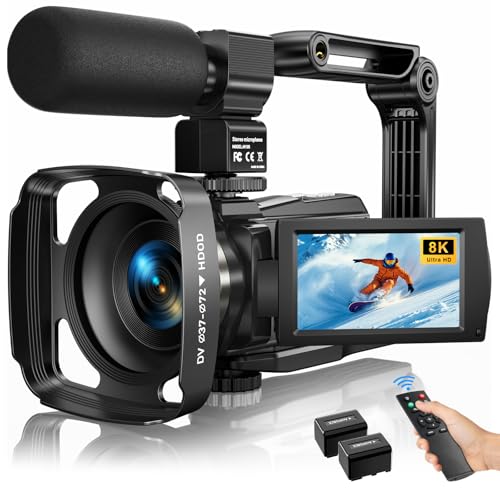
The MWIRB 8K Video Camera is best for videographers who want extremely high-resolution capture and flexible framing. It records in 8K at 15FPS and offers 6K/5K/4K options up to 30FPS, plus 88MP stills and 18X digital zoom. A 3-inch, 270-degree rotatable touchscreen aids self-recording and framing. The built-in Wi-Fi with the iSmart DV2 app enables quick transfers and social sharing. Infrared night vision expands usability in low light. Best for: bloggers, solo creators, and run-and-gun shoots where 8K resolution and remote control improve efficiency. Better for: situations where post-production flexibility and high-res stills matter. Choose this if you prioritise top-tier resolution and self-recording capability. Caution: 8K at 15FPS may not be ideal for fast-action sequences.
Canon EOS Rebel T7 DSLR Camera Kit

The Canon EOS Rebel T7 kit is best for beginners entering videography who want an approachable, capable camera. It features a 24.1 MP APS-C sensor, improved Dual Pixel CMOS AF for smooth focus, and built-in Wi-Fi for quick transfers. The 9-point AF system with AI Servo AF provides reliable tracking for simple shots and tutorials. Best for: new creators who want a straightforward entry into DSLR video and still photography. Better for: learning the basics of exposure and autofocus in a compact, affordable package. Caution: This model lacks the advanced rugged features of pro camcorders and may require additional lenses for varied scenarios.
5K Video Camera Camcorder (Uytya)

The Uytya 5K Video Camera Camcorder is tailored for YouTube creators and travel videographers who want cinematic detail. It records 5K/20fps (also 4K/60fps) and captures 64MP photos with a high-sensitivity CMOS sensor. A 270° rotatable 3.0″ touch screen facilitates flexible shooting angles. The bundled accessories (memory card, batteries, tripod, external mic, remote) support quick setup for beginners and enthusiasts. Best for: first-time creators aiming for impressive 5K output with a comprehensive starter kit. Better for: those who need a versatile all-in-one package for vlogging and events. Caution: May be heavier than compact point-and-shoots, impacting portability.
Canon XA60 Professional UHD Camcorder

The Canon XA60 is a compact pro camcorder designed for events and field documentaries. It records in 4K UHD with a robust DIGIC DV6 processor and a 1/2.3″ CMOS sensor, delivering vibrant color and detail. It offers versatile connectivity for professional setups, including external monitor compatibility and various output formats. Best for: event videographers and documentary shooters who need reliable pro-level video in a portable package. Better for: quick setup and reliable color in diverse environments. Caution: 4K capabilities are strong, but this model may require additional lenses or accessories for specialized shots.
DJI Osmo Pocket 3 Creator Combo
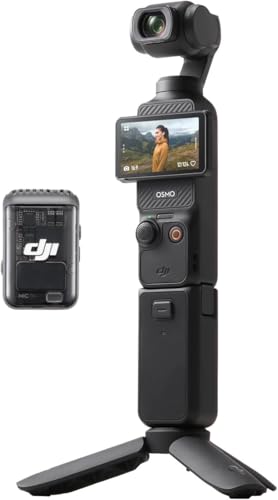
The DJI Osmo Pocket 3 Creator Combo is ideal for on-the-go creators needing stabilization and portability. It features a 1″ CMOS sensor and records 4K at 120fps, making it suitable for slow-motion and dynamic footage. A 2-inch touch screen and 3-axis mechanical stabilization help maintain steady shots while moving. Best for: travel vloggers and field reporters who require a compact kit with built-in stabilization. Better for: situations where quick setup and handheld steadiness matter more than interchangeable lenses. Caution: Smaller sensor and built-in lens limit shallow depth of field compared with larger mirrorless cameras.
Buying Guide
What resolution do you truly need?
8K provides maximum future-proofing and cropping flexibility but demands powerful editing hardware. If you primarily publish on mobile or social platforms, 4K or 5K often suffices with easier workflows.
What about stabilization?
If you shoot handheld or on the move, prioritize in-camera or external stabilization (like a camcorder with 6-axis or 3-axis stabilization). For static tripod work, stabilization is less critical but still beneficial for long-form content.
How important is autofocus?
Modern cameras use advanced autofocus systems (Dual Pixel AF, eye detection). For solo creators, reliable AF reduces the need for constant manual adjustments during vlogs or run-and-gun shoots.
What connectivity and workflow do you expect?
Built-in Wi-Fi, Bluetooth, and app ecosystems enable quick transfers and live streaming. If you need professional broadcast workflows, check for external outputs, like HDMI, SDI, and robust file formats.
Is portability a priority?
Compact models (DJI Osmo Pocket 3, certain 4K camcorders) suit travelers or creators who shoot in tight spaces. Larger DSLRs or 8K camcorders offer better image quality and lens versatility but trade portability.
What are the accessory expectations?
Consider bundled kits (memory cards, batteries, mics, tripods) as they reduce upfront costs and setup time, especially for beginners.
FAQ
- What is the difference between 8K and 4K for videography?
- Do I need a camera with built-in night vision?
- Is a built-in mic enough for vlogging?
- Should I buy a kit or a body-only option?
- How important is autofocus for video?
- Can these cameras be used for live streaming?
8K offers higher resolution and more post-production flexibility, but requires more powerful editing hardware and faster storage. 4K provides a balance of quality and practicality for most creators.
Night vision is beneficial for low-light or dark environments, but for typical daylight shoots, it is not essential. Consider a camera with good high-ISO performance instead.
While a built-in mic can work for casual content, external microphones typically improve audio quality and reduce ambient noise for professional-looking videos.
Beginner creators often benefit from bundled kits that include memory cards, batteries, mics, and tripods, reducing initial setup friction.
Reliable autofocus helps keep subjects in frame, especially for moving shoots. Look for cameras with continuous AF and subject-tracking features if you shoot solo.
Many models support webcam or HDMI outputs suitable for live streaming. Check compatibility with your streaming software and devices.