Answering the question, these cameras are ideal for teens who want simple, travel-ready devices that capture good photos and videos without complexity. The best options balance ease of use, durable design, and features that help young creators grow. This guide highlights five cameras that suit beginner to intermediate teen photographers and vloggers, with notes on who benefits most from each model.
Summary of selected products:
| Product | Main Benefit | Best For |
|---|---|---|
| Lecran Digital Camera | Compact, kid-friendly with 1080p video | Beginners seeking ease of use and fun filters |
| Camkory Digital Camera | User-friendly with long battery life | Travelers who want quick shots on the go |
| Duluvulu 4K Camera | 4K video, 48MP stills, flip screen | Teens pursuing higher-quality vlogging |
| KODAK PIXPRO FZ55 | Compact, 16MP sensor, 5x zoom | Casual shooters who want a simple, reliable compact |
| VAHOIALD Digital Camera | 16x zoom, built-in fill light, anti-shake | Indoor/outdoor use with an emphasis on versatility |
Lecran Digital Camera: Compact 1080P for Kids and Teens

Best for first-time teen photographers who want a straightforward point-and-shoot experience. The Lecran camera uses a CMOS sensor and anti-shake to deliver clear 44MP photos and Full HD 1080P videos. It is designed as a meaningful gift that encourages exploration of everyday moments with family and friends.
- Pros: Easy operation, pocket-size design, included lanyard, and simple power setup.
- Best for: Beginners, younger teens, and students new to photography.
- Limitation: 1080P video, not 4K, which may matter for teen creators seeking ultra-high-resolution footage.
Camkory Digital Camera: 1080P, 44MP with 32GB Card
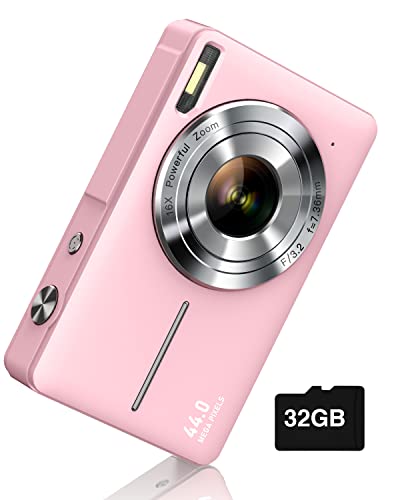
Best for teens who want reliable performance with generous battery life. Camkory emphasizes easy one-second shutter action, automatic color processing, and a large LCD. The two included batteries and energy-saving auto-off make this model well-suited for travel and daily use.
- Pros: Simple controls, compact travel-friendly size, long battery life.
- Best for: Beginners and travel-loving teens who value steadier everyday capture.
- Limitation: 1080P video, not 4K, which limits high-end video projects.
Duluvulu 4K Camera: 48MP, 16X Zoom, 180° Flip Screen

Best for teens pursuing richer video content and self-expression. This model records in 4K with an autofocus system and a 16X zoom, plus a 3-inch flip screen ideal for selfies and vlogging. It includes features like time-lapse, slow-motion, and various creative filters to extend storytelling options.
- Pros: High-resolution video, versatile filming features, durable compact build.
- Best for: Teens who want more advanced video capabilities and editing potential.
- Limitation: 4K can demand more memory and processing; data-heavy workflows may require larger storage and faster cards.
KODAK PIXPRO FZ55: 16MP, 5x Optical Zoom

Best for teens who want a traditional compact camera with a solid sensor and optical zoom. The 16MP sensor captures crisp everyday photos, while the 5x optical zoom offers flexible framing for indoor and outdoor shots. Full HD video support makes it a ready-to-use option for casual vlogging or family trips.
- Pros: Simple, dependable performance with optical zoom.
- Best for: Everyday photographers and younger teens who want a straightforward camera.
- Limitation: FZ55 remains a compact option without 4K video.
VAHOIALD Digital Camera: 16X Zoom and Fill Light
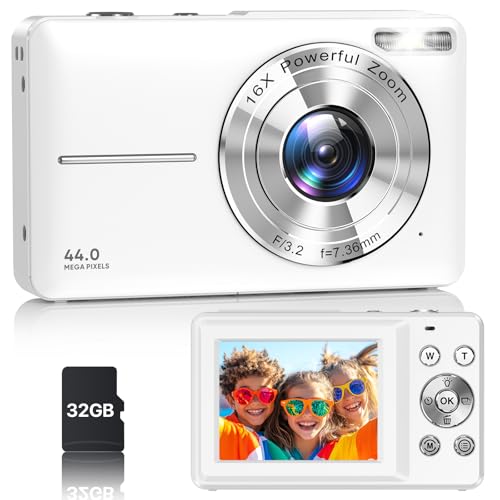
Best for indoor photography and social media-friendly content. This camera includes a built-in fill light, 16x digital zoom, and anti-shake features. It’s a compact option that supports 44MP quality images and 1080P video, making it versatile for a range of teen projects from school assignments to casual vlogs.
- Pros: Enhanced low-light capabilities, compact and portable.
- Best for: Teens who shoot in varied lighting and enjoy filters and effects.
- Limitation: Digital zoom can reduce image sharpness; not a true optical zoom.
Buying Guide: How To Choose A Teeny-Talent Camera
- What resolution matters most? For beginners, 1080P video and 44MP stills provide plenty of quality for school projects and social sharing. For more ambitious teens, a 4K option offers sharper footage but requires more storage and better editing workflow.
- How important is zoom? Optical zoom offers clearer results than digital zoom. If your teen frequently shoots distant subjects, prioritize a camera with an optical zoom (or at least a high-quality digital zoom with awareness of potential quality loss).
- Is portability a priority? Pocket-sized cameras with lightweight bodies are easier for teens to carry on trips, in backpacks, or during sports and clubs.
- What about battery life? Cameras with multiple batteries or long-lasting power help during weekends away, school events, and travel without frequent recharging.
- Should you consider extra features? Look for anti-shake, flip screens for selfies, built-in filters, time-lapse, and basic editing options. These features support creative experimentation without complex software.
FAQ
- Are these cameras easy for beginners? Yes. All listed models emphasize simple controls, quick-start operation, and kid-friendly interfaces suitable for teens just starting out in photography or vlogging.
- Is 4K video worth it for a teen? If the teen plans to publish high-quality videos, 4K offers better detail. If usage is casual, 1080P is typically sufficient and more storage-friendly.
- Do cameras come with memory cards? Some include a card and batteries; others may require you to purchase cards separately. Check the product page for included accessories.
- What is the best all-around option for teens new to photography? A compact, easy-to-use model with good image quality, reliable battery life, and a flip screen for self-recording is often ideal for beginners who want immediate results.
- Can teens use these for school projects? Yes. The combination of still-photo capture and video features supports assignments, yearbook stories, and club reports.
- Do these cameras work as webcam? Some models offer webcam capability via USB or built-in features, which can be useful for creating video content from home.