Choosing the right cable is essential for a dependable outdoor lighting system. This guide highlights five practical cables well-suited for landscape, garden, deck, and pathway lighting. Each option targets common buyer needs such as direct burial capability, copper or copper-clad construction, and suitable voltage ranges. The table below offers a quick snapshot to help compare suitability at a glance.
| Product | Best For | Voltage & Gauge |
|---|---|---|
| Wirefy 14/2 Low Voltage Landscape Wire 100 ft | Direct burial, general landscape lighting | 14 AWG, 2 conductor, up to 150V |
| FIRMERST 14/2 Low Voltage Wire Outdoor 200 ft | Flexible, durable for long runs | 14 AWG, 2 conductor, up to 150V |
| SUNVIE 12/2 Low Voltage Landscape Wire 250 ft | Maximized brightness over long distances | 12 AWG, 2 conductor, up to 300V |
| Elite 16/2 Landscape Wire 50 ft | Small installations, direct burial | 16 AWG, 2 conductor, up to 30V |
| FIRMERST 16/2 Low Voltage Wire Outdoor 500 ft | Long runs with low voltage lights | 16 AWG, 2 conductor, up to 300V |
Wirefy 14/2 Low Voltage Landscape Wire 100 ft

Best for: DIYers installing multiple garden fixtures where ease of stripping and direct burial capability are priorities. This 14/2 gauge wire is designed for low voltage landscapes, including path lights, deck accents, and underwater applications where needed.
Why selected: It combines flexibility with rugged outdoor performance. The 14 AWG, 2-conductor design supports standard low-voltage systems and is described as direct-burial ready, making trenching simpler for larger projects.
Caution: Confirm voltage limits to stay within 150V for safety and performance. Avoid use with higher voltage lighting unless properly rated components are used.
FIRMERST 14/2 Low Voltage Landscape Wire Outdoor Lighting Cable 200 Feet

Best for: Long runs in medium-sized landscapes where durability and ease of stripping are valued. This 14/2 cable is suitable for many low-voltage garden setups and can accommodate typical 12V or 24V installations.
Why selected: The product emphasizes waterproofing, dust and dirt resistance, and direct burial readiness—key for outdoor reliability and minimal maintenance over time.
Caution: While versatile, avoid exceeding 150V with this gauge. Choose thicker gauge or shorter runs if brightness loss becomes noticeable at the farthest fixtures.
GOSDENG 12/2 Low Voltage Landscape Wire 250FT
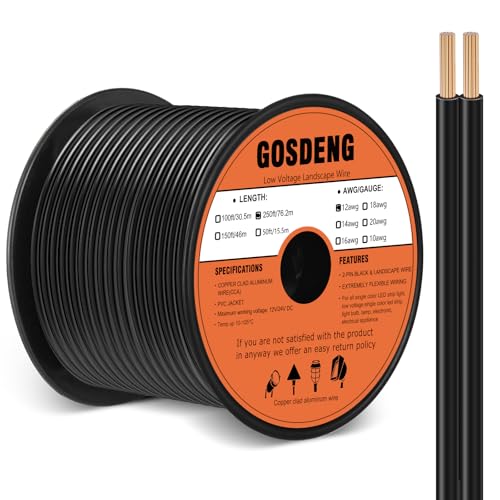
Best for: Projects needing longer runs with higher current capacity, such as multiple lighting zones or brighter fixtures, thanks to the 12 AWG gauge.
Why selected: Copper-clad aluminum (CCA) wire presents a practical balance between conductivity and weight, reducing installation effort on longer runs without sacrificing basic signal integrity.
Caution: CCA is lighter and cheaper than pure copper; consider whether maximum long-term signal fidelity matters more than weight savings in your setup.
SUNVIE 12/2 Low Voltage Landscape Wire 250FT
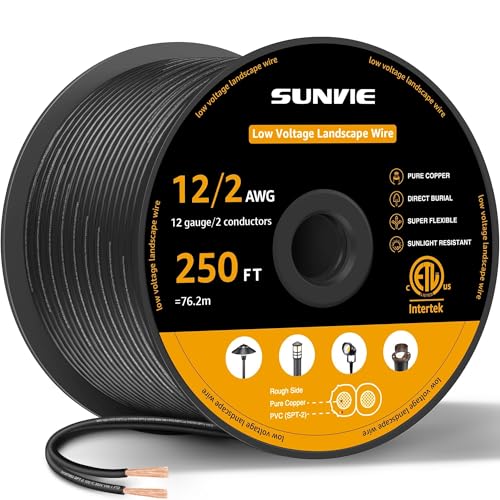
Best for: Garden setups requiring uninterrupted brightness across long distances with pure copper for stable voltage and lower loss.
Why selected: Pure copper construction supports higher conductivity and reduced voltage drop compared to some alternatives. Direct burial readiness adds to long-term outdoor resilience.
Caution: While offering robust performance, ensure proper burial depth and protection from moisture to prevent potential insulation damage over time.
Elite 16/2 Landscape Wire, 50 ft

Best for: Small projects or tight spaces where a shorter run is sufficient, such as around a patio or fence line.
Why selected: The 16 AWG single run is pure copper and direct burial rated, offering reliable performance for low-voltage fixtures up to 30V with good flexibility for compact layouts.
Caution: Shorter runs limit the number of fixtures in one segment; plan the wiring layout to avoid voltage drop across multiple lights in a single trunk.
FIRMERST 16/2 Low Voltage Landscape Wire 500 ft
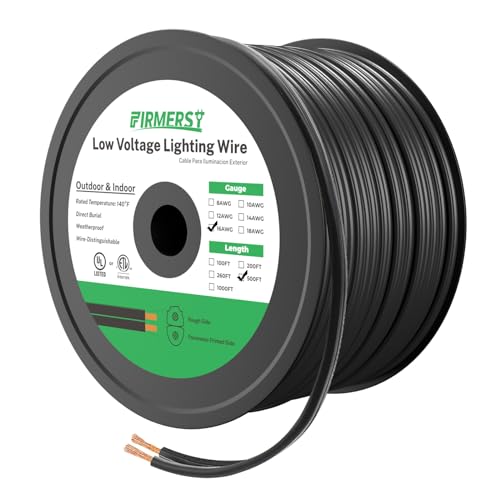
Best for: Large outdoor projects or ongoing landscape lighting installations where many fixtures are planned over a sizable area.
Why selected: The 16 AWG, 2-conductor design supports low voltage systems up to 300V and is described as flexible with durable insulation for direct burial, suitable for sprawling landscapes.
Caution: For brightness consistency, consider impedance and run length calculations; very long runs may require thicker gauge to minimize voltage drop.
Buying Guide: Key Considerations For Outdoor Lighting Wire
- Gauge vs. distance: Lower AWG numbers (thicker wires) carry more current with less voltage drop, especially over long runs. Plan the run length and total load to choose the correct gauge.
- Direct burial suitability: If burying wire, verify direct burial ratings and insulation to protect against moisture, UV exposure, and soil conditions.
- Copper vs. copper-clad aluminum (CCA): Copper provides better conductivity and durability but is heavier and pricier. CCA is lighter and cheaper, with acceptable performance for many residential setups.
- Voltage range: Most landscape lighting uses low voltage (12V–24V). Ensure the wire’s maximum working voltage matches your system specifications to avoid safety risks and performance loss.
- Insulation and jacket quality: Look for jackets that resist sunlight, moisture, and abrasion. A robust PVC jacket expands long-term reliability in harsh weather.
- Installation flexibility: Flexible wire is easier to route around corners and obstacles. Consider the layout and future expansion when selecting wire gauge and length.
- Compatibility with fixtures: Confirm that fixture connectors and transformers are compatible with the chosen wire gauge and insulation type.
Frequently Asked Questions
- What gauge should I choose for a long-run landscape lighting system?
For longer runs, thicker gauges (lower AWG) such as 12 AWG or 14 AWG are common choices, as they reduce voltage drop and maintain brightness across multiple fixtures.
- Is copper or copper-clad aluminum better for outdoor lighting wire?
Pure copper offers better conductivity and durability, but copper-clad aluminum is lighter and cheaper. For lengthy installations, copper may yield better long-term performance.
- Can I bury landscape wire directly in the ground?
Yes, many low-voltage wires are rated for direct burial. Verify the product’s direct burial rating and ensure you follow local codes for burial depth and trench safety.
- What voltage rating is typical for outdoor landscape wire?
The most common is 12V or 24V for landscape lighting. Some cables are rated for up to 150V or 300V, so match the wire to your system’s voltage requirements.
- How do I prevent voltage drop over long runs?
Use a thicker gauge for longer distances, split runs into separate circuits, and ensure transformer capacity aligns with the total load to minimize brightness loss.
- What maintenance is needed for outdoor lighting wire?
Routine inspection for insulation wear, moisture intrusion, and physical damage is advised. Replace any compromised sections promptly to maintain system safety.