Looking for an affordable compressor pedal that preserves your tone while smoothing dynamics? This guide highlights five reliable budget options, each suited to different players—from beginners to gigging musicians. Read on to find the best match for your style and rig, with clear reasons why each pedal was selected and practical buying tips.
| Product | Best For | Why It Stands Out |
|---|---|---|
| Behringer CS400 | Beginners and cost-conscious players | Classic, super-smooth compression at a very accessible price |
| Donner Ultimate Comp | Mid-range players needing versatile tone shaping | Two modes and straightforward controls for varied sounds |
| IOppWin Optical Compressor | Players seeking transparent, studio-like compression | Optical circuit for smooth attack/decay and preserved dynamics |
| POGOLAB Compressor | Bass and guitar players wanting precise control | Sustain, attack, and separate control of each parameter |
| Amazon Basics Compressor | Simple, fully analog compressor for beginners | Fully analog with true bypass in a compact package |
These selections emphasize value, simplicity, and reliability. The list covers a range from classic analog warmth to transparent optical compression, helping you decide based on how you play and where you perform.
Behringer CS400 Compressor Sustainer Ultimate Dynamics

The Behringer CS400 provides smooth compression and sustained tone, designed to compete with leading dynamics pedals. It’s best for players who want a straightforward, budget-friendly option that can tame loud transients while boosting quieter signals without coloring the core sound.
Best for: Beginners or players building a minimal rig who need reliable, easy-to-use compression without sacrificing core tone. Caution: It may feel less feature-rich than higher-end rivals, and users seeking precise attack control might prefer other options.
Donner Ultimate Comp Two-Mode Compressor
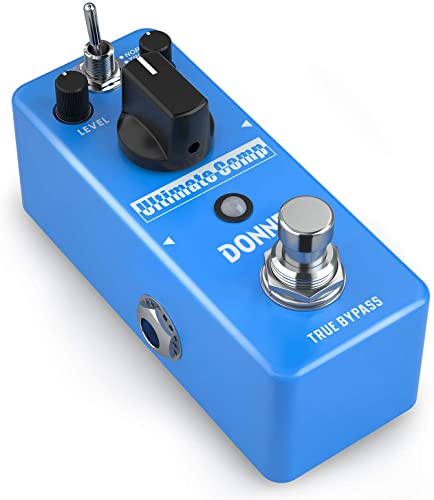
The Donner Ultimate Comp offers advanced compression with two practical modes and a user-friendly tone stack. It smooths dynamics across frequencies, providing a balanced, robust sound suitable for rhythm players and lead work that benefits from controlled sustain.
Best for: Players who want more tonal shaping in a budget-friendly package. Choose this if you value mode options (NORMAL and TREBLE) and simple controls. Caution: Some users may outgrow its single-output approach as they expand their pedalboard.
IOppWin Optical Compressor Pedal

IOppWin’s Optical Compressor emphasizes a studio-grade, transparent tone with smooth attack and decay. It preserves dynamics while offering a compact footprint, making it ideal for players who want a natural-sounding squeeze without audible tone loss.
Best for: Guitarists and bass players seeking a warm, musical compression with minimal tone coloration. Caution: Optical circuits can be sensitive to supply noise; pairing with a clean, regulated power supply helps minimize hum.
POGOLAB Compressor Pedal

The Pogolab Compressor stands out with separate controls for Sustain, Attack, and Level, and a durable aluminum body. It’s well-suited for players who need precise shaping for bass or high-output guitars, including active pickups. It includes noise reduction features for quieter operation.
Best for: Players who want more nuanced control over how quickly compression engages and where it sits in the signal. Caution: It may require careful adjustment to avoid overly compressed tones if your picking is heavy.
Amazon Basics Compressor Guitar Pedal
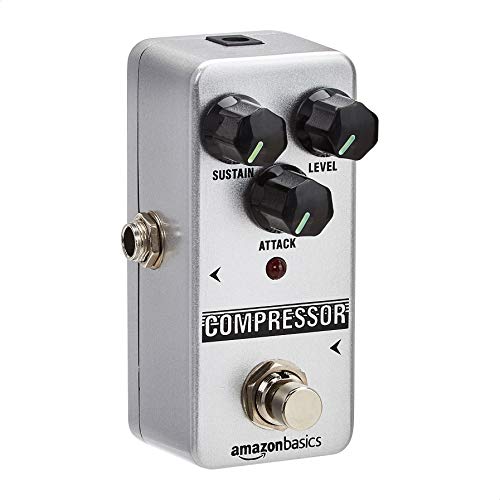
The Amazon Basics compressor delivers an all-analog circuit with true bypass in a compact, durable package. It’s a practical entry-level option for players who want quick, reliable compression without feature bloat. It’s especially appealing for budget-conscious setups that still desire authentic analog tone.
Best for: Beginners and edge-case players who want a simple, true-bypass compressor without extra bells and whistles. Caution: It offers fewer tonal controls, which may limit fine-tuning for complex rigs.
Buying Guide
Key considerations help narrow the field when choosing a budget compressor pedal:
- Purpose and environment: Are you practicing at home, rehearsing with a band, or performing live? Simpler pedals may suffice for home use, while live gigs benefit from predictable performance and reliable bypass.
- Control layout: Do you need basic sustain and level, or do you want dedicated attack, tone, and mode options? More controls mean more shaping potential but a steeper learning curve.
- Power and noise: Some budget pedals are sensitive to power supplies. A regulated 9V DC supply often reduces hum and noise, especially with optical or silicon-based pedals.
- Signal interaction: If you use active pickups or high-output instruments, look for features like noise reduction and strong output to maintain signal integrity.
- Analog vs. digital: Analog circuits generally deliver warmer, natural compression; digital options may offer more precise control but can color tone differently.
FAQ
- What does a compressor pedal do?
A compressor smooths dynamic range by reducing loud peaks and boosting quieter signals, creating a more consistent level and sustain.
- Are budget compressors good for beginners?
Yes. They provide essential compression with fewer options, making them easy to learn and affordable to replace or upgrade later.
- What should I consider when choosing a mode on a compressor?
Modes can alter frequency response or attack. For versatile tones, look for pedals with normal and treble options or adaptive controls that suit your style.
- Is optical compression better than solid-state?
Optical compressors offer smooth, natural attack and decay, which many players prefer for preserving dynamics. Solid-state (transistor) circuits can be more responsive and aggressive.
- Do I need true bypass?
True bypass minimizes signal loss when the pedal is off, which is beneficial for maintaining tone on crowded pedalboards.
- Can I use a budget compressor with bass guitar?
Yes. Many budget pedals support bass frequencies; check the knob ranges and mode options to ensure suitability for lower string tension and dynamics.