Answering the question “which binoculars are best for stargazing?” this guide highlights five well-rounded options that balance light gathering, magnification, and ease of use. Each choice targets a different type of stargazer—from beginners seeking bright, easy views to serious hobbyists chasing faint deep-sky objects. The buyer should consider field of view, tripod compatibility, and overall brightness when evaluating these models.
| Product | Best For |
|---|---|
| Celestron Cometron 7×50 | Beginner stargazers; wide views of constellations |
| Celestron SkyMaster 15×70 | Longer-range star fields; tripod users |
| FLYANT 20×50 | Long-distance, portable stargazing |
| Celestron SkyMaster 25×70 | Higher magnification for deep-sky trails |
| SVBONY SV407 2.1×42 | Wide-angle stargazing with bright star fields |
Celestron Cometron 7x50mm Astronomy Binoculars

The Cometron 7×50 binos are an easy, affordable entry point for beginners who want to start observing the night sky quickly. The 7x magnification and 50mm objectives deliver a broad field of view, making it simpler to pan across the Milky Way and locate constellations. Multi-coated optics improve light transmission for brighter, clearer views, which is ideal for first-time stargazers or travelers who want a portable option. Best for casual observers who want an uncomplicated setup and immediate sky access, such as student hobbyists or weekend campers.
Caution: Large, heavy objects may require a stable aiming point; without a tripod, long-term hold can lead to slight shake, reducing the view’s clarity.
Celestron SkyMaster 15×70 Astronomy Binoculars for Stargazing and Deep-Sky

These 15×70 SkyMaster binocs are a popular choice for more focused deep-sky viewing. The 70mm objectives gather ample light, producing bright, sharp images, especially near dusk or predawn. They pair well with a tripod to stabilize the higher magnification. Best for dedicated stargazers who want brighter views of star clusters, nebulae, and large celestial objects while maintaining portability for field use.
Limitation: They are bulky and typically require tripod mounting, which adds equipment to your setup.
Celestron SkyMaster 25×70 Binoculars for Astronomy

With 25x magnification and 70mm objectives, these binos push for more detailed distant views. They are best paired with a sturdy tripod and a steadier viewing posture to counteract the higher handheld shake. The BaK-4 prisms improve light throughput, helping you see fainter star fields more clearly. Choose this if you want to trace faint nebulae and star clusters from a dark observing site. Best for serious novice to intermediate stargazers who don’t mind heavier gear.
Caution: Higher magnification magnifies hand tremors; a stable tripod is almost essential for steady impressions.
SVBONY SV407 Astronomy Binoculars 2.1x42mm
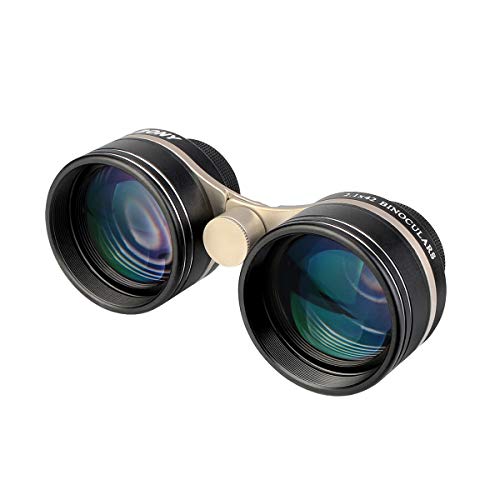
The SV407 offers a wide-angle 26-degree field of view with multi-coated optics and a bright image. The real FMC coating and BAK4 prism design help maximize light throughput, which supports clearer star-field views. Best for stargazers who want a wide, immersive night-sky experience in a lightweight, portable form. The long-depth-of-field design helps minimize constant refocusing during sessions at varying distances.
Limitation: At higher use, some users may notice color fringing in very bright stars—common in budget wide-angle designs.
Celestron SkyMaster 20×80 Binoculars for Deep-Sky Astronomy

These 20×80 binos emphasize deep-sky observation with large 80mm objectives and substantial magnification. They require a tripod and are designed for long-distance viewing, making them suitable for examining galaxies, star clusters, and nebulae from dark sites. Best for experienced stargazers who want to push magnification while keeping light intake strong through large lenses.
Limitation: The size and weight are significant; transportation and tripod setup are necessary for comfortable viewing sessions.
Celestron UpClose G2 10×50 Porro Binoculars

These 10x50s are budget-friendly and versatile for both wildlife and stargazing. The 50mm objective is a good balance for light gathering, with a wider field of view that helps locate constellations and bright nebulae without heavy gear. Best for casual observers who want a general-purpose pair that can handle both daytime and nighttime viewing. A practical option for travel or outdoor events.
Caution: May not perform as well in very dark skies as higher-end, larger-aperture models; plan for darker sites if deep-sky detail is a goal.
Buying Guide
When choosing binoculars for stargazing, consider these key factors:
- Magnification and aperture: Higher magnification reveals faint detail but demands a stable mount. Larger apertures gather more light, improving visibility of dim objects.
- Tripod compatibility: Many high-m magnifications benefit from a tripod. Look for models with standard tripod adapters (¼-inch-20).
- Optical coatings and prisms: Fully multi-coated optics and BaK-4 prisms enhance brightness and contrast, especially in low light.
- Field of view: A wider field of view helps locate star patterns quickly, which is valuable for beginners.
- Portability vs. performance: Lighter, smaller models are easier to transport but may sacrifice light gathering or stabilization.
- Durability and weatherproofing: Weather-resistant or waterproof designs are beneficial for outdoor sessions.
Frequently Asked Questions
- What should I look for in binoculars for stargazing beginners?
Look for 7×50 or 10×50 models with bright coatings and good eye relief for comfortable viewing. - Do I need a tripod for stargazing binoculars?
Tripod compatibility is recommended for higher magnifications to maintain steady views. - Are larger lenses always better for astronomy?
Larger lenses gather more light, but they also increase size and weight; balance is key. - What is the best magnification for general stargazing?
7x to 15x is versatile for beginners and intermediate stargazers; higher magnifications require steadier setups. - Can binoculars replace a telescope for night sky viewing?
They can cover broad views and bright objects, but telescopes reveal fainter details and higher resolution beyond binocs. - Which features improve low-light performance?
Full multi-coating, BaK-4 prisms, and high light transmission coatings boost brightness and contrast.