Answering your search for a battery powered toothbrush, this guide highlights five top options suited for different needs—from budget-friendly, simple cleans to performance-focused whitening and advanced modes. Best for travelers or limited storage are compact models, while best for deep cleaning and whitening are feature-rich brushes. The list includes reliable oral care brands and products with clear advantages and practical trade-offs to help you choose.
Quick comparison of selected products
| Product | Best For | Key Benefit | Limitation |
|---|---|---|---|
| Oral-B Pro 100 3D White | Budget whitening | Dentist-inspired cleaning with precision head | Basic battery setup |
| Oral-B 3D White Action Power | Whitening on a budget | 14,000 strokes per minute for stain removal | Colors vary; standard battery power |
| Aquasonic Black Series Ultra Whitening | Everything premium | 40,000 VPM, multiple modes, ADA accepted | Higher price |
| Colgate 360 Advanced Floss Tip Soft | Hybrid manual-battery users | Sonic tech with soft bristles | A bit basic compared to premium brands |
| Colgate 360 Vibrate Charcoal | Charcoal cleaning | Soft bristles with sonic vibration | Two-pack value, may lack advanced modes |
Oral-B Pro 100 3D White, Battery Toothbrush
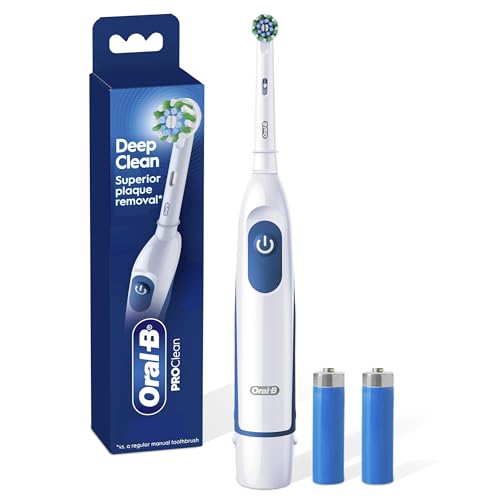
Best for value-minded buyers seeking basic whitening and effective plaque removal. This model uses a Precision Clean brush head for tooth-by-tooth cleaning and runs on two included AA batteries. The simple design prioritizes consistent performance over a long feature set, making it suitable for first-time battery-powered users or as a back-up brush. The main caveat is limited adjustability beyond its standard mode.
Oral-B 3D White Action Power Toothbrush

Best for daily whitening on a budget. It delivers up to 14,000 strokes per minute with a rotating action cup head that brushes each tooth and helps remove surface stains. It’s a good pick for users who want stronger cleaning versus a basic model, though color options vary and replacement heads are an additional consideration.
Aquasonic Black Series Ultra Whitening Toothbrush

Best for premium performance and complete oral care. With a 40,000 VPM motor, four brushing modes, ADA acceptance, and eight DuPont-branded brush heads, this model targets thorough cleaning and whitening. It also features wireless charging and a travel case. Consider this if you want a robust, tech-forward brush; however, higher cost and more features may be more than some users need.
Colgate 360 Advanced Floss Tip Soft Toothbrush

Best for users who want a hybrid manual-battery experience with sonic tech at a friendly price. This two-pack includes soft bristles and an included AAA battery. It’s a straightforward pick for households needing multiple battery-powered options, though it lacks the most advanced cleaning modes found on pricier models.
Colgate 360 Vibrate Charcoal Battery Powered

Best for charcoal cleaning enthusiasts seeking a compact, affordable option. This version uses sonic vibrations to enhance cleaning and includes a charcoal twist for stain removal. It’s a budget-friendly choice for basic everyday use, but may not provide the deeper clean of high-end models.
Oral-B Pro 1000 Rechargeable Electric Toothbrush

Best for a step-up from basic battery models with rechargeable power and multiple cleaning modes. It leverages a dentist-inspired round brush head for comprehensive plaque removal and gum protection. It’s a solid mid-range option for users who want sustained performance without frequent head replacements, but it is not a traditional battery-powered brush.
Buying Guide
- Power source type: Consider whether you prefer disposable batteries or rechargeable systems. Battery-powered options are typically cheaper upfront but require ongoing battery replacement, while rechargeable models simplify charging and maintenance.
- Cleaning performance: Look for motor speed (strokes per minute or VPM), brush head design, and whether the model includes a polishing or whitening mode for stain removal.
- Brush heads and compatibility: Check availability and cost of replacement heads. A wider ecosystem often means lower long-term costs.
- Modes and timers: Multiple cleaning modes (soft, whitening, gum care) and quadrant timers help ensure thorough brushing within recommended time frames.
- Portability and durability: If you travel, consider a compact handle, travel case, and water resistance (IP rating).
- ADA and professional recommendations: ADA-accepted models may offer added assurance for plaque control and gum health, though not all top performers carry the seal.
- Budget vs. features: Decide which features justify the price for your routine—basic cleaning or advanced whitening and gum care.
FAQ
- What is the main difference between battery-powered and rechargeable toothbrushes? Battery-powered brushes use disposable batteries, while rechargeable brushes plug in or use charging docks. Rechargeables generally require less ongoing maintenance.
- Are higher-stroke-count models always better? Higher stroke rates can improve plaque removal and whitening, but individual brushing technique also matters. Choose a model that fits your comfort and needs.
- Do battery-powered toothbrushes work with standard brush heads? Many do, but check compatibility with the brand’s brush heads to ensure optimal performance.
- Is ADA approval important for a toothbrush? ADA approval indicates tested effectiveness, but many premium models perform well without it. Use it as a helpful reference point rather than a strict requirement.
- What should I consider for travel? Look for a model with a travel case, compact size, and a robust waterproof design. Battery life and head availability are also important.
- How often should I replace brush heads? Most manufacturers recommend every 3 months or when bristles show wear, whichever comes first.