When power outages or outdoor excursions loom, a reliable battery operated radio is essential. This guide highlights five practical options, each suited to different needs—from compact emergency clips to feature-rich storm radios. Read on to find which model best fits your scenario and how to maximize performance in real-world use.
| Product | Best For | Key Benefit |
|---|---|---|
| PRUNUS J-166 Portable Radio | Ultra-compact carrying with strong AM/FM reception | Back clip and lanyard for on-the-go listening |
| Portable AM/FM Transistor Radio by BAIJIALI | Home use with loud speaker and long-range reception | DSP anti-jamming for clear signal |
| Panasonic RF-2400D | Camping or outages with AC or battery power | Large, easy-to-read dial |
The following sections compare five well-suited options. Each entry notes who will benefit most, a clear rationale, and a practical caveat to consider before you buy.
PRUNUS J-166: Ultra-Compact, Portable AM/FM Radio
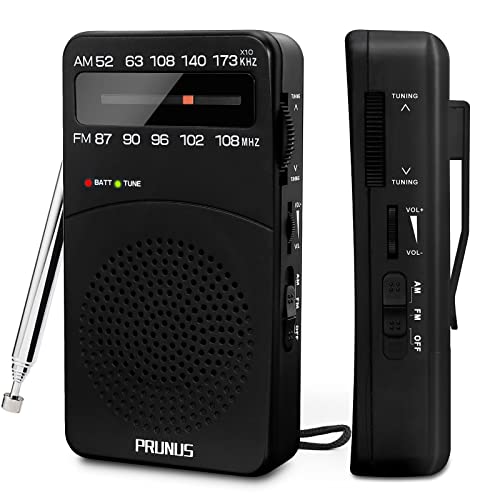
The PRUNUS J-166 is a tiny pocket radio designed for lightweight portability. It measures about 2.7 x 5 x 1.1 inches and weighs around 4.2 ounces (batteries not included). Its back clip and lanyard support easy attachment to a pocket or bag, making it ideal for morning workouts, park strolls, or emergency kits where space is limited. It supports FM (87-108 MHz) and AM (520-1730 kHz) with a 16.5-inch adjustable antenna and a DSP chip to improve reception in varied environments.
Best for: Individuals who want a discreet, carry-everywhere radio for news, music, and alerts. It’s especially suitable for hikers, runners, and travelers who need a light device that won’t weigh them down.
Why selected: Its simplicity and compact design prioritize portability without sacrificing essential AM/FM coverage.
Caution: The product’s very small size means it may feel less sturdy than larger models; ensure batteries are properly installed for optimal performance.
BAIJIALI Portable AM/FM Transistor Radio

This compact table radio emphasizes strong reception and user-friendly operation. It covers AM, FM, and shortwave bands (88-108 MHz FM, 530-1710 kHz AM, 2.8-22 MHz SW) with a DSP anti-jamming chip for clearer signals. A telescopic antenna enhances reception, and the large channel tuner plus volume controls keep operation straightforward, making it a solid pick for seniors or anyone who wants simple, reliable access to a broad radio spectrum.
Best for: Home listeners who want clear sound across multiple bands and an easy-to-use control layout. It’s a good choice for bedrooms, kitchens, or living rooms where background radio is desired.
Why selected: The device blends broad frequency coverage with user-friendly hardware, helping you stay connected in diverse listening conditions.
Caution: As with most compact devices, bass response may be limited; consider external speakers if you need fuller sound for entertaining guests.
Panasonic RF-2400D Portable AM/FM Radio

The Panasonic RF-2400D is a versatile analog radio designed for outdoor use and emergencies. It can run on batteries or via AC power, and it includes a built-in AC adaptor plus accepts four AA batteries. A large, fluorescent-tipped dial aids readability in low light, and it accommodates headphones for private listening. This model prioritizes reliability and visibility, making it a practical addition to camping gear or home disaster kits.
Best for: Campers, hikers, and households prioritizing a straightforward, durable radio with both battery and wall power options. It’s also well-suited for night-time listening due to the large dial.
Why selected: The easy-to-see design and flexible power options make it reliable in varied scenarios where power access may be uncertain.
Caution: The analog interface is simpler than digital models; some users may prefer digital tuning for precision in crowded signal areas.
DreamSky AM/FM Portable Radio

The DreamSky AM/FM Portable Radio offers flexible power: wall outlet or battery operation using 4 AA batteries. It promises strong reception across AM, FM, and shortwave bands with a large, easy-to-use analog tuning dial. The built-in loud speaker provides clear sound suitable for shared listening, while an earphone jack allows private listening when needed. The device is especially suitable for seniors or anyone who values intuitive controls and dependable reception away from home.
Best for: Radio lovers who want a straightforward, all-purpose model for home and travel use, with the option of battery power for emergencies or outdoor adventures.
Why selected: The dual-power capability and large dial make scheduling and tuning intuitive in daylight or dim environments.
Caution: Shortwave performance can be variable depending on location and time; expect best results in areas with active SW broadcasts.
FosPower NOAA Emergency Weather Radio A1

The FosPower A1 is a multi-source emergency radio featuring a 7400mWh (2000mAh) power bank that can recharge devices. It supports three power sources: crank, solar, and AAA batteries, plus a built-in flashlight and a reading lamp. The compact design makes it a robust option for disaster kits, camping, or hurricane preparation, offering essential visibility and communication capabilities when power is scarce.
Best for: Preparedness enthusiasts and households seeking an all-in-one device that combines weather alerts, charging capabilities, and lighting for emergencies.
Why selected: Its power bank and multiple charging methods provide flexibility during prolonged outages or outdoor scenarios.
Caution: The crank and solar charging efficiency depends on weather and use; have spare batteries available for guaranteed operation when sunlight is limited.
DreamSky AM FM Radio Portable Shortwave Radio Battery Powered/Plug in Wall (Second DreamSky model)

This DreamSky model emphasizes a large speaker and strong reception across AM, FM, and SW bands. The long-range antenna helps pull in signals in less-than-ideal locations, while a traditional analog dial keeps operation simple. It’s a fitting option for those who want a loud, clear listening experience without complex menus, whether at home or on the go.
Best for: Listeners who prioritize strong sound and broad band coverage in a straightforward device, suitable for family rooms or bedrooms where conversation and background radio occur.
Why selected: The emphasis on high-quality sound and stable reception makes it a dependable all-arounder for everyday listening and travel kits.
Caution: The emphasis on analog controls means newer users may need a brief familiarization period to optimize tuning accuracy.
Buying Guide: Key Considerations For Your Battery Operated Radio
- Power options: Decide between battery-only, AC-adapter, or multi-source with solar/crank charging. For outages, multi-source models provide the most resilience.
- Reception range: If you live in a rural area, consider models with strong AM/shortwave capability and a long antenna. Urban listeners may value DSP chips for quieter reception.
- Ease of use: Large dials, simple controls, and clear displays help in low-light conditions or for seniors. Analog tuners are straightforward but may lack precision; digital tuners offer quick station presets.
- Speaker quality: A larger built-in speaker improves shared listening experiences. If you need private listening, ensure the device includes a headphone jack.
- Portability: For outdoor use or emergency kits, size, weight, and a carrying handle or lanyard can influence practicality.
- Durability and weather readiness: If you’ll be outdoors, consider models with robust housings, water resistance, or IP-rated protection.
- Additional features: Built-in flashlight, SOS alerts, and power banks add value for emergencies but may add cost or weight. Prioritize features that align with your use case.
FAQ: Quick Answers For Buyers
- What is the best battery powered radio for emergencies?
– A model with multiple power sources (crank, solar, batteries) and a NOAA weather radio function is typically ideal for emergencies. - Do I need shortwave capability?
– Shortwave can provide broader international coverage, but many users mainly rely on AM/FM; choose based on your local listening needs. - Are analog radios still reliable?
– Yes. Analog tuners are simple and intuitive, particularly for seniors or users who prefer straightforward operation. - Should I prioritize a loud speaker or portability?
– If you plan to share listening in a room, a device with a strong speaker is beneficial; for travel, prioritize compact size and a clip or handle. - Is a built-in power bank useful?
– A built-in power bank adds emergency charging capability, which can be valuable during outages when other devices need power. - What maintenance is needed for battery radios?
– Replace batteries as needed, keep a spare set, and occasionally test the radio with fresh power sources to ensure readiness.