Answering the common buyer question: which bass amp delivers reliable tone for practice, recording, and small gigs? This guide highlights five solid choices and explains who each is best for. You’ll find a mix of compact practice amps and more powerful combos that still stay playable in small venues. The top picks lean toward Fender’s Rumble line for consistent bass voice, with Orange offering a distinct character. Each product note includes who it’s best for, plus a practical caveat to consider before buying.
| Product | Power | Speaker | Best For |
|---|---|---|---|
| Fender Rumble 15 V3 | 15W | 8″ Speaker | Compact practice with show-ready tone |
| Fender Rumble 25 V3 | 25W | 8″ Speaker | Entry gigs and rehearsals with simple EQ |
| Fender Rumble 40 V3 | 40W | 10″ Speaker | Room rehearsals and small venues with contour options |
| Fender Rumble 100 V3 | 100W | 12″ Speaker | Band practice and small-to-medium stages |
| Orange Crush Bass 25 | 25W | 8″ Speaker | Audible, characterful bass for rock and funk tones |
Fender Rumble 15 V3 Bass Amplifier

The Fender Rumble 15 V3 offers 15 watts with an 8-inch Fender Special Design speaker. It provides a compact footprint and a top-mount control panel with ivory soft-touch knobs for straightforward tone shaping. Best for practice rooms, dorm rooms, and players who want a lightweight, minimal setup. The small size makes it easy to transport to lessons or quick gigs. A practical limitation is the lower wattage, which may struggle in louder band settings or larger venues. Use this when quiet practices and quick jams are the priority.
Fender Rumble 25 V3 Bass Amplifier

The Rumble 25 V3 delivers 25 watts with an 8-inch speaker, plus a 1/8-inch auxiliary input and a 1/4-inch headphone output. It includes three-band EQ and a newly developed overdrive circuit with contour controls for a richer Fender bass tone. This model is best for players who want more headroom than the 15W version and occasional small-venue use. A potential limitation is its smaller speaker size, which may limit deep low-end in loud band contexts. Choose this if you need versatility in a compact form factor.
Demusea 20W Electric Bass Amplifier
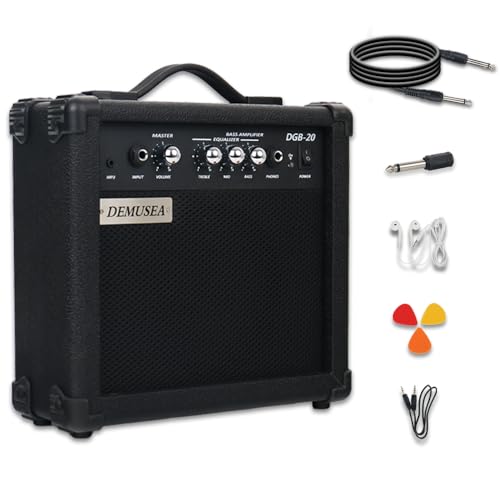
The Demusea 20W model focuses on portability with built-in headphone jack and auxiliary input for practice and jamming along with tracks. It features a 3-band tone control to shape bass, mid, and treble, supporting various genres from warm to punchy. Best for beginners and morning practice or travel practice. A caveat is that, as a smaller amp, it may not deliver room-filling bass in larger spaces or loud ensembles. Opt for this when travel-friendly practice is a priority.
Fender Rumble 100 V3 Bass Amp

The Rumble 100 V3 is a 100-watt combo with a 12″ Eminence Special Design speaker. It emphasizes a strong low-end presence and a flexible overdrive/tone contour system suitable for larger rooms than the smaller Rumbles. Best for band practice and small stages where punchy bass tone is needed without external cabinets. Limitations include its larger footprint and weight compared to compact models, making transport less convenient for solo practice on the go.
Orange Crush Bass 25
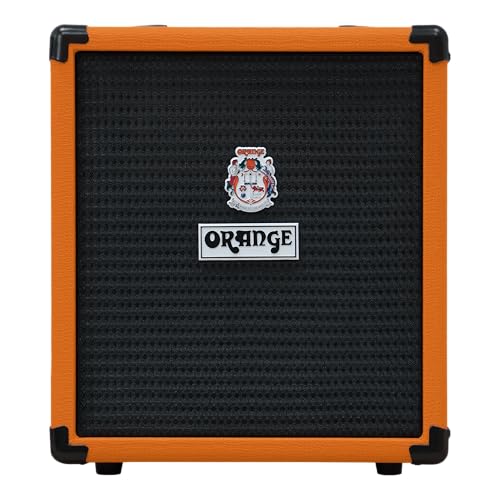
The Orange Crush Bass 25 provides 25 watts with an 8″ speaker and includes Active 3-band EQ, a parametric mid control, and a chromatic tuner. This model is well-suited for players seeking a distinctive tonal character with a straightforward control layout. Best for players who want a touch of British-influenced texture in their bass tone. A potential drawback is that tonal character may not suit every genre, so auditioning is advised if you need a neutral, flat baseline sound.
Buying Guide: Key Purchase Considerations
Power and room size: For home practice, 15–25 watts is often sufficient. For small gigs or rehearsal spaces, 40–100 watts provides more headroom. Consider the room’s volume and whether you’ll rely on PA support.
Speaker size and cabinet design: Larger speakers deliver deeper lows; smaller speakers are more portable. If you plan to play with a band, prioritize a model with a capable 12″ or larger speaker and balanced tone controls.
Tone control features: Look for models with 3-band EQ and contour or overdrive options if you want flexibility. A dedicated mid control or parametric mid can help you carve audible, musical tones in live settings.
Portability: If you travel to lessons or gigs, lightweight amps with carrying handles and compact form factors reduce hassle. Some 20–25W models offer portability without sacrificing too much tone.
Inputs and outputs: Check for auxiliary in, headphone out, and, if needed, USB/line outputs for practice tracking or direct recording. This helps with practice routines and simple demos.
FAQ
- What’s the best bass amp for home practice?
– A compact 15–25W model with a reliable 8″ speaker, like the Fender Rumble 15 V3 or 25 V3, is typically ideal for home use. - Do larger amps always sound better live?
– Not necessarily. Larger amps provide more headroom, but tone preference and portability matter. For small venues, a 40–100W Fender Rumble can be a better balance. - Should I buy a bass amp with built-in overdrive?
– If you value drive on stage, an amp with an overdrive/contour feature (like some Rumbles) offers convenient tonal variety without pedals. - Is a dedicated guitar amp suitable for bass?
– Bass speakers and cabinets are designed for low-frequency response; guitar amps often lack bass extension and may sound thin. Choose purpose-built bass amps for best results. - What should I consider for porting and speaker size?
– For deeper bass, prioritize 12″ speakers or larger and sealed or vented enclosures appropriate to the venue. - Can I use headphones for silent practice?
– Yes. Many bass amps include a headphone output for quiet practice; it’s a practical feature for late-night sessions.