Looking for a reliable backpacking water filter? This guide highlights five top options, each suited to different outdoor needs. Whether you’re a weekend hiker, thru-hiker, or emergency prepper, these filters provide portable purification, simple operation, and durable design. The selections focus on lightweight models, gravity-fed systems, and pump or straw designs for varied scenarios. Read on to find the best match for your adventures and avoid common pitfalls like limited flow or difficult maintenance.
Summary table of selected products
| Product | Best For | Key Benefit |
|---|---|---|
| Sawyer Squeeze Water Filtration System, Cnoc Premium 2 Liter Bladder | Lightweight explorers and travelers | High filtration, reusable, long-life membrane |
| Sawyer SP128 Mini Water Filtration System | Ultralight trips and emergency kits | Compact, extremely light, versatile attachment options |
| Katadyn Hiker Pro Transparent Hand Pump | Backpacking with moving water sources | Pump action for control and reliability |
| Waterdrop Gravity Water Filter Straw | Group trips and base-camp setups | Gravity-fed capacity and long lifespan |
| Sawyer SP129 Squeeze with Pouches | Versatile, multi-pack adventures | Includes pouches and straw; compact to pack |
Product Highlights
Sawyer Squeeze Water Filtration System

The Sawyer Squeeze uses a hollow fiber membrane to remove bacteria, protozoa, cysts, sediment, and 100% of microplastics. It’s designed for outdoor adventures, travel, or emergency preparedness. The system is reusable and easy to clean, with potential life up to 100,000 gallons. The accompanying Cnoc 2 liter bladder is made from extra-durable TPU with a wide mouth for fast filling. Best for hikers who want a reliable, long-lasting filter with simple field maintenance.
Who it’s best for: Ultralight hikers and frequent travelers who prioritize a reusable system with high filtration efficiency. Why selected: Strong membrane construction and backwash capability help maintain flow in varying conditions. Caution: You’ll want to monitor the bladder’s integrity and ensure proper backwashing to maximize longevity.
Sawyer SP128 Mini Water Filtration System

Designed as a compact, high-performance inline filter, the Sawyer SP128 Mini weighs only about 2 ounces and filters down to 0.1 microns. It can attach to a drinking pouch, standard bottles, hydration packs, or be used as a straw. Ideal for hikers, travelers, and emergency kits where space is at a premium. Best for: Ultralight travelers who still demand dependable filtration. Caution: Small size means you may need extra pouches or bottles for extended trips.
Katadyn Hiker Pro Transparent Hand Pump

The Hiker Pro Transparent Microfilter from Katadyn is a pump-style water filter. It handles streams, ponds, and questionable sources by manually pumping water through a microfilter membrane. The design emphasizes reliability in backcountry contexts where gravity or batteries aren’t available. Best for: Backpackers who prefer a hands-on filtration method. Limitation: Pump action requires effort and can slow you down on long days of hiking.
Waterdrop Gravity Water Filter Straw
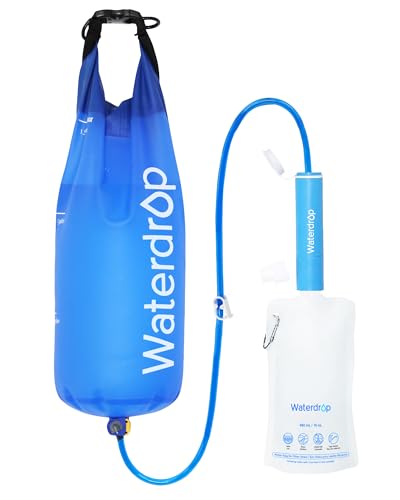
The Waterdrop Gravity Water Filter Straw uses a premium 0.1 micron ultrafiltration membrane and comes with a 1.5 gallon gravity-fed bag. It’s designed for outdoor activities and survival scenarios where gravity can drive filtration. Best for: Groups or base-camp setups needing larger flow without pumping or squeezing. Caution: Gravity setups require a stable, elevated position for optimal flow.
Sawyer SP129 Squeeze with Pouches

This kit includes a Squeeze filter plus two 32-ounce pouches, a straw, and a hydration pack adapter. It offers a lightweight, portable option with flexible use in different water sources. Best for: Travelers who want a complete, ready-to-use squeeze system. Limitation: The filtration relies on squeezing, which can be tiring on long trips.
Buying Guide
What should you consider when choosing a backpacking water filter?
- Filtration type and micron size: Lower microns (0.1) remove smaller particles and microbes, but may require more maintenance.
- Flow and effort: Pump and squeeze designs need manual work; gravity and straw systems rely on ambient conditions for flow.
- Weight and packability: Ultralight models are ideal for fast trips, while gravity systems add capacity for groups.
- Longevity and maintenance: Reusable membranes and backwash capabilities extend filter life; consider cleaning requirements in remote areas.
- Compatibility: Look for compatible pouches, bottles, or hydration packs to maximize versatility.
Which type is best for your situation?
- Ultralight solo hiking: Look for a compact filter like the Mini or Squeeze variants with small pouches.
- Base-camp or group trips: Gravity-fed or larger-capacity options provide easier water sharing.
- Emergency preparedness: Robust filters with easy field maintenance and long life span are preferred.
- Water source variety: Pumps handle questionable sources robustly, while membranes offer consistent filtration across conditions.
Maintenance tips for reliable performance
- Backwash hollow fiber membranes as recommended to restore flow.
- Keep spare parts and replacement membranes where applicable.
- Clean and dry filters after use to prevent mold and odor buildup.
What to avoid
- Avoid overly complex systems for solo use if you prioritize quick setup and low maintenance.
- Avoid relying on a single device for all situations; having a backup method can be crucial in remote settings.
Frequently asked questions
- What is the best filter for high-flow needs? Gravity-fed filters generally provide higher, steadier flow without pumping.
- Can I drink directly from a filter straw? Yes, but flow depends on water source and straw design; direct use is convenient for quick hydration.
- Are microplastics a concern? Some filters remove microplastics; check the micron specification of the unit.
- Do these filters remove chemical contaminants? Many filters focus on particulates and microbes; consider additional purification if chemical contamination is a concern.
- How long do these filters last? Lifespan depends on use and maintenance; follow manufacturer guidance for backwashing and replacement.
- Is boiling water necessary after filtration? In most cases, filtration provides safe water, but boiling is a precaution in uncertain situations.