Looking for a reliable backpacking sleeping bag that balances warmth, weight, and packability? This guide highlights five top options that suit a range of sleepers—from ultralight hikers to family-friendly campers. Each bag is evaluated for who it’s best for, why it stands out, and practical trade-offs. Buy with clarity: consider climate, pack size, and sleeping style when choosing.
| Product | Best For | |
|---|---|---|
| ECOOPRO Portable Sleeping Bag | Backpacking enthusiasts needing compact, weatherproof performance | Ultra-light, waterproof envelope design |
| MalloMe Sleeping Bags | Families and youth groups seeking year-round warmth | Wide temperature range, kid-friendly colors |
| Teton Trailhead 20 Degree | Lightweight solo hikers demanding loft and compressibility | High-loft microfiber insulation, efficient compression |
| OneTigris Bushcrafter’s Bag | Three-season campers needing rugged durability | Weather-shedding outer and quick-dry performance |
| ECOOPRO Warm Weather Sleeping Bag | Warm-weather trips and casual travelers | Waterproof, compact, easy roll-down |
ECOOPRO Portable, Waterproof, Lightweight Sleeping Bag
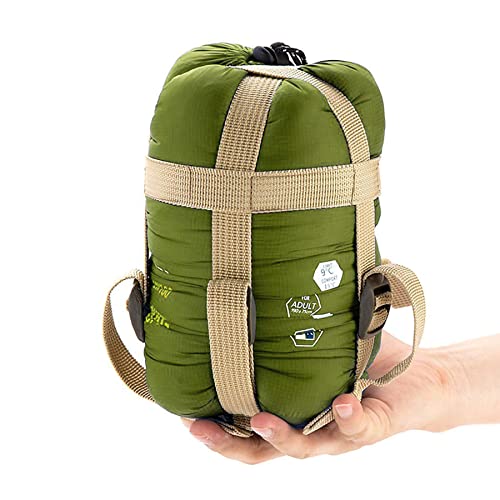
Best for backpackers who need a compact, weatherproof option without sacrificing space. Its outer Nylon shell is waterproof and durable, while the 100% Polyester lining remains breathable. The bag is sized at 83 inches by 30 inches, which accommodates most adults or two small children, making it versatile for solo trips or family outings. A key benefit is its compression-friendly design, rolling down to about 11 inches tall and weighing around 1.7 pounds, striking a balance between warmth and packability. Consider this if you prioritize rain protection and a simple packing system.
Who it’s best for: solo hikers and minimalists who want a compact, weatherproof bag that still fits taller users. Why selected: it combines reliable waterproofing with a lightweight profile and straightforward compression.
Caution: despite its compact size, the bag’s warmth rating leans toward milder conditions, so plan for cooler nights with a liner or additional layer if needed.
MalloMe Sleeping Bags for Adults

Best for families and young campers who want warmth across seasons. The bag is rated for a broad 50°F to 77°F range and fits up to a 6-foot adult, with a weight around 3 pounds. Its outer shell uses a waterproof hex-tech design with double-layered stitching and S-shaped seams, paired with a synthetic fill for reliable insulation. It comes with a compression sack for easy transport, making it a practical choice for beginners and school trips. Choose this for kids or adults who value simple, all-around warmth and moderate bulk.
Who it’s best for: families, kids, and beginners seeking a versatile, year-round bag that’s easy to handle. Why selected: durable construction, warmth across a wide range, and parent-friendly colors.
Caution: the heavier weight compared with ultralight options means it won’t be ideal for ultralight backpacking or long through-hikes.
Teton Trailhead 20 Degree Sleeping Bag

Best for light hikers who want warmth without excess weight. This mummy-style bag features a hood to retain heat, a zipper draft tube, and a vaulted footbox for comfort and warmth. Its breathable, double-brushed liner improves sleep comfort, and the included durable compression sack enhances packability. It’s suited for 20-degree comfort in cooler nights, with a focus on compressibility. Avoid this if you require extra room or you sleep colder than average and may need layering.
Who it’s best for: solo hikers seeking a warm, compact bag with reliable loft. Why selected: strong warmth-to-weight ratio and effective compression.
Caution: the mummy design and snug fit may not suit larger sleepers or those who prefer more shoulder room.
Teton Trailhead 20 Degree Sleeping Bag (Second Listing)

Best for travelers who prioritize a balance of comfort and packability. This version emphasizes a roomy footbox, anti-snag zippers, and a soft inner lining for a peaceful night’s sleep. The design facilitates easy entry and exit, and the included stuff sack aids in consistent compression. It remains lightweight for backpacking while preserving warmth. Choose this if you want a dependable three-season bag with straightforward care and storage.
Who it’s best for: hikers who want a practical, reliable bag with comfortable dimensions. Why selected: dependable zipper performance and a soft, inviting interior.
Caution: the bag is still a mummy style; larger sleepers may prefer a roomier alternative.
OneTigris Bushcrafter’s Sleeping Bag

Best for three-season campers needing rugged performance. This mummy-style bag covers 46.4–59°F (8–15°C), with a water-repellent 300T pongee outer shell and 190T pongee lining. The 7-ounce polycotton filling provides solid warmth and quick-dry capabilities, and YKK zippers with anti-snag design help with ease of use in the field. It’s a solid choice for hikers who value durability and weather resistance. Consider this if you encounter damp nights or rugged terrain.
Who it’s best for: adventurers who need a tough bag for variable three-season conditions. Why selected: robust shell and practical quick-dry performance.
Caution: heavier use may require occasional maintenance to protect the outer fabric and zipper integrity.
Teton LEEF Lightweight Mummy Sleeping Bag

Best for hikers who want a balance of warmth and ultra-light design. This bag is engineered for comfortable movement while remaining easy to pack in a small space. It emphasizes efficient insulation and a compact design, making it a strong match for those who value minimalist gear without sacrificing comfort. It’s well-suited for spring through fall trips where temperatures vary, and you need a light, dependable option in your backpack. Choose this if you prioritize streamlined packing and speed of setup.
Who it’s best for: solo travelers and fast-packers needing a lean, warm option. Why selected: ultralight design with solid loft and size-for-age flexibility.
Caution: not ideal for extreme cold or very tall individuals who need extra space for layering.
Buying Guide: How to Choose the Right Backpacking Sleeping Bag
- Climate and temperature rating: Match the bag’s comfort rating to the typical nighttime temperatures you expect. For three-season use, consider bags rated for 20–40°F in cooler nights and 55–60°F for temperate environments.
- Insulation type: Down offers warmth-to-weight advantages but may require loft for compressibility; synthetic fills perform better in damp conditions and are easier to maintain.
- Shape and fit: Mummy bags save space and warmth but limit shoulder room. Rectangular or semi-rectangular designs offer more movement but are bulkier.
- Weight and packability: If you’re counting grams, prioritize ultralight shells and efficient compression sacks. If family trips matter, a slightly heavier bag with easy handling can be advantageous.
- Durability and weather resistance: Look for waterproof or water-repellent shells for wet nights and rough terrain. Zippers with anti-snag designs reduce wear during use.
- Size and compatibility: Check length and width to ensure comfort for your height and build. If you camp with kids, consider options that can accommodate two sleepers in one bag.
Frequently Asked Questions
- How do I choose the right temperature rating for a backpacking sleeping bag? Answer: Consider the coldest expected night, your sleep comfort, and the possibility of layering, choosing a bag with a comfort rating close to or slightly below that temperature.
- What’s the advantage of a mummy bag? Answer: It minimizes volume and maximizes warmth per weight, ideal for cold nights and compact packs.
- Should I pick synthetic or down insulation? Answer: Synthetic dries faster and maintains insulation when wet; down is lighter and warmer for its weight in dry conditions.
- Do I need a separate compressed bag? Answer: Many bags include a compression sack; if not, choose one that reduces volume significantly for easy packing.
- Can sleeping bags be shared for two people? Answer: Some have extra length to accommodate two children or a smaller adult, but most are designed for single occupancy; check product dimensions.
- How do I maintain a sleeping bag’s performance? Answer: Dry, clean storage and proper washing per manufacturer instructions extend loft and durability.