Looking for an amplifier that reliably powers a turntable with clean, detailed sound? This guide highlights five strong choices that pair well with phonographs and enhance vinyl listening. The selections cover integrated stereo receivers with built‑in phono inputs, dedicated phono preamps, and compact amp/preamp combos suitable for desktop or small rooms. Best for beginners, audiophiles, and home theater setups alike, these options emphasize clarity, low noise, and practical connectivity.
Buyer note: If you already own a phono stage, you may prefer a simple line‑level amplifier or a compact preamp. If you need wireless streaming, prioritize models with Bluetooth. For desktop setups, look for smaller chassis and quiet operation. The following table compares the five products by their core strengths.
| Product | Best For | |
|---|---|---|
| Sony STRDH190 | All‑around home stereo with phono | Phono input plus Bluetooth and multiple inputs |
| Pyle PP999 | Budget phono preamp for minimal setups | Phono to line level conversion |
| Douk Audio X1 | Warm tube sound for vinyl lovers | Tube preamp with MM phono input and Bluetooth |
| Douk Audio NS‑13G | High‑power mini amp with phono | 600W peak, MM phono input |
| Fosi TB10D | Compact, flexible mini amp | TPA3255 class D, bass/treble controls |
Sony STRDH190 2‑Ch Home Stereo Receiver With Phono Inputs

Best for: Entry‑level home listening with vinyl and wireless streaming. This receiver is ideal for buyers who want a simple all‑in‑one solution without extra hardware. It provides a built‑in phono input and Bluetooth, making it a solid choice for dorm rooms, living spaces, or hobbyist setups seeking convenience and decent power.
Why selected: The Sony model offers 100 watts per channel with a dedicated phono stage and multiple inputs, making it a versatile hub for a turntable and modern devices. It’s adequate for small to medium rooms and supports Bluetooth streaming for convenience.
Caution: The device’s Bluetooth range and interference can vary by environment; connect via wired inputs for best fidelity when critical listening.
Pyle Phono Turntable Preamp PP999
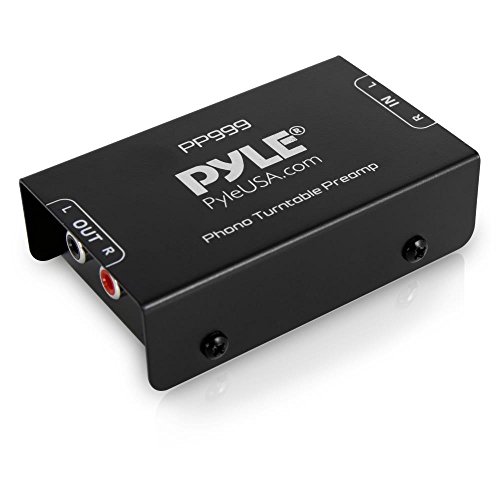
Best for: Vinyl purists who need a dedicated phono preamp to boost signal to line level, especially when the turntable lacks its own phono stage. Ideal for simple, budget setups where the source is a basic turntable.
Why selected: This preamp converts phono signals to line level and supports standard inputs/outputs, enabling compatibility with modern receivers lacking a phono input. It’s compact and straightforward for straightforward vinyl playback.
Caution: Placement near the turntable helps minimize hum and stray noise; avoid long, unshielded runs between turntable and preamp if possible.
Douk Audio Tube Phono Amp X1

Best for: Audiophiles seeking a warm, tube‑like character from vinyl and an easy upgrade path with Bluetooth streaming. Suitable for desktop or small living spaces where a touch of tube warmth is desired without a large tube‑amp footprint.
Why selected: The X1 uses vacuum tubes to deliver a rich, detailed sound and offers easy tube rolling for tone customization. Bluetooth 5.0 adds wireless convenience for mobile devices.
Caution: Tube components can require more maintenance than solid‑state options; ensure proper ventilation and avoid extended operation at very high volumes without a load.
Nobsound 300W×2 Phono‑Ready Mini Power Amp NS‑13G

Best for: Small‑to‑medium rooms where a compact, high‑power amp with a dedicated phono input is desirable. Suitable for driving bookshelf speakers with turntable integration or as a partner to a larger home theater system.
Why selected: It combines high output with a phono input and multiple RCA connections, supporting a broader setup. The 600W peak claim targets louder playback with good dynamics when paired with compatible speakers.
Caution: This model is a high‑power device; ensure your speakers match the recommended impedance to avoid distortion or damage.
Fosi TB10D 2 Channel Stereo Amplifier

Best for: Compact, flexible mini amplifier for desktops, turntables, or small home theaters. Great for users who want adjustable tone with bass and treble controls in a small footprint.
Why selected: The TB10D delivers substantial power from a compact chassis and includes tone controls plus a phono‑ready option through optional connections. It’s a solid choice for expanding a vinyl setup without large hardware.
Caution: While compact, heat management is important; provide adequate ventilation to prevent thermal throttling during extended use.
Buying Guide
What to consider when choosing a turntable amplifier
- Phono vs. line level: If your turntable lacks a built‑in phono stage, you need a dedicated phono preamp or a receiver with a phono input. Otherwise, you may use a line‑level amplifier with a separate phono preamp.
- Power and impedance: Match amplifier power to your speaker impedance (commonly 4–8 ohms). Higher power can deliver cleaner dynamics, but compatibility with your speakers matters more than wattage alone.
- Inputs and outputs: Ensure the amplifier has the necessary inputs for your setup (RCA, 3.5mm, USB, Bluetooth). If you plan to add a subwoofer or streaming devices, confirm available outputs or passthrough options.
- Noise and hum: Look for low‑noise designs and good shielding, especially with phono stages. Shorter signal paths reduce interference with turntables.
- Tone controls: Treble and bass adjustments help tailor the sound to your room, particularly on compact systems. Use them judiciously to avoid coloration of the original vinyl signal.
- Size and placement: Desktop or shelf space matters. For smaller rooms, compact amps with integrated phono inputs are convenient; for living rooms, a full receiver may be preferred.
How to set up for best results
- Place the turntable on a stable, vibration‑resistant surface away from speakers and electronics to minimize feedback.
- Connect phono outputs directly to the phono input or through a dedicated phono preamp before feeding a line‑level input.
- Keep interconnect cables short and well organized to reduce noise.
- Test with a selection of records to assess dynamics, balance, and noise floor in your room.
FAQ
- Do I need a phono preamp for every turntable? If your turntable has a built‑in phono stage, you can connect to a standard line input. If not, you need a separate phono preamp or a receiver with a phono input.
- Can I use a Bluetooth amp with a turntable? Yes, if the amp includes Bluetooth, you can stream from mobile devices. For vinyl fidelity, wired connections often perform better than wireless in interference‑prone environments.
- Is more power always better for vinyl? More power helps with dynamic headroom, especially in larger rooms or with efficient speakers. However, matching to speaker impedance and room size is more important than raw wattage.
- What is “phono MM vs MC”? MM (moving magnet) and MC (moving coil) are cartridge types. Phono preamps must be compatible with the cartridge type for proper gain and equalization.
- Should I buy a dedicated phono preamp or a receiver with phono input? If you already own a high‑quality receiver without a phono input, a dedicated phono preamp provides focused, lower noise amplification. If you want a simple, all‑in‑one solution, a receiver with a built‑in phono stage is convenient.
- Do phono preamps affect record wear? All vinyl playback involves contact between the stylus and the groove. A clean, properly calibrated preamp helps minimize noise and distortion, not wear the records more than necessary.