Find reliable, long-lasting 9V rechargeable batteries for smoke detectors, test equipment, and DIY projects. This guide highlights five strong options, detailing who they’re best for and why they stand out. Expect clear comparisons, practical buying tips, and quick-reference notes to help you pick the right model for your needs.
Summary table of selected products: the table below compares capacity, charging, and ideal use cases to help you decide quickly before reading deeper.
| Product | Battery Type | Capacity | Best For |
|---|---|---|---|
| Quzmo 4-Pack Rechargeable 9V Batteries | Li-ion, USB-C | 1300 mAh | Smoke alarms, frequent users, budget-conscious households |
| EBL 9V Rechargeable Batteries 150mAh (4-Pack) | Ni-MH | 150 mAh | Everyday devices, budget-friendly option, simple replacement |
| Quzmo 2-Pack Rechargeable 9V Batteries | Li-ion, USB-C | 1300 mAh | Smaller kits, multiple devices, USB charging preference |
| HW 9V Batteries 1400mAh | Li-ion, USB-C | 1400 mAh | High-capacity needs, long runtimes, smoke detectors |
| TQTHL 4-Pack 1500mAh Rechargeable 9V | Li-ion, USB-C | 1500 mAh | High-output devices, travel, not for instrument-sensitive gear |
Quzmo 4-Pack Rechargeable 9V Batteries
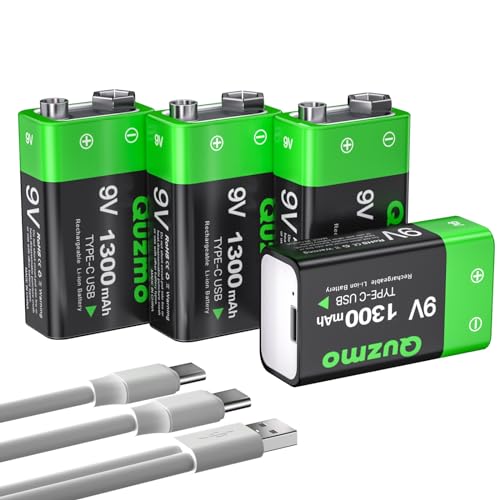
Best for high-use environments, these 9V lithium-ion batteries offer USB-C charging and built-in indicators. The 1300 mAh capacity supports longer run times with more cycles—up to 1200 recharges. They include a 2-in-1 charging cable and a focus on safety features like overcharge and short-circuit protection. Suitable for households with smoke detectors, wireless devices, and portable test gear. A potential limitation is reliance on USB-C charging: keep the included cable handy and ensure compatible charging ports are available.
EBL 9V Rechargeable Batteries 150mAh Ni-MH

Best for low-drain devices and cost-conscious buyers, these Ni-MH 9V batteries offer a practical 4-pack solution. They’re recommended for smoke alarms, clocks, and simple toys, delivering a budget-friendly option with a long cycle life. The trade-off is lower capacity compared with lithium-based packs, which may mean more frequent replacements in high-demand devices.
Quzmo 2-Pack Rechargeable 9V Batteries

Best for compact kits and portable projects, this 2-pack provides the same USB-C charging convenience and 1300 mAh capacity as the larger pack. It’s well-suited for users who want a smaller, lighter complement for multi-device setups or for testing. Limitations include the same need for USB-C infrastructure and potential higher per-battery cost if you only need a few cells.
Rechargeable Lithium 9V Batteries 1000mAh

Best for USB-first charging setups, this Fitinoch option emphasizes a 1000 mAh capacity with USB charging, promising a simple, cord-free recharge. It’s appropriate for users who want straightforward charging without a dedicated standalone charger. A caution: sometimes lower capacities translate to shorter intervals between charges in high-drain devices.
HW 9V Batteries 1400mAh 4 Pack
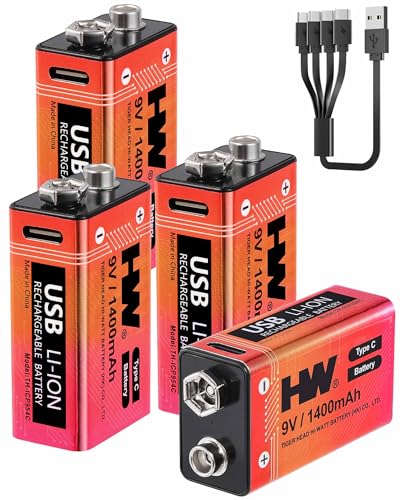
Best for higher-capacity needs, these HW lithium-9V cells deliver robust runtimes with a USB-C port and an included multi-use charging cable. They’re well-matched for smoke detectors and devices requiring consistent performance. A potential limitation is that some users report compatibility variability with certain older devices, so test in a controlled setting first.
TQTHL 4-Pack 1500mAh Rechargeable 9V

Best for extended run times, this option offers the highest capacity among the selections and a USB-C charging setup with a 2-in-1 data cable. It’s ideal for travelers and power users who need reliable performance across multiple devices. Note that the description warns it may not be suitable for some professional musical instruments or highly sensitive equipment, so consider device compatibility before use.
Buying Guide: Key Considerations And Comparisons
- Battery chemistry: Lithium-ion offers higher energy density and longer cycle life than Ni-MH at similar voltages, but it can be more sensitive to extreme temperatures and requires careful charging. Ni-MH is generally more cost-effective and forgiving for everyday devices.
- Capacitance and runtime: Higher mAh ratings generally translate to longer runtimes between charges, especially for high-drain devices like smoke alarms or wireless gear. Compare capacity alongside device power requirements.
- Charging method: USB-C charging with a built-in port simplifies charging and eliminates separate chargers. Ensure your charging setup includes a compatible USB-C cable or multi-port charger.
- Charging cycles: Look for batteries rated for 1000+ recharges if you plan frequent replacements. Cells with robust protection circuits help prevent overcharging and short circuits.
- Physical fit and compatibility: Some devices are sensitive to battery chemistry or voltage stability. For professional instruments or audio gear, verify device compatibility and potential interference rumors before purchasing.
- Storage and safety: Consider a protective storage case to avoid accidental contact with metal objects. Insulation and proper handling reduce the risk of short circuits during transport.
Frequently Asked Questions
- What is the advantage of a 9V lithium battery over Ni-MH for detectors? Longer run time and higher energy density, especially in high-drain devices like detectors.
- Can I use any USB-C charger to recharge these batteries? Yes, if the battery supports USB-C input; use the included or compatible USB-C cable and avoid overcharging.
- Do these batteries have memory effects? Modern Li-ion and Ni-MMH packs minimize memory effects, but it’s still best to follow manufacturer charging guidelines.
- How many times can these batteries be recharged? Many options claim 1000–1200+ cycles depending on usage and charging conditions.
- Are 9V lithium packs safe for smoke alarms? Yes, when used as directed with proper safety protections, these packs are designed to provide reliable power.
- What should I consider when choosing between 1300 mAh and 1500 mAh packs? Higher capacity generally offers longer life per charge; consider device consumption and how often you recharge.