If you’re seeking a 65 litre rucksack, you want a pack that balances capacity with carry comfort, durability, and organization. This guide highlights five highly capable 65L backpacks, each suited to different types of travelers—from weekend hikers to long-distance trekkers. The top picks emphasize adjustable fits, hydration compatibility, and robust materials. Whether you need a pack for rain-soaked trails or dry, rugged expeditions, these options help you carry gear efficiently. Below, you’ll find a quick buyer table and detailed product sections to compare strengths and trade-offs.
| Product | Best For | |
|---|---|---|
| TETON Sports 65L Explorer Internal Frame | Beginners and seasoned hikers | Adjustable torso, lumbar comfort, hydration pocket |
| Nayubo 65L Hiking Backpack | Expanding capacity and travel days | Expandable bottom, multi-compartment design, water-resistant |
| Osprey Rook 65L Brown | All-weather backpacking | Adjustable AirSpeed, LightWire frame, integrated raincover |
| Naturehike 65L Internal Frame | Lightweight long-haul trips | Ultralight design with large capacity and rain cover |
| Teton 65L Scout Internal Frame | Budget-conscious adventurers | Comfortable fit, multiple sizes, hydration pocket |
TETON Sports 65L Explorer Internal Frame Backpack

Best for: Beginners to intermediate hikers who want a feature-rich pack with a balanced feel. This 65L model offers adjustable torso length and a supportive lumbar pad, helping distribute weight for longer carries. The hydration pocket adds convenience for longer treks. The olive color variant emphasizes rugged outdoor style and is documented as a full 65L, with options to adjust to different torso lengths. Caution: while designed for comfort, heavier loads should be balanced carefully to avoid back fatigue on steep trails.
Key features: adjustable torso, open-cell foam lumbar pad, molded channels for airflow, hydration pocket, ranges for 65L/75L/85L variants. Best used for campers who want a reliable, all-day pack without needing extra premium features.
TETON Sports 65L Explorer Internal Frame Backpack (Graphite)
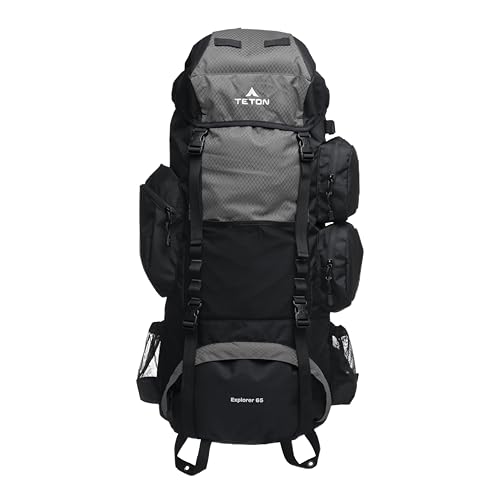
Best for: Trekkers who value a durable shell and consistent fit across outdoor seasons. The graphite variant shares the same core features as Olive, including a customizable torso fit and airflow-enhanced lumbar support. It’s well-suited for multi-day hikes where comfort and stability matter. Limitation: some users may prefer lighter-weight options for ultra-long distances, depending on the terrain and payload.
Key features: multi-position torso adjustment, durable foam lumbar pad, molded channels for airflow, hydration pocket, available in multiple sizes. Choose this if you want a uniform, rugged look with equivalent performance to the olive version.
Nayubo 65L Hiking Backpack

Best for: Travelers who need expandable storage and strong organization. Nayubo’s 65L model offers a bottom expansion and multiple compartments to separate gear, clothing, and tech. The waterproof exterior helps protect contents on wet days, and smooth zippers aid quick access. Caution: the pack’s weight can be higher when expanded, so packing smart is important to maintain balance on steep climbs.
Key features: expandable bottom compartment, multiple pockets (3 front, 2 side), waterproof fabric, smooth zippers, tear-resistant construction. This pack is ideal for longer trips where a flexible capacity is valuable.
Osprey Rook 65L Men’s Backpacking Backpack (Brown)

Best for: Backpackers who need strong ventilation and reliable weather readiness. The Adjustable AirSpeed suspension supports torso-length customization and reduces back sweat through a tensioned backpanel. The LightWire frame transfers weight to the hips, easing shoulder load, while an integrated raincover covers gear in wet conditions. Limitation: the feature set is robust, which can translate to a higher price and a slightly heavier overall pack compared to minimalist designs.
Key features: adjustable torso, AirSpeed suspension, LightWire frame, integrated raincover, lightweight for its capacity. This option is particularly well-suited for longer trips where airflow and rain protection matter most.
Osprey Rook 65L Men’s Backpacking Backpack (Brown OS)

Best for: Those who want a proven all-around pack with consistent performance across seasons. The Brown OS variant provides the same AirSpeed suspension and rain protection, with a slightly different aesthetic. This is a better-for choice when you value a proven design and established fit across a range of torso lengths. Caution: ensure the fit matches your torso length to maximize comfort on long days.
Naturehike 65L Internal Frame Hiking Backpack

Best for: Ultralight-minded trekkers who still need sizable capacity. Naturehike’s 65L model emphasizes a lighter frame with practical organization and a rain cover. It’s suitable for long treks with variable weather, particularly where weight savings matter. Limitations: while lightweight, some users may want extra padding for heavier loads over extended periods.
Key features: 65L capacity with 60L+5L expansion, rain cover, breathable back pad, compression straps, integrated pockets for trekking poles and shoes. This pack stands out when travel weight matters as part of a longer expedition.
Buying Guide: 65L Rucksack Essentials
What will you carry?
Consider the gear load you plan to transport. A 65L rucksack should fit clothing, shelter, cooking gear, hydration, and a few extras for multi-day trips. Choose a pack with a dedicated hydration sleeve and a large main compartment with multiple pockets for organizational ease.
How important is fit?
Back length and torso adjustability are critical. Look for adjustable torsos, supportive lumbar padding, and a hip belt that fits snugly. A well-fitted pack reduces fatigue by transferring weight to the hips rather than the shoulders.
Weather and durability considerations
Weather resistance matters on wet trails. Packs with rain covers or weatherproof fabrics help protect gear. Durability varies by material and seams; aim for reinforced stitching, durable zippers, and abrasion-resistant panels.
Weight and comfort balance
65L backpacks can vary in weight. If you plan long treks, a lighter frame with breathable back panels can improve comfort. If you prioritize durability, a heavier, sturdier shell may be preferable.
Organization and accessibility
Evaluate pocket layouts, side and front access, and the ease of locating items mid-hike. A pack with a bottom compartment and multiple access points typically speeds up gear retrieval on the go.
Bottom line: choosing the right 65L pack
Pick a pack that matches your typical trip length, climate, and carrying style. For entry-level or budget-conscious buyers, the TETON 65L Explorer and Scout variants offer reliable comfort and essential features. For expanding payloads or longer travel days, Nayubo’s expandable model provides flexibility. For all-weather reliability and established design, the Osprey Rook 65L line remains a strong choice. Naturehike delivers a lighter option for careful weight-conscious explorers.
FAQ
- What size is a 65L rucksack best for? It’s best for multi-day trips or extended travel where you need to carry clothing, shelter, and cooking gear for several days.
- Do all 65L packs have hydration pockets? Most do, but verify compatibility with your hydration system and sleeve size.
- Is a rain cover necessary? A rain cover is highly useful for unpredictable weather, especially on exposed trails.
- Should I choose a lighter or more durable 65L pack? If you hike long distances with a light load, a lighter pack is beneficial; for rugged terrain or heavy gear, durability matters more.
- What is the difference between 65L Explorer and 65L Scout from TETON? Both offer comfort features, but the Explorer emphasizes torso adjustability and airflow; the Scout focuses on a similar balance with slightly different sizing options.