If you’re upgrading an older PC or building a budget system, a 4GB graphics card is a sensible balance of cost and performance. This guide targets buyers who want solid 1080p gaming and everyday graphic tasks without breaking the bank. The top picks below are best for budget gamers, home offices, and compact builds where size and power efficiency matter. Each option is evaluated for who it’s best for, potential limitations, and how it compares to similar models.
| Product | Memory | Interface | Best For |
|---|---|---|---|
| MSI GeForce GT 1030 4GB | 4GB DDR4 | PCIe | Budget 1080p gaming, compact builds |
| SOYO GeForce GT 740 4GB DDR3 | 4GB DDR3 | 128-bit | Legacy systems, basic multi-monitor setups |
| Maxsun Radeon RX 550 4GB GDDR5 | 4GB GDDR5 | PCIe | Light gaming and multimedia on a tight budget |
| ARDIYES GT 740 4GB GDDR5 | 4GB GDDR5 | PCIe | Quad-monitor setups and quiet operation |
| QTHREE GT 730 4GB | 4GB DDR3 | PCIe | Low-profile builds and basic tasks |
MSI Gaming GeForce GT 1030 4GB OC Graphics Card
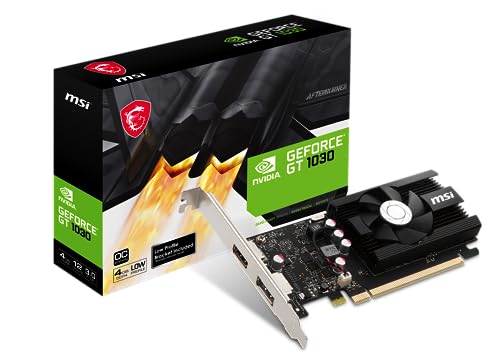
Features include 4GB DDR4 memory and a boost clock up to 1430 MHz, offering a modest step up over integrated graphics for 1080p gaming and media tasks. This card is best for small form factor builds and users who want a simple, low-power GPU upgrade without needing a large chassis or extra power connectors. Caution: performance will be limited in newer titles at high settings; consider this for light gaming or older titles.
SOYO GeForce GT 740 4GB DDR3 Low Profile

This card features 4GB DDR3 with a 128-bit bus and triple output (HDMI, DVI-D, VGA). It’s aimed at legacy desktops and multi-monitor workstations, offering flexible connectivity for older displays and office tasks. Best for users upgrading an older system who still want smooth video playback and light multitasking. Limitation: DDR3 memory and older architecture mean lower power efficiency and gaming performance compared to newer GDDR5 options.
Maxsun Radeon RX 550 4GB GDDR5 ITX

Equipped with 4GB GDDR5, this ITX card emphasizes low noise and stable operation. It’s suitable for 1080p gaming and multimedia tasks on compact systems, thanks to a small form factor and efficient cooling. Best for small builds where space and quiet operation matter. Caution: RX 550’s performance is best on older or less demanding titles; it may struggle with recent AAA games at high settings.
ARDIYES GT 740 4GB GDDR5 Low Profile
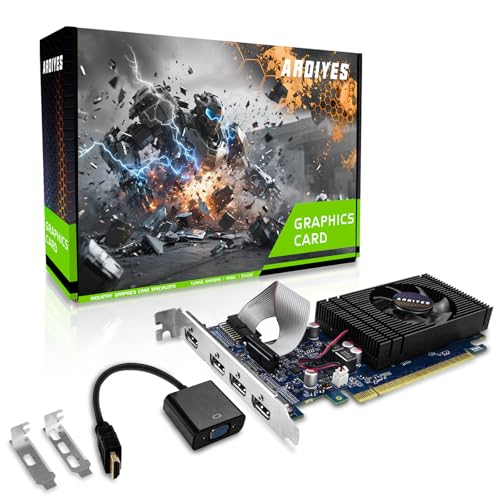
This card is designed for quad-monitor setups, offering four HDMI ports for easy multi-display configuration. It’s best for digital signage, trading desks, and office environments where multiple screens are essential. Benefit: out-of-the-box multi-monitor support. Limitation: The 4x HDMI setup may not deliver strong 4K performance in demanding games; intended more for productivity and video outputs than modern gaming.
QTHREE GT 730 4GB DDR3

Equipped with 4GB DDR3 and a 128-bit bus, this card emphasizes upgrade value for integrated graphics and basic tasks. It includes a low-profile design suitable for compact builds and HTPC setups. Best for budget-conscious users who need a straightforward boost for everyday browsing, video playback, and light gaming. Limitation: GT 730’s performance is the lowest among the listed options, so avoid for demanding titles or modern high-refresh gaming.
Glorto GeForce GT 730 4G Low Profile

Powered by the GT 730 with 4GB DDR3, this card supports multi-monitor output via dual HDMI and VGA/DP, suitable for entry-level multi-display setups. Best for home offices and media centers where a quiet, space-saving GPU is required. A caveat: while it supports NVIDIA Surround, gaming performance will be limited to older titles and lower settings due to its entry-level GPU class.
Buying Guide: 4GB Graphics Card Essentials
What to consider when shopping for a 4GB GPU: intended use, monitor setup, system power, and case size. If you play modern titles at high settings, a card with higher memory bandwidth and newer architecture (e.g., GDDR5) provides a better experience. For multi-monitor needs, models with multiple HDMI outputs or DisplayPort options are advantageous. Power and cooling are important in compact builds; low-profile cards help fit slim desktops without compromising airflow. Budget-conscious buyers should compare 4GB DDR3 versus 4GB GDDR5 based on workload.
Key Questions To Ask
- Will this card fit my PC case and power supply?
- Is 4GB memory enough for my typical games or tasks at 1080p?
- Do I need multiple display outputs for a multi-monitor setup?
- Can I upgrade later if I want better performance?
- Is silence a priority for my workspace?
Practical Comparison Highlights
- Better for gaming: Maxsun RX 550 4GB GDDR5 offers higher memory speed and newer architecture than GT 730/740 options.
- Best for compact builds: ARDIYES GT 740 4GB GDDR5 and MSI GT 1030 4GB OC are low-profile and suitable for SFF cases.
- Best for multi-monitor setups: ARDIYES GT 740 4GB GDDR5 and SOYO GT 740 4GB DDR3 provide multiple outputs and flexible layouts.
- Budget-friendly upgrade: GT 730 4GB options deliver noticeable improvements over integrated graphics at the lowest cost, ideal for basic tasks.
FAQs
- Are 4GB graphics cards still worth it in 2026? Yes for 1080p gaming on older titles and for general GPU acceleration in casual workloads, but expect limited performance in modern AAA games at high settings.
- Which 4GB card is best for HTPC use? Low-profile, quiet-cooled cards like ARDIYES GT 740 4GB GDDR5 are well-suited for living-room setups and media centers.
- Is DDR3 or DDR4/DDR5 memory better for gaming? Modern memory (GDDR5/DDR4+) generally offers better bandwidth and efficiency; DDR3 options are typically more budget-oriented and slower.
- Can a 4GB card support multiple monitors? Some models, such as ARDIYES and SOYO variants, provide multiple HDMI/DP outputs suitable for multi-monitor workspaces.
- Should I worry about DirectX support on these cards? Most of these GPUs support DirectX 11/12 features appropriate for contemporary Windows tasks and several older games.