The best 360 camera for a motorcycle setup depends on durability, low-light performance, stabilization, and post-editing flexibility. This guide highlights five top options suited for riders, whether you’re chasing helmet-cam action, scenic road trips, or high-adrenaline rides. Pick the model that matches your riding style and desired post-production workflow.
Buyer snapshot: quick comparison of selected models.
| Product | Key Strength | Best For | |
|---|---|---|---|
| AKASO 360 Action Camera Motorcycle Combo | 5.7K 360 video, Horizon Lock | Budget riders seeking strong stabilization | Stills quality can be average in low light |
| Insta360 X3 | Active HDR, AI reframing | Avid editors wanting post‑angle flexibility | App requires setup for best results |
| Insta360 X5 Motorcycle Bundle | 8K 360 video, triple AI chips | High-detail riders and low-light crews | Premium price, larger footprint |
| DJI Osmo 360 | Native 8K 360 imaging, strong dynamic range | Riders needing cinematic capability | Higher complexity, heavier mount |
| Insta360 X5 | 8K 360 video, rugged lens | All-weather adventures and durability fans | Prime lenses can be scratched without care |
AKASO 360 Action Camera Motorcycle Combo
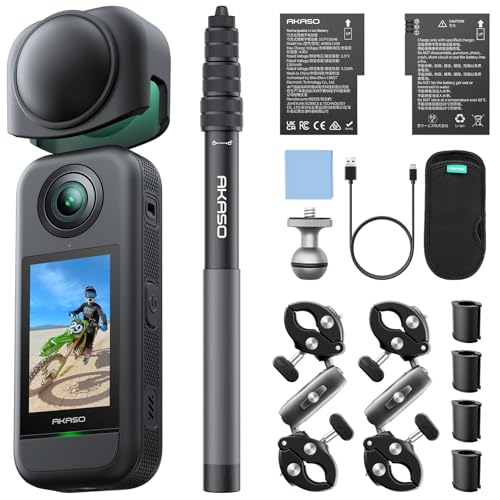
Features include 5.7K 360° video and 360° Supersmooth stabilization, along with 360° Horizon Lock to hold footage level during fast turns or helmet flips. This kit targets riders who want a capable all-in-one option without buying separate stabilizers. Best for budget-conscious motorcyclists seeking reliable stabilization and wide-angle capture. A potential limitation is that low-light performance may not match premium models, so expect brighter lighting to maximize image quality.
Who this is best for: Riders new to 360 capture or those who want a cost-effective setup with solid stabilization. Why chosen: It combines 5.7K 360 recording with horizon-stable footage in a single package, making it an approachable option for motorcycle use.
Caution: Expect reduced performance in dim conditions; plan for daytime rides or add lighting.
Insta360 X3

The Insta360 X3 pairs 5.7K 360 capture with AI-powered reframing, enabling post-ride angle selection after the fact. It supports FlowState stabilization and a 2.29″ touchscreen for on-device editing. This model suits riders who want flexible editing and creative framing without external gear. Better for riders who value AI-assisted editing and a compact setup; however, setup for best HDR results may require some learning curve.
Who this is best for: Riders who want powerful post-production options and straightforward AI editing. Why chosen: The combination of 5.7K 360 video and AI reframing delivers versatile footage for helmet-cam and road-trip angles.
Caution: The advanced editing features work best with compatible software and sufficient processing power.
Insta360 X5 Motorcycle Bundle
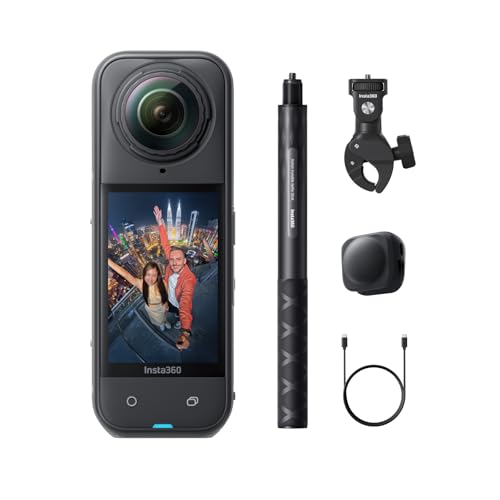
This bundle features 8K 360° footage with dual sensors, a rugged build, and replaceable lenses with sapphire-glass-level scratch resistance. Triple AI chip design enhances low-light performance and noise reduction, making it ideal for riders who venture into dawn, dusk, or tunnel-rich routes. It also includes an Invisible Selfie Stick option to achieve third-person perspectives. Best for riders who want top-tier detail and durability, and are comfortable with a higher price point. A limitation is the heavier system and larger file sizes from 8K footage.
Who this is best for: Enthusiasts who demand high resolution and rugged durability for challenging rides. Why chosen: 8K capability, robust stabilization, and replaceable lenses suit serious motorcyclists.
DJI Osmo 360 Motorcycle Handlebar POV Combo

DJI Osmo combines native 8K panoramic recording with a 170° field of view and a robust multi-specification shooting modes set. Its 1-inch sensors deliver high dynamic range and strong color rendering, while features like magnetic quick-release and heavy-duty mounting streamline on-bike setup. This model is best for riders seeking cinematic quality and advanced shooting options. A potential drawback is the complexity of controls in high-motion scenarios, which may require practice.
Who this is best for: Riders pursuing cinematic 360-degree footage with premium image quality. Why chosen: The 8K panorama and high dynamic range support dramatic, professional-looking rides.
Insta360 X5 (Standard) 8K 360° Camera

The Insta360 X5 offers 8K 360° video with dual 1/1.28″ sensors, triple AI chip design for low-light performance, and an Invisible Selfie Stick option. It emphasizes ruggedness with replaceable lenses and built-in wind protection to capture clean audio while riding. This option suits riders who want all-weather performance and the ability to swap lenses if needed. Limitation: 8K video creates large file sizes and may require substantial storage and processing power.
Who this is best for: Riders who need high-detail 360 footage in varied lighting and weather. Why chosen: Combination of 8K capture, ruggedness, and lens replaceability for long-term durability.
Buying Guide: key considerations for choosing a motorcycle 360 camera
- Resolution and field of view: Higher resolution (8K/5.7K) provides more detail; 360° coverage ensures immersive footage, but larger files require more storage and processing.
- Stabilization and horizon control: Look for horizon lock, FlowState, or AI-based stabilization to minimize shakiness on bumpy rides.
- Low-light performance: Dual sensors and AI noise-reduction improve footage in dawn, dusk, or tunnels.
- Durability and weather sealing: For motorcycling, choose rugged builds with scratch-resistant lenses or replaceable lenses and wind protection.
- Mounting options and compatibility: Ensure the camera works with your handlebars, helmets, or mounting kits, and check for anti-theft mounting options if needed.
- Post-production workflow: Consider native apps and AI editing features for reframing and editing multiple angles efficiently.
- Battery life and storage: Longer rides require extended battery life and ample memory card capacity or onboard storage.
Frequently Asked Questions
- What is the best 360 camera for motorcycle beginners?
- Can 360 cameras capture helmet-cam style footage?
- Do 8K cameras provide noticeably better footage on motorcycles?
- Is AI reframing essential for motorcycle use?
- What accessories matter most for on-bike use?
- Do I need separate gimbals for 360 cameras?
AKASO options offer solid stabilization and a lower price point, making them a practical starting choice.
Yes, many models support helmet mounting with stabilization and horizon-level footage for smooth helmet views.
8K offers greater detail, but it requires stronger processing and may be limited by lighting and motion; 5.7K or 6K often balance quality and practicality.
AI reframing helps post-production by allowing you to select angles after the ride, which can save time and enable creative storytelling.
Anti-theft mounts, rugged housings, replaceable lenses, wind-protective mics, and stable handlebar mounts are key considerations.
Many 360 cameras include advanced stabilization and do not require a separate gimbal for smooth footage, though high-action shots may benefit from one.