Answering the buyer’s search, this guide compares top 360 action cameras for immersive footage, reliable stabilization, and flexible shooting styles. The selections cater to vloggers, adventure seekers, and content creators who want hands-free, all-around views with post-production flexibility. Below, find five strong options and a concise buying guide to help choose the right model for your needs.
| Product | Key strengths |
|---|---|
| Insta360 X5 | 8K30 360 video, triple AI chip, excellent low light, invisible selfie stick |
| Insta360 X3 | 5.7K 360 with FlowState stabilization, AI reframing, rugged versatility |
| GoPro MAX2 | True 8K 360 capture, replaceable lenses, 6 microphones, POV versatility |
| AKASO 360 Action Camera (Standard) | 5.7K 360, 360° Horizon Lock, 64GB kit option, solid stabilization |
| Insta360 X4 Air | 8K 360, lightweight, shoot first, frame later, AI app support |
Notes: All models presented here offer 360-degree capture with advanced stabilization and post-production framing. The table highlights key strengths and intended user types to help you pick quickly.
Insta360 X5 – 8K 360 Camera

The Insta360 X5 features dual 1/1.28″ sensors delivering 8K30fps 360 video. Its triple AI chip design enhances noise reduction and color accuracy for crisper footage in varying light. The invisible selfie stick option helps create third-person-style shots without visible hardware in the frame. Best for: adventure filmmakers who need high-resolution 360 footage and strong low-light performance. Limitation: higher data size and processing requirements may demand robust editing workflows.
Insta360 X3 – 5.7K 360 with AI Reframing

The Insta360 X3 combines 5.7K 360 capture with AI-powered reframing and FlowState stabilization. It’s compact and versatile, aimed at creators who want to shoot 360 video and later choose their framing in post. Best for: vloggers and motor enthusiasts who value post-production flexibility. Caution: AI reframing may require compatible software workflows for best results.
GoPro MAX2 – 360 + Traditional Camera
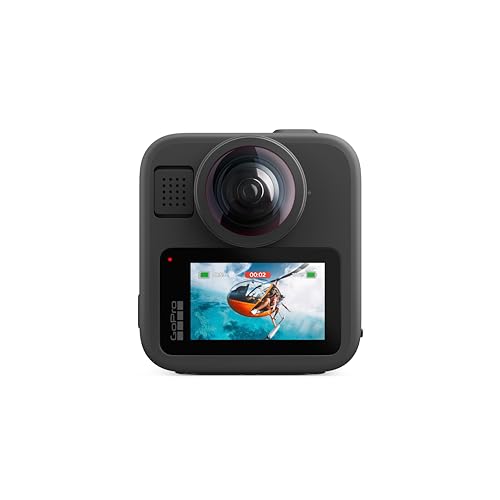
GoPro MAX2 delivers true 8K 360 video with easy reframing to standard 4K clips via the Quik app. It features replaceable lenses, a spherical capture mode, and six microphones for immersive audio. Best for: creators who want turnkey 360 footage with strong editing integration and interchangeable lenses. Limitation: higher price point and more complex workflow for casual users.
AKASO 360 Action Camera Standard
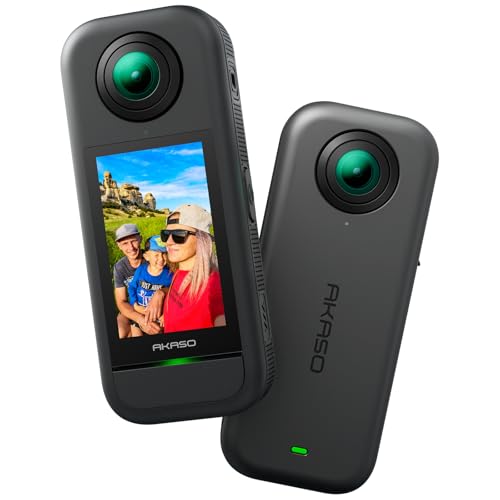
AKASO’s 360 Action Camera Standard delivers 5.7K 360 video with OME stabilization including 360° Horizon Lock. It emphasizes smooth footage and reliable stabilization with a more affordable price. Best for: beginners and budget-conscious creators who want solid 360 performance without extra features. Caution: low-light performance may be limited compared to high-end models.
AKASO 360 Action Camera Standard Combo
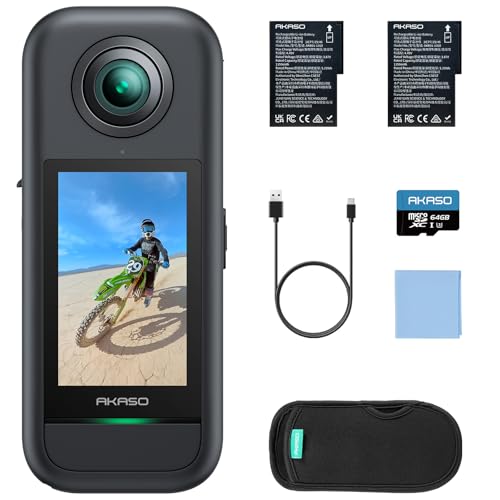
This kit mirrors the AKASO Standard and adds a 64GB microSD card, making it ready-to-record out of the box. It keeps 5.7K 360 video, 360° Supersmooth stabilization, and Horizon Lock. Best for: new creators who want a ready-to-go package with essential stabilization. Caution: card capacity and transfer speeds will affect long continuous shoots.
Insta360 X4 Air – Lightweight 8K 360
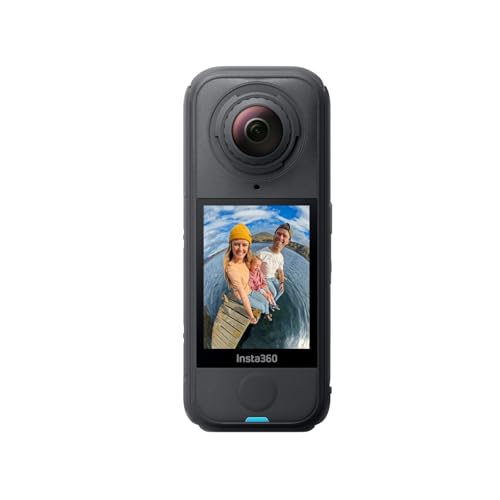
The X4 Air weighs about 165g and offers 8K 360 video with replaceable lenses. It emphasizes shoot-first framing with post-capture reframing in the Insta360 app, plus a built-in wind guard. Best for: action travelers who want a light, high-resolution option and flexible post-editing. Caution: higher-end features may require compatible software for optimal results.
Buying Guide
What should you consider when choosing a 360 action camera?
- Resolution and frame rate: For immersive footage, look for 8K or near-8K options and high frame rates for smooth movement.
- Stabilization: FlowState or 3-axis stabilization helps keep footage steady during dynamic activity.
- Low-light performance: Dual sensors and AI noise reduction improve footage in dim conditions.
- Post-processing flexibility: AI reframing, horizon locking, and easy app workflows save editing time.
- Weight and form factor: Lighter cameras are easier to mount and carry on longer shoots.
- Accessories: Invisible selfie sticks, replaceable lenses, and built-in wind guards add versatility.
How to pick among the top options?
- Best for highest resolution: Insta360 X5 or GoPro MAX2 for True 8K360 footage, with post-processing options.
- Best value: AKASO 360 Action Camera Standard offers solid stabilization at a more accessible price point.
- Best for light, on-the-go filming: Insta360 X4 Air balances weight with 8K capabilities and reframing.
- Best for flexible framing after recording: Insta360 X3 and X5 enable AI-based reframing and advanced editing.
FAQ
- What distinguishes 8K 360 cameras from 5.7K 360 cameras?
8K provides higher resolution but requires more processing power and larger file sizes. - Is an invisible selfie stick feature important?
It helps create third-person perspectives without visible equipment in the shot. - Do these cameras work well in low light?
Some models use dual sensors and AI processing to improve low-light performance, but results vary by model. - Can I reframing 360 footage after shooting?
Yes, several models offer AI reframing in their apps to create traditional videos from 360 content. - Are replaceable lenses worth it?
Replaceable lenses allow adaptation for different scenes but may add cost and complexity. - Do all come with stabilization by default?
Most listed models include some form of stabilization, but performance can vary with motion intensity.