Looking for a simple, compact 35mm point-and-shoot to capture everyday moments with minimal fuss? This guide highlights five reliable options that balance ease of use, portability, and film-friendly features. Best for beginners and casual shooters who want affordable, retro-styled film photography without complicated settings. The top picks cover half-frame formats for more exposures per roll, built-in flashes for varied lighting, and lightweight designs for travel. Below is a quick summary of the chosen products to help you compare at a glance.
| Product | Key Benefit | Best For |
|---|---|---|
| KODAK EKTAR H35 Half Frame (Sage) | Twice as many exposures per roll; built-in flash | Everyday carry, light travel |
| KODAK EKTAR H35 Half Frame (Sand) | Double exposures; lightweight and easy to use | Beginner analog lovers, budget-friendly swaps |
| Kodak Snapic A1 35mm | 2-Zone focus; auto flash | Casual street and travel photography |
| Canon Sure Shot Zoom-S 35mm | 38-60mm zoom; auto exposure | Versatile framing for portraits and scenes |
| KODAK EKTAR H35N Half Frame Bundle | Built-in star filter; long exposure bulb mode | Creative night and light-play shots |
KODAK EKTAR H35 Half Frame Film Camera, Sage
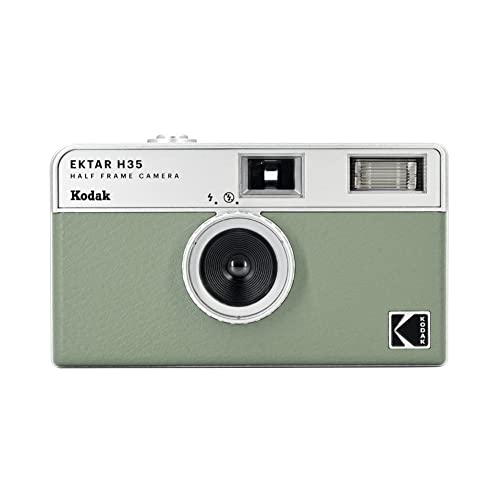
The KODAK EKTAR H35 Half Frame in Sage is designed for film enthusiasts who want double the exposures per roll without carrying extra gear. The camera is lightweight and pocket-sized, making it ideal for daily carry and casual trips. Its straightforward operation suits beginners and those who prefer a simple, no-fuss shooting experience. A built-in flash expands shooting options for indoor and night scenarios. Best for travelers and hobbyists who value film economy and ease of use.
Who it’s best for: Beginners seeking a low-effort, high-exposure option with built-in flash for diverse lighting. Why chosen: It emphasizes film economy and portability, with a user-friendly design.
Caution: Battery type is not included; ensure you have the correct power source if the model requires one for the flash or other features.
KODAK EKTAR H35 Half Frame Sand

This Sand-colored Half Frame variant mirrors the Sage model in core functionality, focusing on a compact, light design and the ability to shoot more frames per roll. It’s well-suited for analog newcomers who want a forgiving, easy-to-use 35mm option with a built-in flash for everyday environments. The film-saving feature means you can maximize a 24-, 36-, or larger exposure roll, depending on your roll choice.
Who it’s best for: Budget-conscious learners who want a portable, double-exposure capable camera. Why chosen: Strong value with the same core features as the Sage version, offering color variation for personal style.
Caution: Similar to other film cameras of this type, be mindful of film availability and processing times when traveling or shooting in remote areas.
Kodak Snapic A1 35mm

The Kodak Snapic A1 offers a compact, recyclable design with a 3-element glass lens and a 2-zone focus system for quick, sharp results. An auto flash helps manage lighting without manual exposure tweaking, making it a practical pick for quick street snaps or travel documentation. The camera’s light weight and simple controls suit shooters who want reliable results without fiddling with settings.
Who it’s best for: Travelers and casual photographers who want a small, reliable camera with easy focus and automatic flash. Why chosen: Clear focus system and built-in flash support day-to-night shooting without complexity.
Caution: The bundle and body are aimed at straightforward use; advanced control enthusiasts may find the exposure options limited.
KODAK EKTAR H35N Half Frame Bundle

The H35N Bundle adds a built-in star filter to help create a four-beam flare effect around bright spots, plus a coated glass lens for improved sharpness. It also features a bulb function for longer exposures, enabling creative night photography and light trails. This option is best for shooters who want a little extra creative control without stepping up to manual settings.
Who it’s best for: Creative hobbyists exploring light effects and night photography on a budget. Why chosen: Adds creative tools while retaining the simplicity of a half-frame, auto-exposure camera.
Caution: Long-exposure features may require stable tripod use and careful handling of heat on longer sessions.
Buying Guide: What To Consider When Choosing a 35mm Point-and-Shoot
How does half-frame format affect your shoots? Half-frame cameras double the number of exposures per roll, which lowers per-shot cost and increases the number of frames you can capture. They are ideal for travel logs, daily shoots, and experimental projects, but they may require more careful framing due to a smaller frame size.
- Exposure control: Do you need auto exposure or manual adjustments? Most pick-and-shoots offer auto exposure, with some models including basic controls like flash, zoom, or focus zones.
- Lens and focus: A fixed lens with a simple 2-zone or auto-focus system makes setup quick. A zoom lens adds framing flexibility but may add bulk or cost.
- Flash options: Built-in flashes are common and helpful for low-light days. Check flash range and recycle time if you plan night photography.
- Weight and portability: If you plan daily carry or travel, prioritize lightweight, pocket-friendly designs with simple grips.
- Film economy: Half-frame cameras maximize film usage but require film selection that suits film speed and lighting conditions.
- Extras and bundles: Some models include film, batteries, or lenses as part of a bundle, which can simplify setup for beginners.
FAQ
- What is the advantage of a half-frame camera?
It doubles the number of exposures per roll, letting you shoot more photos per roll and reduce film costs, though each image is slightly smaller.
- Do these cameras require batteries?
Many have built-in flashes or auto functions that require batteries, while some operate without. Check each model’s battery needs before shooting in remote areas.
- Is a zoom lens necessary for a 35mm point-and-shoot?
A zoom can offer framing flexibility, especially for portraits or travel scenes, but many users value compactness and simplicity over a variable focal length.
- What kind of film should I buy for these cameras?
Standard 35mm films (color or black-and-white) work well. If the camera supports higher ISO, you may choose faster films for low light. Keep in mind the film’s exposure count per roll will influence your total shots when using half-frame.
- Are refurbished or renewed cameras okay to buy?
Renewed options can offer good value, but verify return policies, condition notes, and any included accessories to ensure you have essential parts for shooting.
- Which camera is best for beginners?
Models with auto exposure and built-in flash, like the Kodak and Canon options listed here, are typically the easiest for new film photographers.