Answering the question for Windows and Mac users who want better-than-basic sound from a desktop setup. This guide compares popular 2.1 PC speaker systems and helps you pick the right model for gaming, movies, or music. It highlights who each product is best for and why it was selected. The top picks below balance price, performance, and compatibility to fit different needs—from casual listening to immersive gaming.
Summary of chosen products (quick reference):
| Product | Best For | Why It Stands Out | Limitations |
|---|---|---|---|
| Logitech Z313 2.1 Multimedia | Budget setups, small desks | Compact subwoofer; simple control pod | Lower overall power |
| Klipsch ProMedia 2.1 THX | Hi‑fi gaming and movies | THX-certified, Klipsch clarity | Higher price |
| Nylavee 2.1 PC Speakers | Multi‑connectivity, versatile rigs | Bluetooth 5.4 and multiple inputs | Brand is newer |
| Logitech Z625 THX 2.1 | Home theater or gaming rigs | THX-certified with multiple inputs | Bulkier footprint |
| Cyber Acoustics CA-3610 | Desktop music and games on a budget | 62W peak, strong bass | Less refined high end |
Logitech Z313 2.1 Multimedia Speaker System

The Logitech Z313 is a compact 2.1 system designed for small desks and budget setups. It combines a 25 Watts (RMS) output with a diminutive subwoofer and a convenient control pod for easy adjustments. Best for students, dorm rooms, or anyone who wants improved sound without occupying much space. Choose this if you need simple, plug‑and‑play audio without extra features.
Best for: Quick upgrade for tight workspaces or first-time 2.1 buyers. Limitation: lower total output compared with larger systems.
Klipsch ProMedia 2.1 THX Certified

Klipsch ProMedia 2.1 THX Certified speakers deliver legendary Klipsch clarity with THX certification. The system uses a 3″ midrange drivers in the satellites and a 6.5″ side-firing subwoofer for full-range bass. Best for gamers and movie watchers who want precise imaging and impactful bass without distortion. Avoid this if you’re on a strict budget or have a very small desk; it’s a premium choice with a higher price.
Nylavee Computer Speakers With Subwoofer

Nylavee’s 2.1 system blends a powerful subwoofer with two satellite speakers and adds Bluetooth 5.4 alongside USB and AUX inputs. This makes it a versatile option for desktops that connect to multiple devices, including laptops, phones, and consoles. Best for multi‑device households or users who want flexible connectivity. Caution: Bluetooth latency can vary with some devices, so wired use may provide more stable performance for gaming.
Logitech Z625 THX Certified 2.1 System
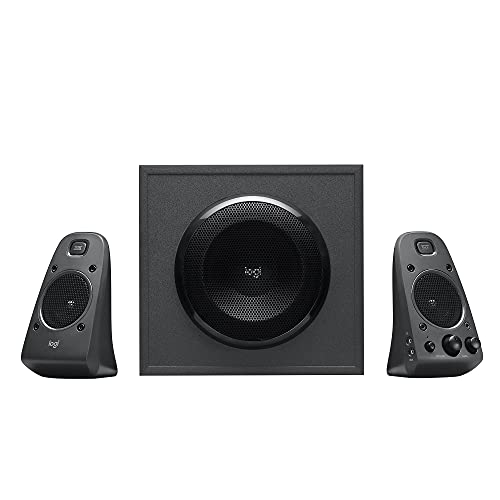
The Logitech Z625 offers robust THX Certified audio with a total of 200 Watts RMS (400 Watts peak). It provides multiple inputs including optical, 3.5mm, and RCA, enabling easy connection to a game console, TV, and PC simultaneously. Best for a more demanding setup that benefits from strong bass and versatile source options. Better for larger desks; it’s a larger footprint and may overwhelm compact spaces.
Cyber Acoustics CA-3610 2.1 System

Cyber Acoustics CA-3610 combines 62W peak power with a 5.25″ down-firing subwoofer and dual 2″ satellites. A control pod allows easy volume and bass adjustments, plus a 3.5mm aux input for quick connections to gaming consoles or mobile devices. Best for budget‑minded users who still want room‑filling sound. Limitation: the high end may feel less refined compared with THX‑certified options.
Buying Guide
What should you consider when choosing 2.1 PC speakers?
Power and bass: Look for higher RMS wattage and a dedicated subwoofer for more impactful bass. THX certification can indicate better overall sound quality, but not all setups need it.
Inputs and connectivity: Multi‑input options like optical, RCA, AUX, USB, and Bluetooth allow easy cross‑device use. USB power versus wall power can affect desk clutter and portability.
Size and placement: On smaller desks, compact satellite units and a down‑firing subwoofer keep the setup neat. Larger systems suit bigger desks or living spaces with room for the bass to breathe.
Which features matter most for your use case?
- Gaming: Prioritize low end punch, clear midrange, and reduced latency when possible. Wired connections may be preferable for zero-latency audio.
- Movie watching: Look for wide dynamic range, strong bass, and clear dialogue reproduction. A THX option typically performs well here.
- Music listening: Clarity across highs, mids, and bass is key. Satellites with efficient drivers can improve imaging and stereo field.
- Desktop productivity: Clean control pods, simple setup, and reliable Bluetooth or wired connectivity reduce desk clutter.
How to compare these models quickly?
- Power density per channel (RMS) and total subwoofer output.
- Number and type of inputs; ease of switching sources.
- Size of the satellite drivers and subwoofer; room impact.
- Certifications like THX; whether the claim aligns with real-world performance.
FAQ
- Q: Do THX-certified speakers always sound better?
A: They often deliver consistent performance and control, but perceived quality depends on room acoustics and source material. - Q: Is Bluetooth on 2.1 systems useful for gaming?
A: Bluetooth adds convenience for non‑lag‑critical listening but may introduce latency with certain game setups; wired connections are typically more reliable for gaming. - Q: Are compact 2.1 systems enough for movies?
A: Yes, many compact systems deliver solid bass and clarity, but larger rooms may benefit from bigger subs. - Q: What should I connect to a 2.1 setup with multiple devices?
A: Look for models with optical, RCA, AUX, and USB inputs to cover consoles, PCs, and mobile devices. - Q: Is a dedicated subwoofer necessary?
A: For fuller bass and cinematic sound, a dedicated subwoofer is beneficial; for near‑field listening or tight spaces, a smaller sub might suffice.